Viewing entries in
'90s

AC/DC – The Razors Edge (Album Review)

AC/DC – The Razors Edge (Album Review)

When you think of The Razors Edge, aside from the title track, it’s only logical to be enamoured by the record’s hit single, “Thunderstruck”. Yet, limiting oneself to the hit singles alone is a detrimental undertaking, as The Razors Edge is an album experience in every sense of the term. Okay, so I may have a generalised dislike for the song “Mistress For Christmas”, and the closing track is far from AC/DC’s strongest, but as an album, The Razors Edge is utterly flawless and can be considered one of their greatest.

Released in 1990, a decade after Back In Black, The Razors Edge would once again show why AC/DC has always been a force to be reckoned with as it saw the Australian rockers rise to the top of the charts, worldwide, with a release that not only enhanced their celebrated discography, but in many respects can be seen as an entry point to the music they’d deliver throughout the rest of the 90s. While sales could never match their 1980 relaunch, following Bon Scott’s passing, The Razors Edge is the band’s third best-selling album, according to BestSellingAlbums.org, with sales exceeding 8.7 million units, representing a significant pickup following the inconsistency of much of their 80s output.   

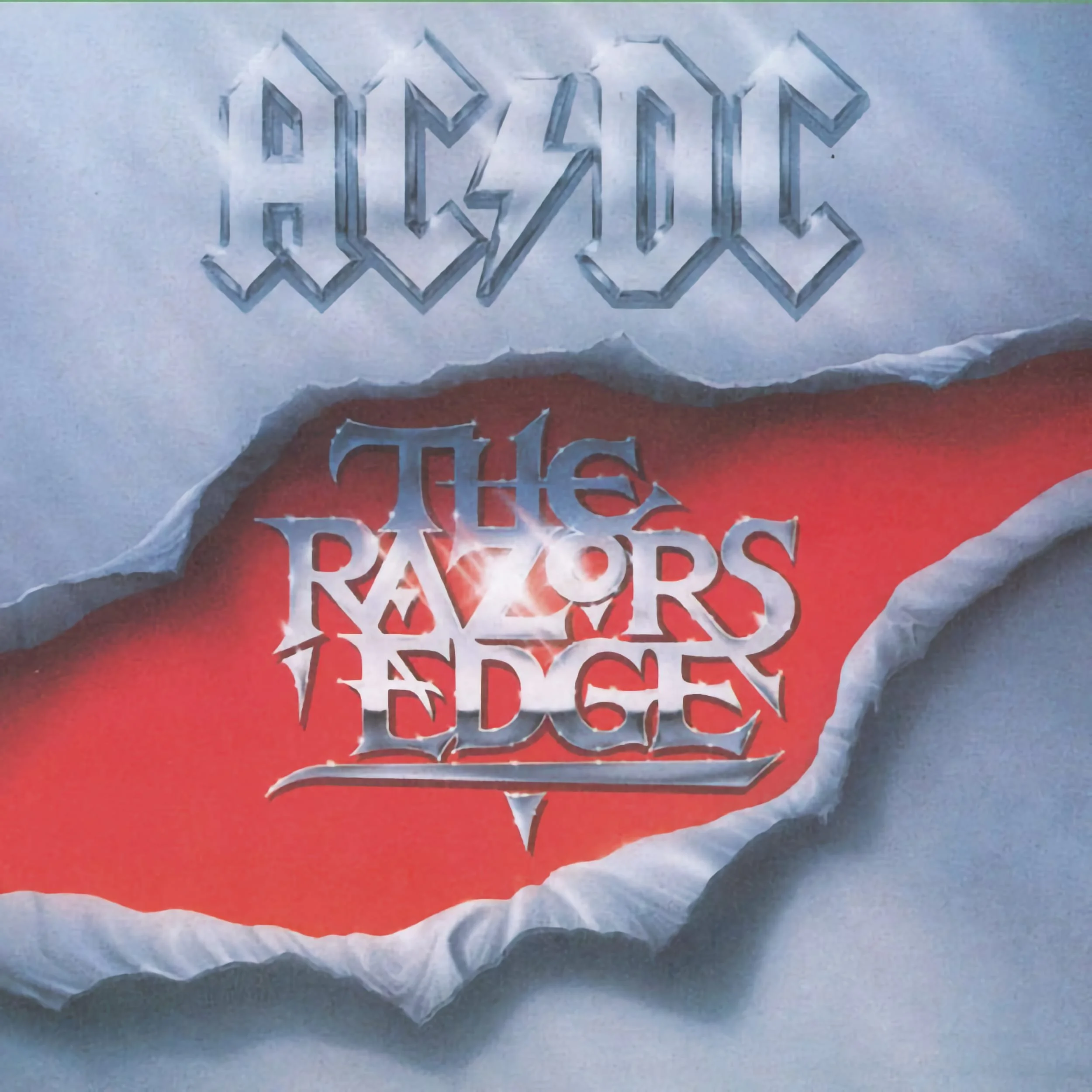
Featuring a stark metallic and red artwork design, The Razors Edge is nothing if not striking and is the perfect counterpart to the blues-based hard rock styling that fans have always held in high regard. With soaring riffs, thunderous rhythms, and Brian Johnson’s gravelly, gut-wrenching vocals, The Razors Edge is a sonic marvel that has to be heard in order to be fully appreciated. AC/DC never followed trends, and their output has been consistently solid, even with a change in production and the inclusion of legendary drummer Chris Slade on this release. Yes, I’ve thoroughly enjoyed Phil Rudd’s drumming throughout the years, and Simon Wright’s era (1985-88), but the attitude, drive, and determination of Slade’s drumming on The Razors Edge is the strongest the band ever had. A controversial perspective, certainly, but Slade’s showmanship, particularly with regard to his drumming style, and his suspended bass drums (gong bass drums) setup, really added a new dynamic to AC/DC where the drummer was seemingly as flamboyant as Angus Young on lead guitar.

As it pertains to the sonic qualities of this particular release, most listeners will be familiar with the 2003 remasters and, to be honest, the angst it receives from some fans is simply unwarranted. Yes, they’re a little loud, but the 2003 AC/DC remasters are far from the unlistenable mess that some will suggest they are. Was the original release more dynamically pleasing? Probably, but in all honesty, I can’t remember, despite living through the era and being a fan at the time. Let’s just say that I’m not listening to the remaster of The Razors Edge and simultaneously questioning the sonic qualities of this timeless release. That is, unless I’m listening to the Hi-Res Lossless Apple Digital Master from Apple Music.

The aim of the Apple Digital Master program is noble, and a step in the right direction to counteract the loudness wars, but not all Apple Digital Masters are created equal, or offer a sonic improvement to the physical or non-Apple Digital Master counterparts. The core problem with the streamed edition is that it sounds as though a sheet has been placed over your speakers. It’s less shrill and clinical, especially in the top end of the audible spectrum, but despite a rounder presentation that is somewhat similar to vinyl, the result is that the stream sounds a little dull and is, therefore, an inferior reproduction when compared to the CD reissue from 2003. It really makes no sense, given both are from the same mastering sessions, but the difference is there nonetheless, and neither is “better” than the other; they’re just “different”. As comparison is the thief of joy, the good news is that if you don’t compare, you (likely) won’t care.

Thunderstruck has one of the most recognisable openings in all of recorded music history. Even if you’re not familiar with this landmark tune, the moment you hear it, it melds with your soul and the tribal rhythm will become so entwined with your senses that you’ll be rocking out with your air guitar for hours afterwards. From the buildup to the lyrical bombardment, “Thunderstruck” is amongst the greatest songs that AC/DC has ever recorded, if not the greatest.

Fire Your Guns is raw, gritty, and a complete contrast to the spit and polish heard on “Thunderstruck”. It will take you back to their 70s-era styling, as well as sounding as if it could have been included on many of their mid-80s releases, but the strength of “Fire Your Guns” is that it doesn’t try to be something it’s not. It’s rock and roll AC/DC style!

Moneytalks is rhythmic gold that will see you toe-tapping and head-bopping throughout. While the headbanging, fist-pumping, energy of “Thunderstruck” is absent, “Moneytalks” is its equal in the appeal that it’s had to fans the world over, for it’s one of the album’s standout tunes and for good reason; it’s blues-based hard rock at its very best.

The Razors Edge is an ideal title track with an incredible composition. The guitar licks are out of this world, the bass and drums are absolutely thumping, and Brian Johnson’s vocals are reserved yet authoritative. Yet, it isn’t amongst the band’s most well-known tunes, nor was it released as a single, but when considering it further, it becomes apparent that “The Razors Edge” forms the backbone for the entire record, thereby making it an essential album-only number.

Mistress For Christmas is the one song from the album where you’ll see me rolling my eyes. While my dislike of Christmas most certainly tarnishes my acceptance of the song, at its most fundamental, it’s a killer tune that sees the band at, arguably, their most comically fun, since Bon Scott confessed to the world that a “Whole Lotta Rosie” was a whole lotta woman.

Rock Your Heart Out is a fast-paced, guitar-driven number that will see you rocking along. It may be an album-only tune, but it’s songs like this that make AC/DC albums so enjoyable, for the energy and drive never cease until the final note is played.

Are You Ready is a stadium-filling number if there ever was one and should have been the opening track for all live performances.

Got You By The Balls is another blues-based masterpiece that can be seen as a precursor to the direction the band would take with Ballbreaker and Stiff Upper Lip.

Shot Of Love sees the band rhythmically charge forward with this highly compelling album-only number.

Let's Make It harkens back in styling to “Mistress For Christmas”, particularly during the song’s opening, but while not a standout, “Let’s Make It” remains thoroughly enjoyable, particularly in the context of the album’s linear structure.

Goodbye And Good Riddance To Bad Luck is a hidden gem, particularly for those who are only aware of AC/DC’s stadium-filling hits. The landmark tunes are great, of course, but sometimes it’s the lesser-known recordings that really stand out, and the guitar solo here is simply exquisite.

If You Dare isn’t the strongest closing track, but once the song gets going, it will compel you to play the record again, for The Razors Edge can seldom be listened to once.

While every AC/DC fan will have their own opinion as to how The Razors Edge fits within AC/DC’s extensive discography, there is no doubt as to the record’s enduring appeal as it’s amongst their greatest releases. For any other band, this album would be akin to a Greatest Hits release, but for AC/DC, no greatest hits is necessary, as their body of work speaks for itself, and The Razors Edge is no exception. Turn it up to 11, rock out, and enjoy what can be best described as an energetic and melodic stroke of musical genius.

Meat Loaf – Bat Out Of Hell II: Back Into Hell (Album Review)

Meat Loaf – Bat Out Of Hell II: Back Into Hell (Album Review)

Released in 1993, Meat Loaf's Bat Out of Hell II: Back Into Hell is a monumental rock album that not only pays homage to its iconic predecessor but also manages to carve out its own unique space in the annals of rock music history. Expanding on Bat Out Of Hell, this second outing furthers the rock opera approach, taking listeners on an epic journey filled with larger-than-life characters, dramatic storytelling, and soaring melodies. In this review, we’ll explore the various aspects that make Bat Out Of Hell II: Back Into Hell a timeless classic for it’s more than just a cash grab follow-up.

Maintaining the operatic storytelling style that Jim Steinman and Meat Loaf are renowned for, Bat Out Of Hell II continues the story arc of the original Bat Out of Hell album, with recurring themes of love, rebellion, and the timeless battle between good and evil. The narrative elements make the album feel like a rock and roll Broadway show, immersing listeners in a world of passion and drama. While Steinman’s songwriting has been pivotal to Meat Loaf’s success, it is the vocalist’s powerful and emotive vocals that are at the heart of this album's success. Yes, others have recorded Steinman’s songs, to much fanfare, but nobody has outperformed Meat Loaf’s vocal prowess on his classic tunes.

Part of the appeal had always been Meat Loaf’s larger-than-life persona; a style that perfectly complements the operatic and grandiose nature of Steinman's storytelling. Tracks like I'd Do Anything For Love (But I Won't Do That) showcase Meat Loaf’s incredible vocal range and passion and his delivery consistently adds a layer of depth and emotion to the lyrics, making them feel more like character monologues than typical rock songs.

While these two incredibly talented individuals are the core reason for the success of each other, and the Bat Out Of Hell series, the production of Bat Out Of Hell II: Back Into Hell is second to none as the arrangements are orchestral and theatrical, featuring elements of rock, pop, and even a touch of classical music influence. Add to that the use of choirs, pianos, and guitars and you get an incredibly rich sonic landscape that perfectly complements the narrative. Yes, the album benefited from a big-budget approach, that wasn’t quite present with the original 1977 release of Bat Out Of Hell, but a level of rawness remains ever-present despite this album’s polished and epic sound.

Purists, particularly those who are attached to the original Bat Out Of Hell will likely view this second instalment as a detractive element but it would be amiss to consider it this way as Bat Out Of Hell II not only lived up to the legacy of the original, but also managed to become a classic in its own right. That statement certainly can’t be applied to the third instalment, Bat Out Of Hell III: The Monster Is Loose; an album that is solid on its own, but is certainly not worthy of its legacy. 

While the music may be paramount, and one should never judge an album by its cover, Michael Whelan created a captivating piece of imaginative realism when designing the Bat Out Of Hell: Back Into Hell cover art. It screams to be seen on the larger vinyl canvas, and while it was released on vinyl in 1993, the CD was commanding everyone’s attention by that stage and the smaller canvas, while adequate, failed to truly captivate the essence of the scene. Thankfully, in 2019, the album was reissued on vinyl for the 25th anniversary and I’m fortunate to have that edition in my collection for it not only sounds incredible, but it looks magnificent.

As enamoured as I often am with Apple Music’s quality, the lossless Apple Music stream is a direct CD counterpart that is more than acceptable, but it’s the fullness of sound, mixed with nuanced clarity, that enables you to turn the volume up and rock out like never before to the aforementioned vinyl reissue. That isn’t to say that the stream is substandard, but if you have the option and you enjoy vinyl, it presents the album in a manner that is incomparable to any other delivery method for the smoothness and fullness of the analogue counterpart really makes this album shine. That all said, grab whichever copy you have access to, turn the volume up, and let’s check out the songs that make up this exceptional release.   

I'd Do Anything For Love (But I Won't Do That) is an epic ballad and the album's most iconic track. Featuring a soaring melody, a powerful choir element, and Meat Loaf's passionate vocals, I’d Do Anything For Love (But I Won’t Do That) was destined to be a standout. Some may lament that this song has been played ad nauseam throughout the years, but as a contender for the greatest power ballad of all time, it is to be expected that it would be controversial.

Credit, however, must be given to Lorraine Crosby for the incredible vocal prowess she delivered on this track. Meat Loaf is good, there’s no doubt about that, but Crosby’s vocal inclusion takes the song to another level entirely; much the same as Ellen Foley’s inclusion on Paradise By The Dashboard Light did.

Life Is A Lemon And I Want My Money Back is an incredible, yet pessimistic, reflection on life's disappointments and unfulfilled promises. It is one of Meat Loaf’s greatest tunes and with its catchy chorus and introspective lyrics, it's memorable and relatable. Add to that some killer guitar work and you’ve got a theatrical rock number with just the right amount of aggression to give the song an attitude all of its own.

Rock And Roll Dreams Come Through is a soft rock anthem but as catchy as it is, it’s one song that has dated far more than it ideally should have. Perhaps that is because it was originally released in 1981 on Steinman’s Bad For Good. That edition features the vocals of Rory Dodd and while he doesn’t have the vocal chops Meat Loaf had, I thoroughly enjoy the original and consider it to be a published demo. Still, neither is exceptional and I dare say that Rock And Roll Dreams Come Through has yet to be fully realised. While it is unlikely, I do hope that another artist will cover this tune, and make it their own, while ensuring that it has a harder rock edge that I feel is deserving of the song. 

It Just Won't Quit shifts the flow of the album somewhat. Yes, it may be sonically compelling, but as much as I consider Bat Out Of Hell II to be largely perfect, It Just Won’t Quit does adversely affect the flow of the album. While rock operas demand melodrama, I can’t help but wonder if a shortening, and simplification, of the song wouldn’t have been better suited to the track.

It Just Won’t Quit is another cover for Meat Loaf as it was originally recorded and released by Pandora’s Box on their 1989 release, Original Sin. The Pandora’s Box original isn’t bad, but I do prefer this interpretation.

Out Of The Frying Pan (And Into The Fire) is a high-energy, rock-infused anthem driven by a sense of urgency and a killer guitar performance. Yes, dear reader, get your air guitar ready as you’re going to need it for it’s one of the best songs in Meat Loaf’s back catalogue.

Jim Steinman originally released Out Of The Frying Pan (And Into The Fire) on Bad For Good and while it’s somewhat lacklustre, it showcases the origins of the song and allows fans to see the evolution of the tune.

Objects In The Rear View Mirror May Appear Closer Than They Are is a beautiful song from start to finish. While I enjoy Meat Loaf’s louder, more rock-driven songs, he had such incredible control over his vocals that he could sing almost any style thrown at him and this is no exception. 

Wasted Youth captures the feeling of youthful rebellion and the idea that life is fleeting. That said, I’m not sure I would call it a song and while Jim Steinman’s spoken word lyrics offer a momentary respite from Meat Loaf, it really doesn't add substance to the overall album experience. Nevertheless, if viewed in a similar style to Lou Reed’s body of work, then it most certainly can be classed as a song. Still, it makes for a very compelling entry into Everything Louder Than Everything Else.

Everything Louder Than Everything Else has a driving rock rhythm and powerful vocal performance that contribute to its anthemic quality. While it was never going to be a standout tune, I couldn’t imagine the album without this song as it’s a solid riff-driven number that is thoroughly enjoyable every time I hear it. 

Good Girls Go To Heaven (Bad Girls Go Everywhere) is a jazzy rock song with a catchy, upbeat melody and a playful attitude and is without a doubt one of the standout tunes from Bat Out Of Hell II: Back Into Hell

As with It Just Won’t Quit, Good Girls Go To Heaven (Bad Girls Go Everywhere) is another Pandora’s Box cover. The original is solid, reminding me of many Bonnie Tyler songs. Yes, Meat Loaf’s version is the one to beat, but Pandora’s Box recorded an exceptional original.

Back Into Hell serves as an instrumental interlude that works well on its own, but does it work well in the album format? Over the last couple of decades I’ve become familiar with it, so removing it now would not be an option. However, as with Wasted Youth, one can’t deny that it shifts the flow of the album.

Lost Boys And Golden Girls is pure Meat Loaf. His vocal tracking on Lost Boys And Golden Girls is superb and the song is a perfect classical-styled rock tune that compels me to listen to the album again.

Lost Boys And Golden Girls was also originally recorded and released on Steinman’s Bad For Good and as much as I adore Meat Loaf’s interpretation, Steinman's performance is masterful.

The impact of Bat Out Of Hell II: Back Into Hell on the rock opera genre and its influence on subsequent generations of rock musicians cannot be overstated. While it may not have been quite as successful as its predecessor, it remains a timeless rock masterpiece that captures the essence of operatic storytelling within the realm of rock music. Meat Loaf's powerful vocals, intertwined with Jim Steinman's poetic songwriting, and grandiose arrangements, result in an epic musical experience that continues to resonate with music lovers even decades after its release. 

Elton John – The One (Album Review)

Elton John – The One (Album Review)

Released in 1992, The One is Elton John’s twenty-third studio album and while his classic era was well behind him, and this release is not quite as polished as Sleeping With The Past, there’s something for fans to appreciate when listening to this album; if you give it time to grow on you, that is!

Arriving during a period of personal and professional rejuvenation, for John, The One was a return to form for the master musician. With his trademark piano-driven rock and pop sound that features heartfelt lyrics, the music contained within did, and continues to, resonate with listeners throughout the world. As eluded to earlier, The One isn’t an album that is likely to immediately connect with your soul. You feel as if something is missing, yet can’t quite put your finger on it. However, the more you listen to the album, the more the songs meld into a piece of audible art and The One subsequently becomes one of John’s greatest releases.

As with most of John’s reissues, the digital counterparts come with additional songs. I’m certainly not a fan of that approach and prefer to listen to and appreciate the music in its original sequencing. While I have listened to both bonus tracks, Suit Of Wolves and Fat Boys And Ugly Girls, I feel neither adds value to The One and as a result, I’ve chosen to share with you a playlist of The One that omits that bonus material.

Simple Life is a beautiful opener and while it may hark back to the sound signature of the era, it isn't dated and still sounds fresh. John’s vocals are, as is usually the case, filled with warmth and sincerity, but the entire composition of the song is nothing short of perfection; perhaps a tad long, but perfect nonetheless.

The One shifts the tonality somewhat, but as the title track, this is one of John’s most magical ballads. His vocals perfectly combine with the song’s lush orchestration to add depth and intensity. The One is, without a doubt, one of the standout tracks from not only this record, but John’s entire career.

Sweat It Out is a little more upbeat with a vibrant and captivating style. What’s more interesting, however, is the sonic elements placed within the mix. Such additions have the possibility of becoming too complex, but each musical aspect was included to enhance the music rather than detract from the song itself; a rarity, certainly!

Runaway Train (feat. Eric Clapton) is one of the greatest songs John and Clapton have ever recorded, in their respective careers. Yes, it is that good!

Whitewash Country shifts the style somewhat and initially, it’s as if John were recording another country music-inspired tune before the pop-rock elements kick in. Any song following Runaway Train was always going to be challenged, but as an album-only tune, Whitewash Country is solid. It was never destined to be a standout, but it flows well enough within the album’s linear structure.

The North is a beautiful song and a hidden gem that has never achieved the recognition it deserved.

When A Woman Doesn't Want You may be an album-only tune, but it’s stunning as John’s vocals are filled with raw emotion that combine with the song’s soulful and catchy melody.

Emily starts well, but John’s vocalising of the verses is a little off. It’s not the worst song he’s ever recorded, but I doubt anyone would seek Emily out on its own, outside of listening to the album as it just isn’t noteworthy.

On Dark Street has a rock-infused sound, with a catchy chorus, that will see you toe-tapping and head-bopping throughout.

Understanding Women has a killer synth introduction with witty lyrics and a bouncy melody that would have been a hit had it been released in the mid-80s.

The Last Song is one of the greatest closing tunes I’ve ever had the pleasure of hearing. It’s also one of John’s most beautiful vocal performances for it leaves you wanting more, thereby making it a fitting conclusion to a magnificent album.

The One is a remarkable addition to Elton John's extensive discography where he successfully balances introspective and emotional ballads with more upbeat and rock-oriented tunes. His signature piano-driven sound and heartfelt lyrics are on full display throughout, and his vocal performances are nothing short of outstanding. The One, ultimately, captures a mature and reflective John, making it a must-listen for both longtime fans and newcomers alike.

Guns N' Roses – Use Your Illusion I (Album Review)

Guns N' Roses – Use Your Illusion I (Album Review)

Released in 1991, Use Your Illusion I stands as a landmark release in the annals of rock music history as it is the first instalment of the Use Your Illusion albums; one of the greatest release schedules the world has ever seen.

Use Your Illusion I was also a pivotal moment for Guns N’ Roses as the sprawling and ambitious work showcases the band’s musical prowess, lyrical depth, and unbridled energy. Of course, the very same statement could be said about Use Your Illusion II; an album that leans more towards a melodic style, featuring ballads and experimental tunes, which further showcases Guns N’ Roses’ versatility. As to which I prefer, or consider the better of the two albums, I find that difficult to answer as together they’re a collective masterpiece. That said, while I thoroughly appreciate both, I know for certain that I listen to Use Your Illusion I far more often than I do it’s sister album.

Speaking of preferences, I’m not a fan of the 2022 remaster. It isn’t that I find the remaster to be fundamentally bad, but I’m dead against the new orchestration elements on November Rain. It’s blasphemous and is not an accurate representation of Use Your Illusion I. Perhaps I’d be less judgemental had this modification been included as a separate offering, but as it pertains to physical releases, the album in its original mode is no longer available meaning that the original is somewhat lost to history. A shame, certainly, but someone with some common sense has permitted the original album to remain available on the iTunes Store and Apple Music. Subsequently, this original release will be the focus of this review, for classic albums should never be replaced with rerecorded or remixed versions. It’s bad enough that they remaster them when the need often isn’t there. Honestly, I never recall putting Use Your Illusion I on and pondering if it needed a remaster. It was perfect the way it was and that is the way that I choose to enjoy it henceforth.

Right Next Door To Hell kicks the album off with a relentless burst of energy, but as the album opener, I’ve never been convinced that it was the right choice. It’s certainly no Welcome To The Jungle, is it?

Dust N' Bones is an incredible, severely underrated, tune but it’s great to hear Izzy Stradlin sharing vocal duties with Rose as they complement each other perfectly.

Live And Let Die is an incredible cover. Guns N’ Roses performed it admirably and put their own spin on this Paul McCartney and Wings classic. I’d even go as far as suggesting that this edition bests the original recording, partially due to the pop-rock styling that isn’t ideal for the song. That said, if you listen to the live recording from Wings Over America, you may have a different opinion for it’s a great performance that is more in line with the Guns N’ Roses interpretation.

Don't Cry is simply stunning and is not only one of the album’s standout ballads, but it's one of the very best songs that Guns N’ Roses ever recorded. The same, unfortunately, can’t be said for the alternate lyrics version found on Use Your Illusion II.

Perfect Crime returns the album to its hard rock roots with a fast-paced rocker that showcases the band’s raw energy. The only problem is it, like Right Next Door To Hell, isn’t perfectly positioned. Perhaps if the opening track was resequenced closer to Perfect Crime, these album-only tracks would have flowed more convincingly.

You Ain't The First is a hidden gem. Its slower, semi-acoustic-styled presentation, is simply fantastic and presents a perfect interlude before Bad Obsession kicks things up a notch.

Bad Obsession is one of the greatest songs off the album, but it’s that killer blues-infused groove, along with the unique introduction, that will ultimately captivate you.

Back Off Bitch is incredible with killer riffs, a rebellious spirit, and Axl Rose’s ferocious vocals. It’s, without a doubt, one of the best songs from the Use Your Illusion recording sessions.

Double Talkin' Jive is gritty with rapid-fire lyrics and a compelling rhythm that will immediately capture your attention. As with Dust N' Bones, Stradlin’s lead vocals on this tune are superb and while Rose is generally the lead vocalist of Guns N’ Roses, I can’t help but wonder what Guns N’ Roses would have sounded like had Stradlin been the sole lead singer as he’s got a vocal drawl that simply sounds right for their blues-based rock and roll sound. Nevertheless, there are songs that only Rose could have recorded so this may well be a case of appreciating both musicians for their unique qualities.

November Rain is Guns N’ Roses’ magnum opus. It’s arguably the greatest ballad in all of rock and roll history. From the piano-driven intro, to Slash’s iconic guitar solo, to Rose’s emotive vocals, November Rain is a timeless epic.

The Garden, featuring Alice Cooper, is a dark and brooding tune that is utterly brilliant with both Rose and Cooper complementing each other. The Garden is, most certainly, a hidden gem and had it been released as a single, there’s no doubt that it would have gone to the top of the charts.

Garden Of Eden could have been an incredible straight-up rock and roll tune, but the overproduced nature of the song, particularly regarding the synthesised elements, resulted in a lacklustre recording.

Don't Damn Me is full of brute energy, with an incredible riff, and is amongst the greatest music Guns N’ Roses has ever recorded.

Bad Apples isn’t a bad apple, pun intended, but it isn’t a standout either. It is, however, a perfect album-only tune.

Dead Horse is raw, with a killer rhythm, that melds perfectly with Rose’s impressive vocal prowess. It’s a hidden rock and roll gem.

Coma is a sonic masterpiece and the perfect closer to Use Your Illusion I. The rollercoaster intensity will keep you captivated throughout this 10-minute epic while also leaving a lasting impression that will compel you to play the album again or proceed to Use Your Illusion II.

Use Your Illusion I is nothing if not a hard rock masterpiece, brimming with passion and creativity; the likes of which we’re unlikely to see again. While many may reject that statement, this is an album that encapsulated Guns N’ Roses’ multifaceted talents, from hard-hitting rock anthems to soulful ballads, the first instalment of the Use Your Illusion albums has a little bit of everything. The result is that Use Your Illusion I has become an enduring classic that continues to resonate with listeners decades after its release.

Midnight Oil - Blue Sky Mining (Album Review)

Midnight Oil - Blue Sky Mining (Album Review)

Following a masterpiece is no easy task as subsequent albums will always be compared. That said, can Blue Sky Mining match the performance captured on Diesel And Dust?

Yes, and no! 

Few would argue that both albums are exceptional in their own right, with Blue Sky Mining winning, amongst other awards, the Best Album of 1990 by the Australian Record Industry Association (ARIA). While I do consider Diesel And Dust to be the stronger of the two, both were released during Midnight Oil’s creative peak; that is until the release of RESIST in 2022. 

While the previous paragraph never quite answered if Blue Sky Mining matched the performance of Diesel And Dust, I will say that it was Blue Sky Mining that would introduce me to one of the greatest rock bands Australia has ever produced. 

I know, I still haven’t answered the proposed question, have I? 

Perhaps it is best to say that the two cannot be separated or compared for whenever I think of Midnight Oil, I class both records as exceptional examples of what Midnight Oil is musically and what they stand for. 

Known for their politically charged lyrics and energetic performances, Midnight Oil continued their powerful musical journey with this album and while the mastering isn’t quite as lush as that heard on Diesel And Dust, it is thoroughly enjoyable and allows one to turn the volume up without experiencing fatigue. That aspect is particularly interesting as the original releases of the album were significantly more dynamic but the brick walling applied here certainly doesn’t detract from the emotive energy of the recording. Dare I say, it enhances it for compression is not always a bad thing.

Blue Sky Mine launches the album with a driving rhythm and anthemic sound that perfectly suits Peter Garrett’s vocal style. Although, it is far from the strongest song to be featured on the album and the production is a little dated when compared to modern standards. Nevertheless, from the get-go, Midnight Oil showcase their social consciousness as they deliver their opinion on workers’ rights. 

Stars Of Warburton slows the pace with a solid rhythm. While there is little doubt that Stars Of Warburton isn’t at the top of anyone’s favourite Midnight Oil songs, that chorus is where the magic happens. 

Bedlam Bridge has a somewhat chaotic introduction that’s a little left-of-the-centre, but it’s compelling and draws you into the story and sonic wonderland that is to come. On Bedlam Bridge, Garrett’s vocals are amongst his cleanest ever recorded; unlike his earlier punk-era recordings. As with Stars Of Warburton, the chorus, with its infectious beat and catchy melody ensure that it’s not only memorable but is one of Midnight Oil’s greatest recordings. The only disappointment is the closing moments of the song as I feel the street sounds are distracting. Yes, I acknowledge the segue between Bedlam Bridge and Forgotten Years, but I feel the outro is unnecessary and should have been repositioned to the intro of Forgotten Years. It’s just unfortunate that I also consider the first few seconds of Forgotten Years to be the perfect length.

Forgotten Years is one of Midnight Oil’s most recognisable tunes and there’s little doubt as to why, as the band’s musical prowess, along with Garrett’s powerful vocals, combine with perfect synergy to form an exceptional tune.

Mountains Of Burma is evocative and is amongst Midnight Oil’s finest recordings. 

King Of The Mountain has to be one of the most energetic, infectious, and hard-hitting rock rhythms in rock and roll history. There’s a little Punk, a lot of Rock, and Garrett’s commanding vocals. What more could one ask for? 

River Runs Red slows the tempo considerably and very well could have been a Crowded House tune; that should be seen as a compliment. Sonically, River Runs Red is simply gorgeous. The musical layering is exceptional and is amongst the very best I’ve ever heard. It really is that good!

Shakers And Movers is a solid song, but I would class it as a B-side. However, a B-side for Midnight Oil, particularly at this point in their career, would be a hit for any other band.

One Country is another passionate performance with a powerful message from The Oils. Recorded with an acoustic focus, One Country becomes a contemplative listen that makes you sit up and take notice. It’s simply gorgeous! 

Antarctica is a mesmerising closer. It’s thoughtful songs such as Antarctica that are Midnight Oil’s trademark, but it’s even more important as the final track on an album for you can either play the record again or sit and reflect on the music you’ve just heard. Whatever you decide to do next, one thing is for certain, Antarctica leaves a lasting impression. 

Blue Sky Mining may not have reached the heights of Diesel And Dust, but it’s still one of the greatest albums Midnight Oil ever recorded. The higher production quality is noticeable, and appreciated, but it never sounds overproduced. Granted, fans of their earlier works may disagree, but you can’t please everyone. Nevertheless, with the album's powerful lyrics, energetic performances, and distinctive sound, Blue Sky Mining is a must-own, and listen, for fans and newcomers alike.

Rick Price - Heaven Knows (Album Review)

Rick Price - Heaven Knows (Album Review)

When I think of the very best that the Australian music industry has to offer, Rick Price and his debut album, Heaven Knows, are always at the top of my list. In a time when Australian music was flourishing with artists like John Farnham, Jimmy Barnes, and Diesel, Rick Price held his own and carved a niche for himself with this highly acclaimed debut from 1992.

With its heartfelt lyrics, soaring melodies, and polished production, Heaven Knows remains a timeless, and somewhat hidden, classic. Unfortunately, it has been out of print for decades and as much as I’d love to see it reissued on a physical format, it’s unlikely to happen. Never say never, of course, but this is yet another example whereby streaming and digital download stores reign supreme with regard to out-of-print music being readily available for new audiences to enjoy.

Speaking of the digital offerings, Heaven Knows is presented in lossless CD Quality on Apple Music and I really couldn’t be happier for it’s a superbly recorded, mixed, and mastered album. While The Essential Rick Price contains many of the landmark tunes from Heaven Knows, the mastering is too hot meaning that while there’s greater punch and forwardness to the songs you know and love, it becomes fatiguing to listen to. Yes, some albums sound better when the dynamic range is compressed, but that is not the case here.

What’s Wrong With That Girl? has an addictive rhythm with stunningly beautiful guitar work. Add Price's incredible vocal and you’ll be captivated from the very first note.

Not A Day Goes By continues to enthral with its poignant lyrics and Price's heartfelt delivery. The soaring chorus and infectious hooks make it an instant earworm; although, I would have liked the chorus to be sung in a lower register as it can become a little jarring on the senses. Regardless, Not A Day Goes By is a trademark Rick Price tune and is one that is thoroughly enjoyable.

A House Divided picks up the tempo with an excellent pop-rock tune that will see you singing along throughout the chorus. It’s perfectly suited to Price's style but I’d also love to see a country music artist reimagine A House Divided for there’s a touch of country within the song that I feel could be explored further.

Walk Away Renee is a fantastic cover of The Left Banke's original 1966 recording. With Price's knack for crafting catchy melodies, backed by rich arrangements that perfectly complement his soulful vocals, Walk Away Renee has never sounded better.

Heaven Knows is simply magnificent. Price's smooth vocals effortlessly glide over a lush musical arrangement, blending elements of pop, rock, and soul that create an instant connection with the listener.

Church On Fire is the first track on the album that doesn't immediately excite me and is a poor follow-up to Heaven Knows. It does, however, become more palatable as the song builds towards the chorus, but it isn’t likely to be anyone’s favourite song. Yes, it is sequenced poorly within the album structure, but I really don’t feel Church On Fire would have fit anywhere else on the album and I’d go as far as saying that it should have been omitted.

Life Without You is an enjoyable song with a touch of country, folk, and pop that fits perfectly with the overall style of the album and Price’s vocal presentation. It’s an album-only tune, for sure, but it’s songs such as Life Without You that make the album experience all that much more cohesive.

Foolin’ Myself has a killer guitar intro and is a solid pop-rock tune with a catchy chorus that will keep you on the hook.

Forever Me And You is a beautifully crafted ballad that showcases Price's ability to tug at the heartstrings. Price's impeccable vocal control knows few limits meaning that Forever Me And You, much like the rest of the album, is exceptional!

Fragile is a beautiful closing track that permits reflection while also encouraging listeners to play the album again.

Price’s ability to seamlessly blend different genres and deliver heartfelt performances has always set him apart from his contemporaries. The album's production is polished and timeless, allowing it to transcend the era it was released in. Hence, if you're a fan of heartfelt ballads, infectious melodies, and soulful performances, this album is an absolute must-listen; not just for fans of the Australian music scene but for music lovers worldwide.

Dances With Wolves – Original Motion Picture Soundtrack (Composer: John Barry) [Album Review]

Dances With Wolves – Original Motion Picture Soundtrack (Composer: John Barry) [Album Review]

Released in 1990, to correspond with the film’s release, the Dances With Wolves Original Motion Picture Soundtrack, composed by John Barry, perfectly captures the spirit and emotion of the film. From the sweeping, epic overtures to the more intimate and introspective moments, the music transcends a film score and becomes a simply sensational piece of classical music that you’ll find yourself listening to time and time again. 

As one of the greatest soundtracks ever recorded, I’ve lost count of how many times I’ve played it since its release, but it would have to be hundreds if not thousands of times. You see, Dances With Wolves, unlike other soundtracks, is so remarkable that it can be appreciated in both the foreground and background as it seamlessly integrates into just about any situation. 

As you may have guessed, Dances With Wolves is my favourite soundtrack of all time and while the film is epic in its own right, I can’t recall the last time I saw it. It would have to be a couple of decades. It simply didn’t make as much of an impact on me as John Barry’s score did. 

In fact, I am so enamoured by this soundtrack that I’m not ashamed to admit that I have two copies. One on CD the other on vinyl. Most of the time, I find myself gravitating to the standard CD release for this is the edition that I listened to back in the 90s as it was the perfect studying accompaniment whereby the 54-minute runtime seemed to match my level of peak concentration and permitted a six-minute break before getting back to work. 

Depending on which region of the world you reside in, you’ll likely find that you’ll come across one of two different cover art designs. Perhaps that is another reason why I own two copies as the vinyl counterpart offers me the alternative cover art; of course, that’s just a convenient excuse, but I can think of far worse justifications. 

The CD booklet is rather basic but in all honesty, there isn’t a need for extraneous elements. Although, the vinyl reissue as I’ll come to later, could be a little more complete. That said, it would be nice to have had the orchestra members credited for John Barry may be the maestro but his orchestra isn’t mentioned and they’re the ones that turn his masterpieces into audible reality. Granted, this aspect isn’t uncommon, but it is one element that I feel needs addressing. 

Sonically, the CD is as magnificent and expansive as the film that accompanied it. It’s a pleasure to listen to for its clarity and dynamic range never cease to amaze. Of course, that is before we put the Original Recordings Group (ORG) 2014 reissue on the turntable.  

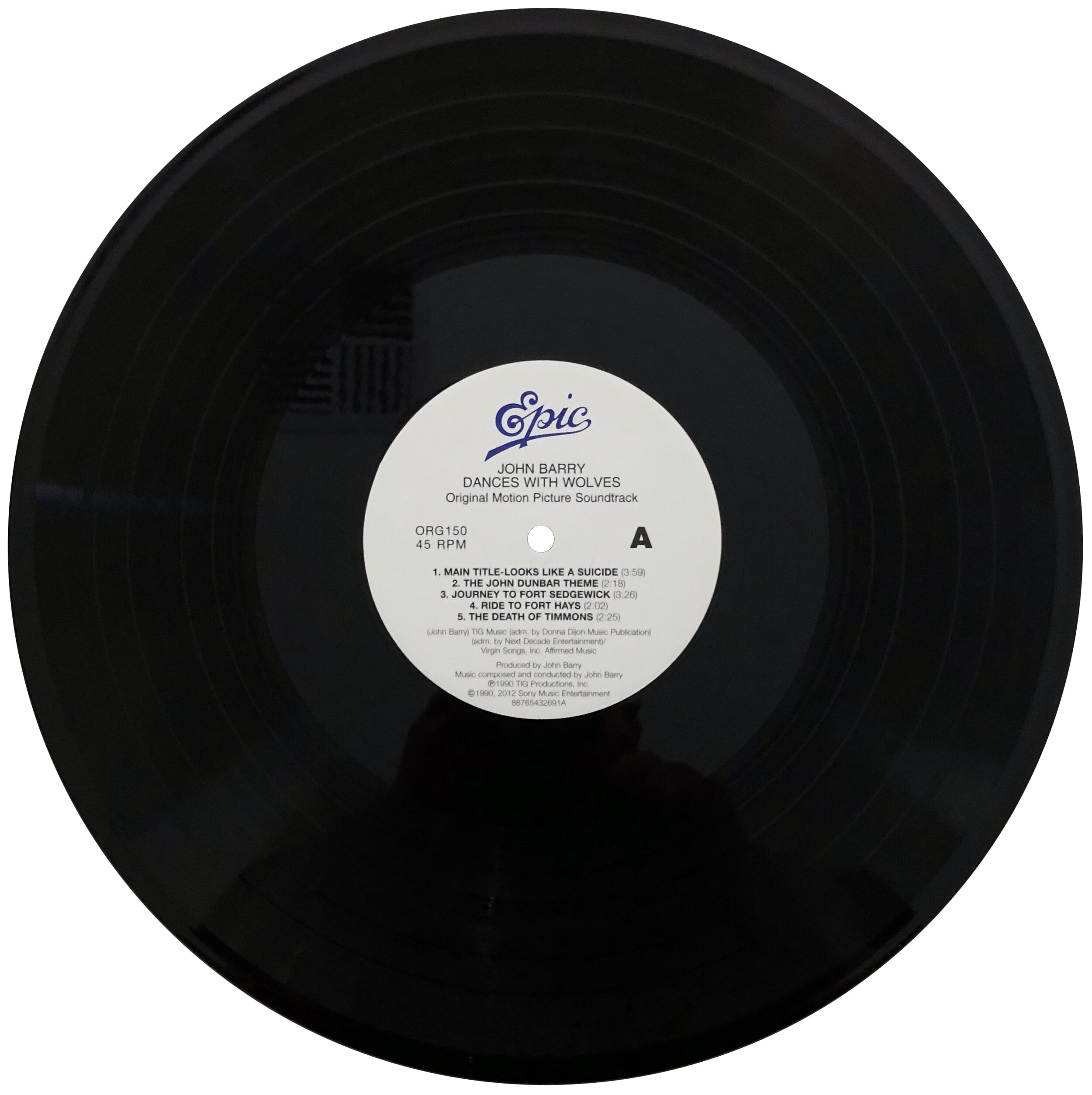
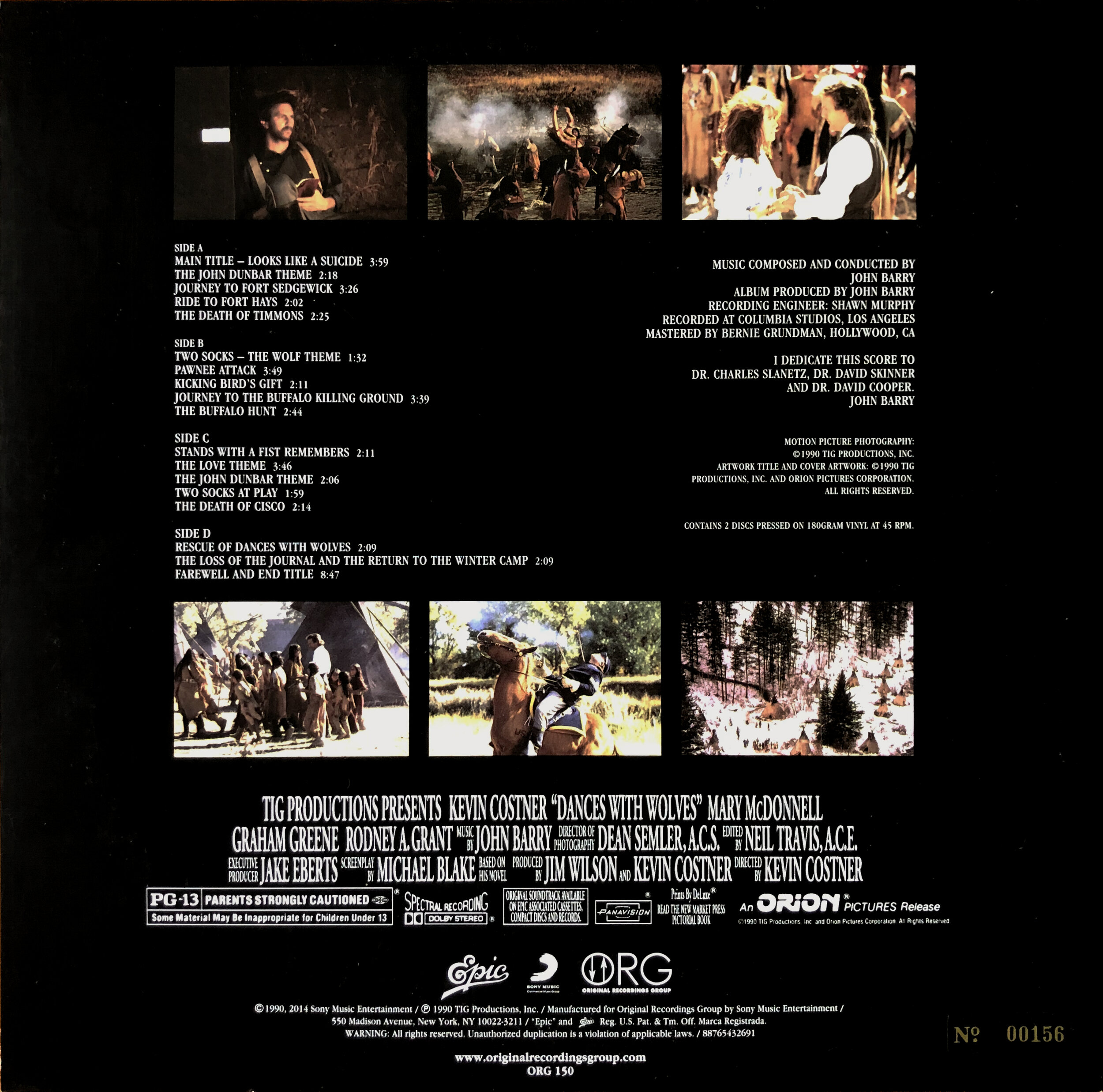
Towards the end of 2014, I heard that Original Recordings Group (ORG) were to release a limited, numbered, edition of this beloved soundtrack and I simply couldn’t resist. For those of you who are interested, I’m fortunate enough to own number 156 out of 2500. The number, of course, isn’t essential, but it adds further uniqueness to my collection. This particular repressing would also mark the first time the Dances With Wolves soundtrack would be reissued on vinyl, since the original 1990 release. 

ORG are renowned for their sonic quality and this is no exception having been pressed and delivered at 45rpm. That, of course, means that the soundtrack is presented across four sides and is as luscious as one could hope for. Naturally, as classical music fans will note, vinyl isn’t the epitome of sonic reproduction as pops and clicks do manage to creep in in even the most arduously cleaned record playback chain. It’s simply the nature of the format and while it sounds utterly incredible, the CD release becomes sonically superior by default of not having surface noise to contend with.

Some may not mind, of course, as life has a level of surface noise that often can’t be avoided, but the ORG releases, despite being intricately reproduced, are rather expensive and if a CD at the fraction of the cost remains superior, for this listener, then one must naturally question if classical music on vinyl is a worthy endeavour. 

If you can tolerate a few minor sonic blemishes, however, for the advantage that is offered with the analogue sound, then I would suggest sourcing a copy of the ORG vinyl reissue.

Additionally, ORG releases hold their value over time but the minute you put a value on your collection, a little bit of the magic disappears for it is no longer about the way the music touches your soul. Trust me, as someone who has added their collection to Discogs over the years, it seldom results in a greater appreciation of the music itself for it commodifies that which we love. 

If there is one disappointment to note regarding the ORG reissue, it is that despite being a gatefold design, nothing is printed on the inner gatefold. It is like looking into a void for it’s black and empty. Naturally, you’ll notice that I haven’t included this element in the selection of photographs above, but if you take a glance at the CD images, you’ll see the inner design of the CD booklet that I wish had been reproduced on the vinyl counterpart. It’s a missed opportunity and is particularly disappointing as it is promoted as a premium product.

Purists will argue that it perfectly replicates the artwork from the original vinyl release and I wouldn’t disagree with them but I would add that the original release, issued on a single LP, had no gatefold. Hence, while it may be accurate, it could have also been expanded. In every other way, however, the ORG vinyl reissue is visually stunning and worthy of having in my collection.

Turning our attention to streaming, things begin to get a little more complicated. Both the CD release and ORG vinyl reissue have the original 18-track, 53-minute, score but Apple Music et al have three editions. Two seemingly identical replicas and one with an expanded runtime and sequencing. 

Seriously, why do record labels do this? The original release is perfect and the bonus tracks from a 2004 reissue program detract from the flow of the recording. Yes, after 30+ years of listening to this soundtrack, I know it inside and out so any deviation will always be a shock to the system, but while many of the additional tracks blend in adequately, songs such as Fire Dance offer a considerably different tone thereby creating the aforementioned distraction. I’d also add that just because it may have worked well within the context of the film, that doesn’t mean that it will work well when presented chronologically on the soundtrack. The number of soundtracks that have been ruined by extraneous content never ceases to amaze me. Watching a film, and listening to the score, in my mind, are two entirely different processes. They should complement each other but a soundtrack need not replicate the film experience.  

While I may be lamenting the different versions, and don’t even get me started on the 25th Anniversary double CD edition, one thing that we should be grateful for is that this soundtrack is still readily available. As fans of original motion picture soundtracks will note, few survive past their initial release and when added to streaming services, tracks are often missing due to contractual issues. A frustrating aspect; certainly!

What isn’t at all frustrating is the music contained within this release. Regular readers will note, I generally divulge into a discussion of the individual songs, on any given album, but as it pertains to classical scores, I feel it is best to let the music speak for itself for this body of work is exceptional and worthy of inclusion in every music collection; particularly one with a classical or film score focus.