Viewing entries in
T. Rex

T. Rex – Electric Warrior (Album Review)

T. Rex – Electric Warrior (Album Review)

There are classic albums, and then there is T. Rex’s Electric Warrior; a killer '70s rock and roller! While not quite as polished as their 1972 follow-up, The Slider, Electric Warrior laid the groundwork for what was to come, despite this being their sixth studio album overall and second under the T. Rex banner. It did, however, deliver a musical shift that favoured an increasingly electric approach, one which had started with their self-titled 1970 release, rather than the acoustic styling they’d previously been known for. As a result, the glam meets rock with touches of funk was met with great success, and Electric Warrior remains T. Rex’s most commercially successful release.

Aside from the musical shifts, much of Marc Bolan’s songwriting on this release revolves around personal experiences and while lyrical intent is not necessarily the focal point of music, particularly for this music lover, one thing is for certain, and that’s that T. Rex benefits from this shift in songwriting as well. Add to that Tony Visconti’s production brilliance, and what you’ve got is an album that is not only highly compelling but sonically impressive. The musical trickery of Visconti took the quartet to much bolder musical heights that couldn’t have been conceived without his influence, and he is, in many ways, a core member of T. Rex, having produced just about everything the band put out until their 1975 release, Zip Gun.

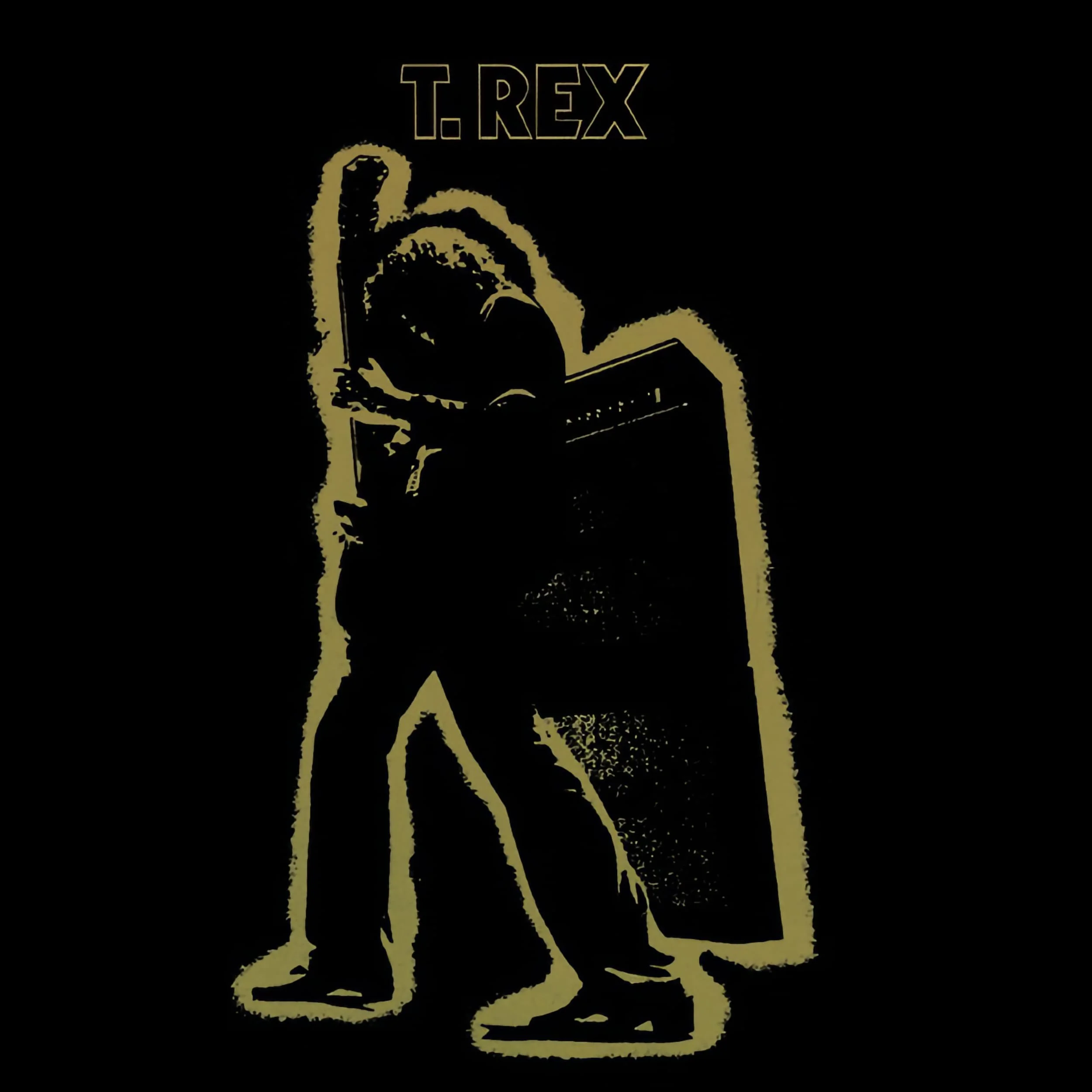
Electric Warrior is also notable for its striking album artwork, which effectively sets one’s expectation, while simultaneously matching the overall musical style of the record. While the album’s artwork maintains its emphasis on small-format digital screens, the stark gold on black design would, undoubtedly, be best appreciated via the larger vinyl canvas, and its ability to be displayed amongst one’s collection. While I’ve yet to be able to appreciate it via that format, the CD-quality lossless Apple Music stream is sonically exquisite. Based on the 2012 remastered/reissue, this streaming edition is ideal for those who have yet to venture into one of the many physical releases and will likely appeal to most music lovers.

You’ll be met with a digital reproduction that sounds warm and enveloping with a full-bodied sound. There are, however, a couple of instances when the cymbals can sound a little jarring, particularly at higher volumes, but it’s a minor gripe that is likely a non-issue on the more rounded and smoother vinyl editions. Nevertheless, the greatest gift of streaming is that we can sample the music, and so, as we take a look at the songs that make up this classic release, give it a listen and decide for yourself.

Mambo Sun sets the tone for the album with its hypnotic upbeat funky vibe. If you’re not moving involuntarily to the rhythm, you’re most certainly listening wrong, as “Mambo Sun” has a surreal atmosphere that perfectly presents Bolan’s vocal atop the pulsating rhythm.

Cosmic Dancer slows the tempo somewhat, but the initial throwback to a more acoustic sound is quickly overtaken by the gorgeous symphonic presentation that not only enhances the song but showcases the experimental nature of both T. Rex and the glam rock genre itself.

Jeepster has a rock swagger that is perfectly suited to the era. While not necessarily a standout, and one song from the record that suffers from a little too much shrillness in the top end, “Jeepster” is a solid album-only number that fulfils that obligation perfectly.

Monolith is a masterful number. Yes, there’s a little too much focus on the cymbals, but the layered nature of this tune is exceptional and feels akin to a bridging element between legacy T. Rex (Tyrannosaurus Rex) and this bold new musical styling.

Lean Woman Blues is about as country as you’re gonna get from T. Rex, but despite the twang element, it’s the blues-driven styling, the vocal grit, and distorted guitar that, ultimately, makes “Lean Woman Blues” so appealing.

Get It On, also known as Bang A Gong (Get It On), is T. Rex’s magnum opus. Nothing comes close, even though there are many contenders, but from the very first note to the last, Bolan and the band draw you into this groove-filled number that will stay with you long after the album has ended.

Planet Queen flows well from “Get It On” with its softer groove that, while less immediate than the aforementioned tune, is dreamy and hypnotic in a manner that you’ll likely find highly compelling.

Girl is a beautiful tune, one that Bolan knocks out of the park for his vocal delivery, the subtle musical bed, and Burt Collins’ exceptional flugelhorn, meld together in one of the greatest and most unassuming tunes T. Rex ever recorded.

The Motivator picks up the pace, but the heavier groove, with its killer rock riff, is a welcome return to form as “The Motivator” represents the broader musical perspective of the band and is somewhat of a hidden gem.

Life's A Gas is a beautiful ballad. Gentle and melancholic. Few songs are as stunning as this unassuming number.

Rip Off is full of raw energy that, in some respects, is too far removed from the dreamy fluidity of “Life’s A Gas”, but it does serve well as the album’s closing tune for it leaves you wanting more and will likely see you spinning the record again, for Electric Warrior is an album that can be seldom listened to once.

No matter which way you look at it, or whether or not you consider The Slider as a superior T. Rex record, Electric Warrior is timeless and has had a profound impact on musicians and music lovers alike. Yes, the sub-million sales may encourage some to suggest that it was less successful than one might think, but those who have taken the time to listen to Electric Warrior know of its impact; one that will see it highly sought after long after this review, and all of us are but distant memories.
T. Rex – The Slider (Album Review)

T. Rex – The Slider (Album Review)

There are classic albums, and then there is The Slider, a record that further solidified the legendary status the English rockers had attained on this, their seventh studio album. While The Slider was not as commercially successful as Electric Warrior (1971), it’s quintessentially T. Rex and if one was to share the band with a music lover, that had yet to experience them, The Slider would be at the top of my recommendation list for T. Rex doesn’t get much better than this, even though I have a soft spot for the experimental Futuristic Dragon (1976).

Released in 1972, The Slider finds T. Rex at a pinnacle moment of their career. With a selection of songs that play akin to a Greatest Hits release, it wouldn’t be far-fetched to suggest that The Slider, despite not reaching the commercial success of Electric Warrior, is the superior album. There will be some who naturally disagree, and they’d subjectively be correct, but The Slider is a glam rock masterpiece that knows few peers.

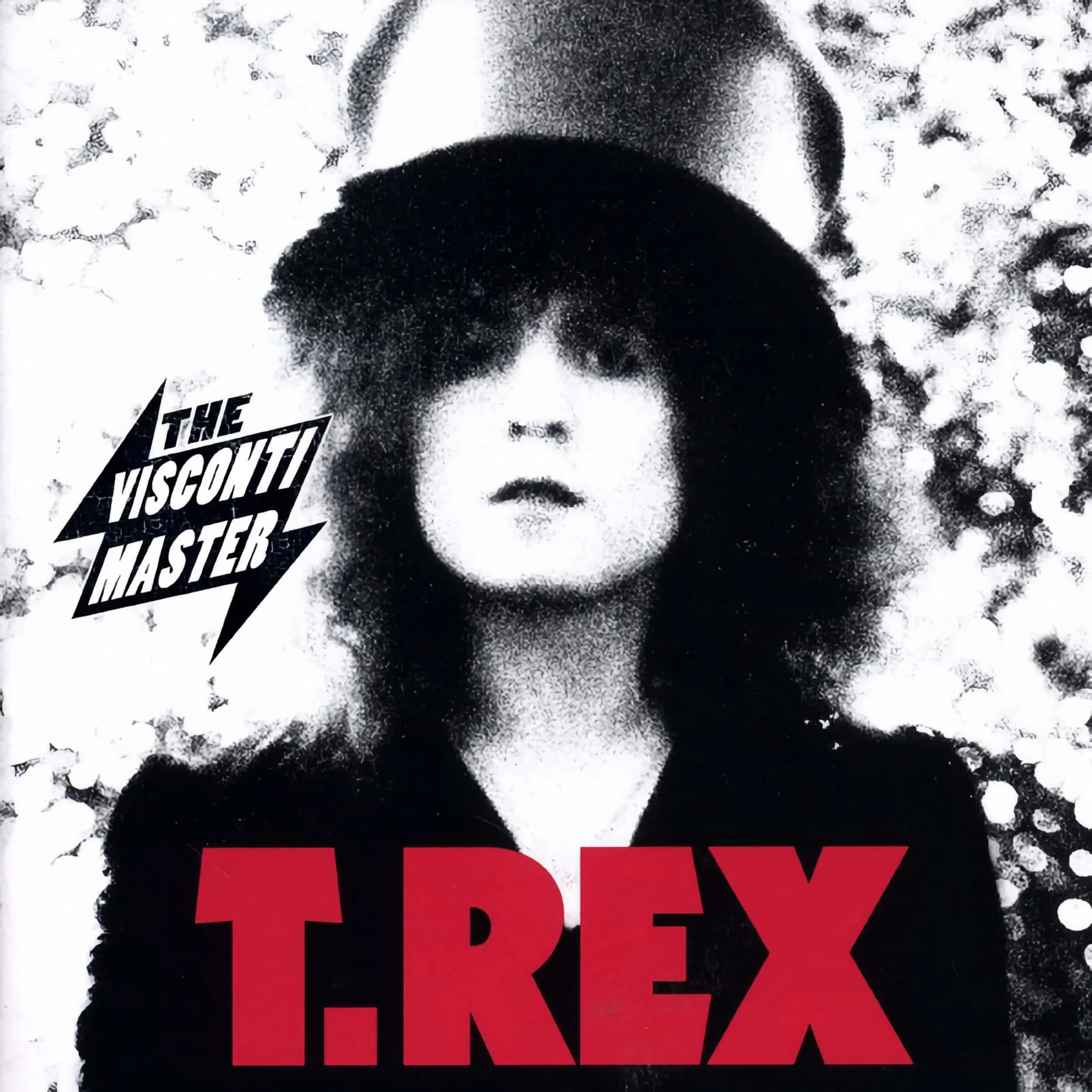
Featuring a stark black and white photograph of Marc Bolan, courtesy of Ringo Starr (yes, the one and only), the cover art design is striking. Perhaps my only complaint is that my preferred edition, The Visconti Master, utilises the white space from the album’s cover to inform us of the different mastering when presented on Apple Music et al. It shouldn’t matter, and most of the time I overlook it, but it takes away from the original artwork and is a distraction. First world problems, I know, but at least they didn’t make the same mistake as it pertains to the physical releases.

With regard to the sonic qualities, I find the Visconti remaster simply sounds right. And, yes, that is a technical term! For those unaware, Tony Visconti was the album’s producer, and this latest mastering is smoother, bolder in the mid and low end aspects of the recording, whilst also allowing for a thoroughly pleasing wide and enveloping soundstage. It isn’t presented as an Apple Digital Master, but it doesn’t need to be, as the CD-quality counterpart is stunning.

Undoubtedly, there will be fans of the original mastering, but whichever you prefer, join me as I take a look at the songs that make up this legendary release.

Metal Guru is a killer opener with a rhythmic burst that sets the tone for the entire album. Bolan’s emotionally charged vocals help to give the song its glam rock feel, but the backing vocal harmony adds to the mystique, for “Metal Guru” is amongst T. Rex’s finest recordings.

Mystic Lady slows the tempo somewhat, but the flow from “Metal Guru” is so natural that it’s unlikely you’ll sense the shift, unless you’re expecting it. With a near-dreamlike atmosphere, “Mystic Lady” is a lushly layered masterpiece that showcases not only T. Rex’s incredible musical prowess but Visconti’s high production values.

Rock On captivates like no other. You’ll feel compelled to move involuntarily to the rhythm as this song melds with your soul and stays long after the album has ended, but an earworm such as this has never been so pleasantly rewarding to the senses. The gruff, yet highly polished style of the song is part of its appeal, as it provides a contrast that works surprisingly well.

The Slider delves into a grunge-styled tone that provides the backbone to what can only be described as a classic glam-rock number. The layered musical bed is detailed and enveloping, yet Bolan’s vocals sit perfectly within the mix, further showcasing just how well The Slider, the album and this title track, have been recorded and mixed.

Baby Boomerang is an ideal glam-rock tune, for the short and punchy styling is undeniably catchy.

Spaceball Ricochet is a musical exploration that needs to be heard firsthand in order to be fully appreciated. While those not overly familiar with the era, or T. Rex, may point to “Spaceball Ricochet” being akin to a David Bowie tune, that would be a complimentary statement. The sparse, yet evolved, styling of the song is perfectly suited to both artists and is a great example of glam music at, arguably, its apex.

Buick Mackane is amongst the heavier tunes on the album, and while I’ve always appreciated Guns N’ Roses’ 1993 cover, from The Spaghetti Incident, the original is all that one ever really needs to listen to, as its muscular driving riff, while maintaining the band’s glam aesthetic, is nothing short of exceptional.

Telegram Sam is derived from one of T. Rex’s most iconic compositions, "Get It On". With a touch of funk, a dab of rock, and a healthy dose of glam, “Telegram Sam” is as instantly irresistible and catchy as the aforementioned track and a highlight amongst a collection of songs that are some of the very best in all of recorded music history. Some may be perturbed that the riff and overall styling were reused, but when you have such an incredible tune, why not repurpose it? AC/DC has been doing it successfully for decades.

Rabbit Fighter is a boldly dramatic number that sees T. Rex at their most theatrical and grandiose, whilst simultaneously delivering one of Bolan’s most impressive vocal performances.

Baby Strange is a raw, stripped-back rocker that will find you head-bopping and toe-tapping along. The riff and Bolan’s vocal delivery are the highlights on this tune, and while it may have been seen as a little pedestrian, the strength of “Baby Strange” is its simplistic approach.

Ballrooms Of Mars is one of the slower compositions on the record, but it’s an absolutely magnificent tune and another that highlights not only the band’s overall musical ability and tightness, but Bolan’s incredible vocal capabilities that, in this case, have a slight John Lennon styling in a respectful tip of the hat to the former Beatle.

Chariot Choogle is a killer high-energy number with an incredible riff and rhythm that you’ll feel as much as you’ll hear it, for this is one number that will encourage you to move both involuntarily and intentionally to the rhythm.

Main Man is a magnificent closer, with a dreamy mystique that is reminiscent of “Life’s A Gas” and is, subsequently, difficult to ignore. It will encourage you to play the record again, as well as offering you the opportunity to sit and reflect on the music you’ve just heard.

From start to finish, T. Rex’s The Slider is nothing short of an exceptional release that has not only stood the test of time but also remains one of the greatest albums ever recorded. It is T. Rex at their finest and, if, like me, you’ll find yourself playing this record on repeat for hours, for The Slider can seldom be listened to once.

T. Rex – Futuristic Dragon (Album Review)

T. Rex – Futuristic Dragon (Album Review)

Released in 1976, Futuristic Dragon, T. Rex’s eleventh studio album is both unique and experimental as it showcases the continued evolving music style of the English rock band. With this change in direction, you may find that it requires repeat listens to fully grasp, and appreciate, the record’s overall intent. Longtime fans will likely feel right at home, despite the differences from T. Rex’s earlier works, but newcomers should look beyond the renowned catchy tunes and appreciate Futuristic Dragon as it was originally intended; as an album experience first and foremost. 

While Futuristic Dragon doesn’t deviate too far from T. Rex’s classic output, the incorporation of elements of soul, funk, and reggae ensure, when mixed with their glam rock original sound, that the album not only remains fresh but becomes a timeless musical experience. 

While there’s little doubt that T. Rex was a band effort, Marc Bolan has again written thirteen memorable tunes that all have the renowned T. Rex quality, but  with the aforementioned shifts. The result is an album that features catchy melodies and an overall groove that not only highlights Bolan’s lyrics, but one that will captivate your soul. Speaking of Bolan’s lyrics and vocal delivery, you’ll likely hear a little John Lennon influence on songs such as My Little Baby, Calling All Destroyers, and Dreamy Lady. Intended, or not, the correlation is fantastic and you’d be forgiven for mistaking these two musical legends, as you listen to the album, for I have even got the two mixed up on various occasions. 

As it pertains to the sonic qualities of the lossless Apple Music stream, I can say with complete honesty that it could be better. Yes, the stream is a direct counterpart to the CD release of the album and while there aren’t any glaring issues and is subsequently adequate, the stream gives off a sense that there is more to be heard, yet elements are concealed in the mix and subsequent master. It’s also a little boxed in as the soundstage is concerned and a remaster, by a skilled mastering engineer, would ensure the stereo soundstage would be wide and enveloping. The recording could also do with a slight bump in the mid to low-end range of the audio spectrum and while I acknowledge that this can be done in the digital domain, modern EQ settings often lack fine manual controls meaning that the preset options can boost audible elements too far. The result of such extreme measures is that it can be detrimental to other aspects of the recording that are otherwise perfect; hence, my recommendation for a remaster by a well-respected mastering engineer who can ensure the intent of the original recording is maintained.

Forgoing a remaster, for the moment, it is plausible that Futuristic Dragon would be best delivered on vinyl for the format’s inherent limitations would naturally help to produce a smoother, more fuller, and fluid presentation than the streaming counterpart is capable of. Of course, there’s no guarantee that this would yield greater results, but I have observed such occurrences in the past. That all said, the stream remains thoroughly enjoyable, I simply feel that the reproduction could be better than it already is for the music contained within is exceptional and is deserving of the very best production possible. As it is all about the music, however, join me as I take a look at the songs that make up this incredible release. 

Futuristic Dragon (Introduction) is far from the greatest opening track of all time, but if you listen to the album, with a little Alice Cooper in the back of your mind, it becomes more than palatable. If nothing else, the segue to Jupiter Liar is well presented and much appreciated. 

Jupiter Liar is a groove-based masterpiece. With a mix of funk and rock elements, you’ll quickly find yourself tow-tapping and head-bopping along. As to why Jupiter Liar was never released as a single, I’ve no idea, but it is beyond comprehension for I feel this song would have rocketed to the top of the charts. 

Chrome Sitar takes us on a psychedelic dreamlike journey with an incredible rhythm and sensational hooks. The mix and overall composition of Chrome Sitar is impressive; so much so that I consider Chrome Sitar to be one of the greatest songs T. Rex ever recorded.  

All Alone presents us with a song that’s a little more upbeat. Think the Motown vibe mixed with a little soul and a touch of T. Rex. On paper, it shouldn’t work, yet it does. While All Alone may not be the strongest song from the album, it is nothing if not addictively good. That said, if you struggle to get into this tune, may I suggest you listen to it independently a few times as it grows on you the more you listen to the song. 

New York City is utterly brilliant! Yes, you’ll hear elements of Get It On, from Electric Warrior, but the repurposing of musical techniques, particularly in this instance, isn’t a bad thing. New York City is, subsequently, not only a standout but its energy and catchiness ensure it’s one of the best songs on Futuristic Dragon.   

My Little Baby possesses a romantic styling that doesn’t really suit T. Rex, but I’d be lying if I said that it doesn’t grow on you. If nothing else, it shows us a different perspective to what T. Rex could have been, had they chosen a different direction; one more aligned with pop than rock. 

Calling All Destroyers has a driving rhythm with some killer guitar licks and a vocal style that reminds me fondly of John Lennon. It’s a classic rock tune that is not only one of the best songs from the album but one of T. Rex’s greatest recordings. 

Theme for a Dragon is a lush instrumental piece that suits the album perfectly. Further embracing the album’s boldness, Theme For A Dragon is perfect for its intended purpose but I will say that the faux audience element can be a little grating on the senses and I, for one, would have preferred that aspect to be removed from the mix. 

Sensation Boulevard is another funky tune that adds to the overall style of the album. While it was never going to be a standout recording, it’s groovy and utterly compelling. 

Ride My Wheels is a little more eclectic than the other songs featured on Futuristic Dragon, but don’t let that deter you as it is the album’s diversity that makes it such a fascinating release. 

Dreamy Lady is T. Rex meets disco with a touch of Lennon. It’s brilliant and is without a doubt one of Bolan’s greatest vocal recordings. 

Dawn Storm shifts the musicality again, but the soul-inspired approach, particularly in the vocal department, is nothing short of musical genius. Dawn Storm is, subsequently, one of the most beautiful songs you’re ever likely to hear. 

Casual Agent closes the album on a high note with a dynamically engaging approach that will compel you to play the album again. Yes, the repeated chorus becomes an earworm; but it’s a thoroughly enjoyable one. 

No matter which way you look at it, Futuristic Dragon remains a fascinating release in T. Rex’s celebrated discography. Featuring sonic transitions and musical explorations like that never heard by T. Rex before, this timeless classic remains compelling for fans and newcomers alike. While not as successful as their earlier releases, the artistic boldness and genre-bending approach make for an enthralling musical experience that showcases the evolution of T. Rex and Marc Bolan’s musical journey, thereby ensuring that Futuristic Dragon is not only one of the greatest albums released in 1976 but one of the best releases of all time.