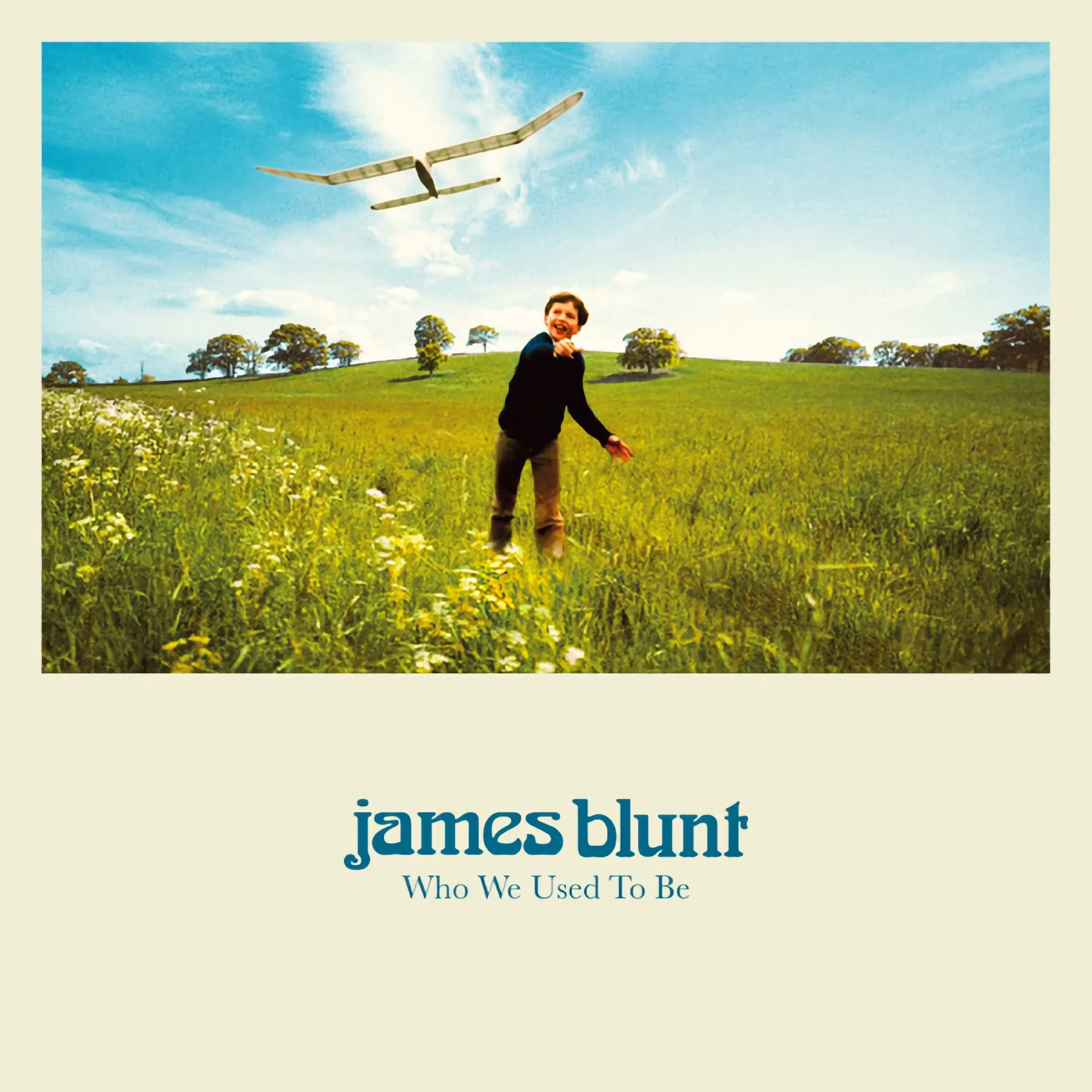
James Blunt is one of those rare artists who consistently release highly compelling modern works of art that, for lack of a better term, are timeless. Who We Used To Be, however, loses a little focus (compared to his previous works) as Blunt continues to meld his signature sound with that of more modern recordings. That isn’t necessarily a bad thing, especially if one’s aim is to stay relevant. Still, it does shift Blunt’s musical style to such an extent that there are moments on this release that make the British pop sensation indistinguishable from any number of his contemporaries. While Who We Used To Be is amongst the very best releases of 2023, I do hope that Blunt’s future releases will be dialled back a little more, perhaps to the unique styling we heard on All The Lost Souls (2008); an exceptional release and one of Blunt’s finest.
Released in 2023, Who We Used To Be is the seventh studio album from James Blunt. With a core 10-track, 31-minute, linear structure, it’s closer to an EP than a full-length LP. Yet, in a strange dichotomy, a decision was made to offer a Deluxe Edition with an LP-length runtime, of ~44 minutes, and an additional four tracks. One may assume, as is often the case, that the bonus material on the Deluxe Edition fails to add to the overall album experience and only contains recordings that didn’t fit well with the core album’s linear structure. That, however, couldn’t be further from the truth as the 14-track release flows far better than the truncated 10-track edition.
While modern listeners likely won’t care, particularly as attention spans no longer lean towards the longer LP format, artistic output should never yield to the masses, and it is with that in mind that I implore you to exclusively listen to the Deluxe Edition. That, unfortunately, is going to be a problem for those who appreciate buying their music on vinyl, as the singular, and extremely limited vinyl release (300 units), released as a 45rpm edition (and pressed to recycled vinyl) only contain the core album tunes. It’s, ironically, a bit of a waste, especially considering both Standard and Deluxe Editions have been released on CD.
Don’t get me wrong, I appreciate the recycled vinyl approach, but pressing the album at 45rpm, in an attempt to gain greater fidelity, is a fool’s errand when it comes to recycled vinyl. Hence, it would have made more sense to release the album on vinyl, via the Deluxe Edition linear structure, at the more common 33rpm, and press more copies, as the artwork alone is worthy of presentation via the larger canvas.
As it pertains to the overall sound quality, aside from the chosen production style, Who We Used To Be is sonically pleasing via the Lossless Apple Music stream. It isn’t an Apple Digital Master, but that need not be an issue for its sonic presentation is bold, enveloping, and perfectly aligned with the overall sonic qualities that I associate with Blunt. Yes, it’s a little on the loud side, but not distractingly so.
Alongside the Lossless edition is the Dolby Atmos mix. Compared to the stereo mix, it’s more spacious with greater instrument separation, but it lacks energy and emphasis in the bass and midrange of the audible spectrum, as it’s a little too detailed and revealing. Granted, the bass is more balanced, resulting in less distortion, an aspect which may be appealing to some, but I much prefer the bombastic nature of the stereo mix as it’s akin to a live performance with a vibe to match.
The good news is, you can listen for yourself and make up your own mind. So, press play on your preferred version and join me as I take a look at the songs that make up this noteworthy release.
Saving A Life is a magnificent opening tune. The catchy musical bed, accompanying Blunt’s incredible vocal, is so sonically pleasing, as it builds to the crescendo, that you’ll find yourself compelled to put the song on repeat, but I appeal to you to listen on because this is just the beginning. Yes, “Saving A Life” is a modern classic, with a polished pop production to match, but the appeal of Who We Used To Be is the sum of its parts rather than a small selection of notable tunes.
Some Kind Of Beautiful picks up the tempo and will see you on your feet dancing to the groove that would be perfectly suited to any nightclub the world over. The melody is naturally the focus, but Blunt’s vocal delivery on “Some Kind Of Beautiful” is the true standout and is amongst his most impressive vocal presentations, particularly as it relates to his faster-paced numbers.
Beside You is a compelling tune, but the opening echo-based vocal technique, while appropriate to the song, is the first real indication of Blunt merging too much with modern production stylings for “Beside You” is most certainly a James Blunt tune, but if you weren’t familiar with Blunt, you may consider this song to be from one of his contemporaries as it’s overproduced with too much vocal distortion. Still, and this shows his musical talent, “Beside You” remains thoroughly enjoyable.
Last Dance is a beautiful song. Blunt’s vocals are delicate throughout the verses and soar during the chorus, resulting in a tune that is not only worthy of his legacy but is a hidden gem.
All The Love That I Ever Needed is classic Blunt and is one of the songs from this release that is closest to his career-defining tunes, thereby making it highly compelling to long-time fans and newcomers alike.
The Girl That Never Was has a stripped-down production, with a simpler composition, that allows Blunt’s beautiful tones, and the message contained within them, to come through clearly.
Cold Shoulder picks up the tempo with a bolder musical presentation that, while not a standout, will find you toe-tapping and head-bopping along to this pleasant album-only tune.
I Won’t Die With You is a party number, and outside of the verses, the chorus lights up the song with a musical bed that is highly compelling, even if the brass instrumentation appears to be synthesised. While I don’t have anything against synthetic sounds, and love much of what came out of the 80s, I was ready to applaud the trumpeter as it’s believable enough to be an organic performance.
Dark Thought is lyrical magic, both in relation to its storytelling and Blunt’s vocal delivery. While there can only ever be a select few songs released as singles, “Dark Thought” has lead single written all over it as it’s amongst his greatest songs that casual fans have likely never heard. Yes, the subject matter may be too introspective and dark to launch an album on, but “Dark Thought” is a musical masterpiece.
Glow is a lovely song, with a subtleness and relaxed tone that acts as a perfect album-only tune, as every song doesn’t need to be a hit for an album to be exceptional. Coincidentally, it is the closing song for the standard release of the album, and in that context, I don’t feel that it’s strong enough to encourage one to play the album again. The song also ends prematurely, which leads to a sense of an incomplete record.
Confetti And Roses is somewhat sombre, but Blunt absolutely nails the vocal delivery on this tune, and it’s a core reason as to why the Deluxe Edition linear structure is paramount to the album’s overall appeal, for I couldn’t imagine Who We Used To Be without “Confetti And Roses”.
Care A Little Less has a unique quality about it. It’s not the type of song that I’d usually link to Blunt, but it’s highly compelling nonetheless. For a reason that escapes me, as I listen to “Care A Little Less”, I can’t help but hear the production and songwriting styles that align with those of Michael Jackson and Quincy Jones. Perhaps I’m hearing something that isn’t there, because it’s not a direct correlation, but there’s something within this tune that leads me to that conclusion.
A Thousand Lives is another magnificent song that would be easy to overlook if all you ever did was listen to the core release of Who We Used To Be, hence why the Deluxe Edition should be the only version of the album you listen to.
When You’re Gone closes the record on a much bolder and compelling note than “Glow” would have, as “When You’re Gone” is more in line with the album’s overall style, one that incorporates modern production and songwriting techniques while remaining true to Blunt’s musical vision. As it pertains to this closing number, it will encourage you to play the record again, as Who We Used To Be can seldom be listened to once.
No matter which way you look at it, Who We Used To Be is an extraordinary album and is one of James Blunt’s most impressive to date. While it’s most certainly amongst the best albums released in 2023, there’s a real chance of Blunt disappearing within an overly crowded genre, as the merging of his unique sound, with modern musical stylings, prevents him from standing out as he once had. That, however, doesn’t deter this fan, as this collection of songs will stay with you long after the album has ended; that is, should you listen to the Deluxe Edition.