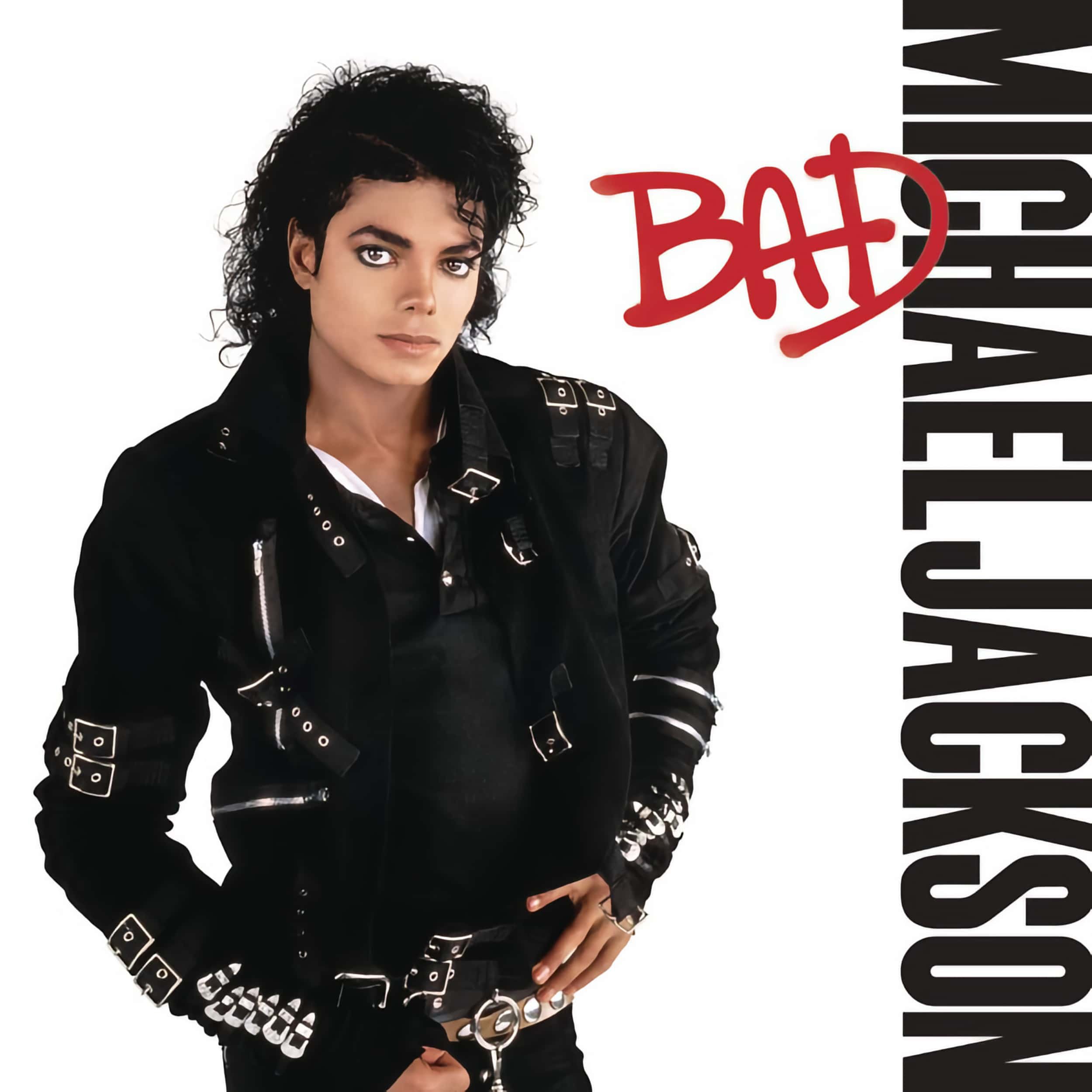
Topping Thriller was always going to be an uphill battle. While Bad may not have hit the heights of Thriller’s sales numbers, just like Off The Wall, I’d argue that it’s a stronger album than Jackson’s most iconic release. Of course, with sales exceeding 35 million worldwide, and five number one hits, Bad was an astronomical success in its own right and represents the pinnacle of Michael Jackson and Quincy Jones’ collaboration; a partnership that resulted in some of the greatest music ever recorded.
For anyone who has listened to the album or knows the hits, you’ll likely attest to just how extraordinary the music is. However, along with the new music came a new image, one that was considerably edgier and showed a rather different Michael Jackson. This shift would become particularly prevalent on songs such as Speed Demon, Dirty Diana, and Smooth Criminal, as Jackson’s musicality evolved with a greater focus on rock elements. Still, to call Bad a pop/rock record would be disingenuous because while it most certainly had those elements, it was primarily a pop (synth-pop) record that blended dance (disco and electronic vibes) and R&B, with a touch of rock. Upon further reflection, it’s easy to see Bad as a body of work in and of itself, with minimal influence from his time as frontman of both the Jackson 5 and The Jacksons. That isn’t to dismiss his incredible origins, but Jackson managed to do what few have done successfully: extract themselves from a successful group to launch a solo career that led to success and fandom beyond comprehension.
Naturally, part of this success must be attributed to Quincy Jones, as the three albums he produced with Jackson (including Off The Wall and Thriller) are arguably his greatest. While Jackson would continue to have incredible success with later releases, there’s no doubt that his collaboration with Jones was idealistic for both creatives, as Jones had never seen success of this calibre either. It was nothing short of a perfect match, and the high production values, pinpoint-perfect recording style, and overall mastering of the album have contributed to it being a timeless success.
While the latest 2012 Apple Digital Master is stunning, and simply sounds right via the Hi-Res Lossless presentation on Apple Music, several caveats will likely frustrate purists. This has nothing to do with the mastering or overall sound quality, but it’s the slight variances across editions that result in the latest offerings being different to those originally released. Credit for this additional information needs to be given to the good people over at Discogs, who have shared, in the notes, all the changes when compared to the original 1987 release of the album. The most notable change would be the omission of the spoken introduction for the song I Just Can’t Stop Loving You. Yet, despite playing the original cassette to death, I never noticed this or any of the other changes. Admittedly, it’s been a number of decades since I listened to the original release, as I no longer have that tape, but it perturbs me to know there’s a difference, and I was none the wiser. All that said, Bad is one of those albums that can be enjoyed via any variant, so let’s take a look at the songs that make up this legendary release.
Bad launches the album with a bombastic upbeat styling, yet despite how enjoyable the song is, the introduction has always been a little too sharp for my liking. It doesn’t detract from the album itself, but I usually make sure that the volume is lowered as I hit play. However, once the lyrics enter the mix and the rhythm begins to meld with my soul, Bad and its overall pop/rock attitude becomes an ideal album opener and a stunning title track that showcases Jackson’s shifting musical attitude.
The Way You Make Me Feel continues the energy and would have been a slightly more appealing opener, for that introduction is extraordinary. The sultry styling shows Jackson delving further into an attitudinal adulthood styling with this release, but it’s the rhythm and toe-tapping head-bopping brilliance that sets The Way You Make Me Feel apart from the album’s opener.
Speed Demon is one of the best songs from the record, and if you haven’t had a chance to check it out, take a look at the highly compelling music video. Aside from this aspect, Speed Demon’s strengths are based on the funk meets pop meets rock vibe, thereby making it another standout on an album that, in many ways, is akin to that of a Greatest Hits release.
Liberian Girl shifts the tempo considerably with a more atmospheric and smooth Caribbean styling. It’s the first time on the album that we hear Jackson’s gorgeous vocal in a softer tone, but it’s clear from the outset that for those who loved Jackson’s softer numbers on Thriller, they’ll feel right at home here. While Liberian Girl isn’t necessarily a standout, other than in composition and vocal delivery, it’s perfectly suited to the album and acts as connective tissue. It is interesting, however, that it was chosen to be the final single from Bad, for I believe it would have been best had Leave Me Alone been the final single released, particularly as it wasn’t included on the vinyl or cassette releases. Nevertheless, Liberian Girl is a lovely song.
Just Good Friends has a rough opening, but I’ll be damned if I don’t declare my love for this song. The funk, the synthetic instrumentation, and incredible lyrics and delivery ensure Just Good Friends has a little bit of everything, including a killer performance from Stevie Wonder. Interestingly, Just Good Friends was written by neither Jackson nor Wonder, yet it’s perfectly suited to both performers.
Another Part Of Me flows seamlessly and introduces a bolder funk aspect. There’s no doubt that Quincy Jones’ production cues can be heard throughout, but instead of the King Of Pop, Jackson should have been referred to, in this era, as The King Of Funk, for Bad, despite its harder edge, is a funk-driven musical wonderland with Another Part Of Me being a perfect example of this.
Man In The Mirror is one of Jackson’s most beautiful and powerful songs. As with Just Good Friends, Jackson didn’t pen this masterpiece, but there isn’t any other musician who could have recorded it better. It is a Michael Jackson trademark tune and is also one of the greatest songs ever recorded.
I Just Can't Stop Loving You may no longer have the spoken introduction, as it was edited out of most reissues, but in all honesty, it isn’t missed, and the flow between Man In The Mirror and I Just Can't Stop Loving You is far better sans the spoken word opening. As a pop-ballad, however, I Just Can’t Stop Loving You is a magical number. Siedah Garrett makes the perfect vocal counterpart to Jackson’s, thereby ensuring this is one of those timeless tunes that can appeal to anyone, for it’s a love song for the ages.
Dirty Diana takes things up a notch by delving back into the rock styling with guitar maestro Steve Stevens shredding up the song in a manner that is perfectly complemented by Jackson’s powerful vocal delivery.
Smooth Criminal is, arguably, one of Jackson’s most recognisable tunes. The tribal rhythm, combined with the song’s punchiness, tight basslines, and shimmering musical bed, creates a stunning soundstage, one that allows Jackson’s bullet-styled vocals to be perfectly positioned within the mix. In many respects, Smooth Criminal could be considered a textbook perfect song and, if nothing else, is amongst Jackson’s greatest and a highlight of the 80s.
Leave Me Alone is one of the most interesting songs Jackson ever wrote and recorded, but not because of the subject matter. The intriguing aspect is that it was exclusive to CD releases of the album and didn’t feature on original vinyl or cassette editions of Bad. As such, many of us, myself included, had to purchase the CD as well, for Leave Me Alone is such a compelling track that one couldn’t simply live without it. It makes me wonder, at times, just how many CD players were sold as a result of this exclusive bonus track. Nevertheless, despite Smooth Criminal being a perfect closer, Leave Me Alone takes the album to another level entirely. Additionally, if you decide to pick up one of the vinyl reissues of Bad, it’s important to note that the majority of reissues stay true to the record’s original linear structure, that is, unless you track down a copy of the Music On Vinyl reissue from 2009 that includes this brilliant closer.
While Thriller is given far too much focus within Jackson’s remarkable legacy, Bad is arguably his most defining album for the production, recording, and songwriting are all second-to-none. Most importantly, however, it showcased far more musical versatility than any of Jackson’s prior works; an aspect that was previously hinted at, but never quite achieved. The result is an album that is more than just a collection of chart-topping numbers, for this is a cohesive work that is nothing short of a musical masterpiece.