Viewing entries in
Australian Music

Midnight Oil - Blue Sky Mining (Album Review)

Comment

Midnight Oil - Blue Sky Mining (Album Review)

Following a masterpiece is no easy task as subsequent albums will always be compared. That said, can Blue Sky Mining match the performance captured on Diesel And Dust?

Yes, and no! 

Few would argue that both albums are exceptional in their own right, with Blue Sky Mining winning, amongst other awards, the Best Album of 1990 by the Australian Record Industry Association (ARIA). While I do consider Diesel And Dust to be the stronger of the two, both were released during Midnight Oil’s creative peak; that is until the release of RESIST in 2022. 

While the previous paragraph never quite answered if Blue Sky Mining matched the performance of Diesel And Dust, I will say that it was Blue Sky Mining that would introduce me to one of the greatest rock bands Australia has ever produced. 

I know, I still haven’t answered the proposed question, have I? 

Perhaps it is best to say that the two cannot be separated or compared for whenever I think of Midnight Oil, I class both records as exceptional examples of what Midnight Oil is musically and what they stand for. 

Known for their politically charged lyrics and energetic performances, Midnight Oil continued their powerful musical journey with this album and while the mastering isn’t quite as lush as that heard on Diesel And Dust, it is thoroughly enjoyable and allows one to turn the volume up without experiencing fatigue. That aspect is particularly interesting as the original releases of the album were significantly more dynamic but the brick walling applied here certainly doesn’t detract from the emotive energy of the recording. Dare I say, it enhances it for compression is not always a bad thing.

Blue Sky Mine launches the album with a driving rhythm and anthemic sound that perfectly suits Peter Garrett’s vocal style. Although, it is far from the strongest song to be featured on the album and the production is a little dated when compared to modern standards. Nevertheless, from the get-go, Midnight Oil showcase their social consciousness as they deliver their opinion on workers’ rights. 

Stars Of Warburton slows the pace with a solid rhythm. While there is little doubt that Stars Of Warburton isn’t at the top of anyone’s favourite Midnight Oil songs, that chorus is where the magic happens. 

Bedlam Bridge has a somewhat chaotic introduction that’s a little left-of-the-centre, but it’s compelling and draws you into the story and sonic wonderland that is to come. On Bedlam Bridge, Garrett’s vocals are amongst his cleanest ever recorded; unlike his earlier punk-era recordings. As with Stars Of Warburton, the chorus, with its infectious beat and catchy melody ensure that it’s not only memorable but is one of Midnight Oil’s greatest recordings. The only disappointment is the closing moments of the song as I feel the street sounds are distracting. Yes, I acknowledge the segue between Bedlam Bridge and Forgotten Years, but I feel the outro is unnecessary and should have been repositioned to the intro of Forgotten Years. It’s just unfortunate that I also consider the first few seconds of Forgotten Years to be the perfect length.

Forgotten Years is one of Midnight Oil’s most recognisable tunes and there’s little doubt as to why, as the band’s musical prowess, along with Garrett’s powerful vocals, combine with perfect synergy to form an exceptional tune.

Mountains Of Burma is evocative and is amongst Midnight Oil’s finest recordings. 

King Of The Mountain has to be one of the most energetic, infectious, and hard-hitting rock rhythms in rock and roll history. There’s a little Punk, a lot of Rock, and Garrett’s commanding vocals. What more could one ask for? 

River Runs Red slows the tempo considerably and very well could have been a Crowded House tune; that should be seen as a compliment. Sonically, River Runs Red is simply gorgeous. The musical layering is exceptional and is amongst the very best I’ve ever heard. It really is that good!

Shakers And Movers is a solid song, but I would class it as a B-side. However, a B-side for Midnight Oil, particularly at this point in their career, would be a hit for any other band.

One Country is another passionate performance with a powerful message from The Oils. Recorded with an acoustic focus, One Country becomes a contemplative listen that makes you sit up and take notice. It’s simply gorgeous! 

Antarctica is a mesmerising closer. It’s thoughtful songs such as Antarctica that are Midnight Oil’s trademark, but it’s even more important as the final track on an album for you can either play the record again or sit and reflect on the music you’ve just heard. Whatever you decide to do next, one thing is for certain, Antarctica leaves a lasting impression. 

Blue Sky Mining may not have reached the heights of Diesel And Dust, but it’s still one of the greatest albums Midnight Oil ever recorded. The higher production quality is noticeable, and appreciated, but it never sounds overproduced. Granted, fans of their earlier works may disagree, but you can’t please everyone. Nevertheless, with the album's powerful lyrics, energetic performances, and distinctive sound, Blue Sky Mining is a must-own, and listen, for fans and newcomers alike.

Comment

Midnight Oil – Diesel And Dust (Album Review)

Comment

Midnight Oil – Diesel And Dust (Album Review)

Ian McFarlane's Encyclopedia of Australian Rock And Pop references Diesel And Dust as “groundbreaking and one of the greatest Australian albums of all time”. I dare anyone to challenge that claim as Diesel And Dust is the quintessential album Midnight Oil should be remembered for.

John O'Donnell, Toby Creswell, and Craig Mathieson also thought so highly of Diesel And Dust that it was awarded the No.1 Australian album in their book, The 100 Best Australian Albums. They go on to say “in the process of reinventing themselves, Midnight Oil has crafted an album of brilliant, passionate, and intelligent songs that carry a message”.

Following these greats with any additional commentary on Diesel And Dust would be seemingly superfluous, but bear with me as I take a look at the music that makes up Diesel And Dust.

Beds Are Burning is iconic! With its catchy guitar riffs and anthemic chorus there’s little doubt as to why it has remained as revered as it has over the years. Addressing the plight of Australia's Indigenous people and their stolen lands also adds to the emotive element of the tune and while politically-charged lyrics are not everyone’s cup of tea, few would gripe about Midnight Oil’s lyrical direction as the music is off-the-charts good.

Put Down That Weapon is sonically gorgeous. In fact, while the lossless Apple Music stream is from the 2008 remastering sessions, you won’t be disappointed for Put Down That Weapon, in particular, is mastered with kid gloves meaning that the pounding drums and infectious guitar hooks give the song a rebellious edge, while Garrett's vocals convey a sense of urgency and conviction.

Dreamworld shifts the tempo and tone but the driving rhythm section and memorable melodies ensure that Dreamworld remains a captivating listen. That said, Dreamworld is one song that can be a little jarring on the senses, especially when listening repeatedly as it isn’t quite as smooth, from a sonic perspective, as the other songs featured on Diesel And Dust.

Arctic World is an atmospheric marvel and while some may dislike the styling of the song, the evocative nature of Arctic World ensures the listener sits up and takes notice of a song that addresses climate change; an issue that is still plaguing modern society.

Warakurna flows seamlessly from Arctic World with rhythmic perfection. It’s one of my all-time favourite Midnight Oil songs as it blends traditional rock elements with indigenous influences to deliver a song with a poignant message.

The Dead Heart is another sonic standout from an album that defines Midnight Oil. The combination of all musical elements and Garrett's passionate vocals creates an emotionally charged atmosphere that is both captivating and deeply moving from both literal and musical perspectives.

Whoah is sonically beautiful. Close your eyes, relax, and enjoy.

Bullroarer picks up the pace with driving guitar riffs and a rhythmic and infectious chorus that ensure Diesel And Dust is remembered for its high-energy sound as much as it is for its sociopolitical messaging. With a tip of the hat to Midnight Oil’s Punk roots, Bullroarer is a musical masterpiece and one of the best songs they have ever written and recorded. If you haven’t already, turn the volume up to 11.

Sell My Soul is a hidden gem with introspective vocals and a melodic arrangement. While it was never destined to be a standout hit, Diesel And Dust is all the better for Sell My Soul’s inclusion.

Sometimes showcases Midnight Oil’s Punk roots and while there’s absolutely nothing wrong with that, it isn’t the strongest song on the album, particularly with regards to the verses. The chorus, however, is another issue entirely for it’s thoroughly enjoyable and captivating.

Gunbarrel Highway, while not featured on the vinyl and cassette releases of Diesel And Dust, made it to many of the CD editions as a bonus track. While I’m normally dismissive of bonus tracks, Gunbarrel Highway is one exception as it is a perfect closing tune to the album; one that encourages me to play it again.

Midnight Oil’s Diesel And Dust is timeless from both the perspective of sociopolitical issues and musicality. This is one album whereby each track stands on its own but the collective nature of the album experience further amplifies a cohesive musical statement. While some will turn to it for literal meaning, others such as myself will prefer to enjoy the album for its masterful musicality. No matter how you choose to appreciate Diesel And Dust, one thing is for certain, this is one album that you need to have in your collection.

Comment

Rick Price - Heaven Knows (Album Review)

Comment

Rick Price - Heaven Knows (Album Review)

When I think of the very best that the Australian music industry has to offer, Rick Price and his debut album, Heaven Knows, are always at the top of my list. In a time when Australian music was flourishing with artists like John Farnham, Jimmy Barnes, and Diesel, Rick Price held his own and carved a niche for himself with this highly acclaimed debut from 1992.

With its heartfelt lyrics, soaring melodies, and polished production, Heaven Knows remains a timeless, and somewhat hidden, classic. Unfortunately, it has been out of print for decades and as much as I’d love to see it reissued on a physical format, it’s unlikely to happen. Never say never, of course, but this is yet another example whereby streaming and digital download stores reign supreme with regard to out-of-print music being readily available for new audiences to enjoy.

Speaking of the digital offerings, Heaven Knows is presented in lossless CD Quality on Apple Music and I really couldn’t be happier for it’s a superbly recorded, mixed, and mastered album. While The Essential Rick Price contains many of the landmark tunes from Heaven Knows, the mastering is too hot meaning that while there’s greater punch and forwardness to the songs you know and love, it becomes fatiguing to listen to. Yes, some albums sound better when the dynamic range is compressed, but that is not the case here.

What’s Wrong With That Girl? has an addictive rhythm with stunningly beautiful guitar work. Add Price's incredible vocal and you’ll be captivated from the very first note.

Not A Day Goes By continues to enthral with its poignant lyrics and Price's heartfelt delivery. The soaring chorus and infectious hooks make it an instant earworm; although, I would have liked the chorus to be sung in a lower register as it can become a little jarring on the senses. Regardless, Not A Day Goes By is a trademark Rick Price tune and is one that is thoroughly enjoyable.

A House Divided picks up the tempo with an excellent pop-rock tune that will see you singing along throughout the chorus. It’s perfectly suited to Price's style but I’d also love to see a country music artist reimagine A House Divided for there’s a touch of country within the song that I feel could be explored further.

Walk Away Renee is a fantastic cover of The Left Banke's original 1966 recording. With Price's knack for crafting catchy melodies, backed by rich arrangements that perfectly complement his soulful vocals, Walk Away Renee has never sounded better.

Heaven Knows is simply magnificent. Price's smooth vocals effortlessly glide over a lush musical arrangement, blending elements of pop, rock, and soul that create an instant connection with the listener.

Church On Fire is the first track on the album that doesn't immediately excite me and is a poor follow-up to Heaven Knows. It does, however, become more palatable as the song builds towards the chorus, but it isn’t likely to be anyone’s favourite song. Yes, it is sequenced poorly within the album structure, but I really don’t feel Church On Fire would have fit anywhere else on the album and I’d go as far as saying that it should have been omitted.

Life Without You is an enjoyable song with a touch of country, folk, and pop that fits perfectly with the overall style of the album and Price’s vocal presentation. It’s an album-only tune, for sure, but it’s songs such as Life Without You that make the album experience all that much more cohesive.

Foolin’ Myself has a killer guitar intro and is a solid pop-rock tune with a catchy chorus that will keep you on the hook.

Forever Me And You is a beautifully crafted ballad that showcases Price's ability to tug at the heartstrings. Price's impeccable vocal control knows few limits meaning that Forever Me And You, much like the rest of the album, is exceptional!

Fragile is a beautiful closing track that permits reflection while also encouraging listeners to play the album again.

Price’s ability to seamlessly blend different genres and deliver heartfelt performances has always set him apart from his contemporaries. The album's production is polished and timeless, allowing it to transcend the era it was released in. Hence, if you're a fan of heartfelt ballads, infectious melodies, and soulful performances, this album is an absolute must-listen; not just for fans of the Australian music scene but for music lovers worldwide.

Comment

John Farnham – Whispering Jack (Album Review)

Comment

John Farnham – Whispering Jack (Album Review)

Farnsy, as he is lovingly known to Australian audiences, is an icon of the pop music industry. Despite that, many international readers will likely be unfamiliar with his music as international sales of his records, and a lack of touring, guaranteed him a position as Australia’s preeminent musical entertainer. 

Released in 1986, Whispering Jack became a classic Australian pop rock album that showcased Farnham’s impressive vocal capabilities via a series of timeless tunes. A commercial success, reaching number one on the Australian charts for 25 weeks, and becoming the highest-selling album in Australia, Whispering Jack has gone on to sell more than 1.68 million copies, as of 2006. That may not seem a lot by international standards, but this represents superstardom for an Australian artist where the population of the country is just over 25 million (16 million, at the time of the album’s release).

Whispering Jack is known as Farnham’s breakout album, but it certainly wasn’t his first outing as a performer for it’s his twelfth studio album. Previously, Farnham had been a pop teen idol, billed as Johnny Farnham, the Justin Bieber of his day, and lead singer of the Little River Band in the early 80s, but he never quite reach household name status until the release of Whispering Jack.

Farnham’s history and the way Whispering Jack came about is legendary and it would be a perfect candidate for defining the meaning of the “Little Aussie Battler”. On that note, it's important to acknowledge that Glenn Wheatley, a former bass guitarist for The Masters Apprentices, was responsible for primarily funding the recording of Whispering Jack and without his support, this exceptional recording would never have seen the light of day.

Wheatley's support ensured the Australian music-loving public would also experience the equally exceptional Age Of Reason (1988) and Chain Reaction (1990) with his latter albums being solid but not career-defining. Nevertheless, the one thing that always captured my attention was Farnham’s unique vocal style as his timbre is immediately identifiable. Similarly, the lyrics he’s singing are pronounced so eloquently that there’s rarely a need to refer to the liner notes for guidance on Farnham-themed karaoke nights as there isn’t a mondegreen to be heard. 

Sonically, the lossless Apple Music stream, of the non-remastered, non-anniversary, edition of Whispering Jack sounds superb. The remastered version is simply too loud and becomes fatiguing to listen to despite the nice boost in the low mid-range. Of course, if you adjust your EQ settings you can achieve similar results without brickwalling the entire recording.

Before we take a look at the songs that make up this classic Australian album, I must comment on how striking the album artwork is. It’s clean, minimalist, 80s (yet not tacky), and is instantly recognisable from a distance. Few artists ever have artwork that is so highly polished that it matches the recording contained within, but this is certainly one of them. 

Pressure Down is an upbeat pop-rock anthem that sets the tone for the rest of the album. Farnham's powerful vocals and the catchy guitar riffs make this track an instant classic. While it will take you back to the 80s, with a pop-synth sound that was revolutionary at the time, it interestingly doesn’t feel that distant from modern pop music; further validating its longevity of relevance. 

Interestingly, you may notice a few seconds at the beginning of the song that, when listening on speakers, is seemingly void of anything. However, when listening via headphones, especially with high gain on and at ear bleeding levels (not recommended–please protect your hearing), it’s possible to hear the whispering element. 

Initially, I had thought that the spoken word was ‘a restructure of subject or language.’ Of course, Google is our friend and as such directed me to Jane Gazzo’s Herald Sun column. Gazzo details the spoken words as actually being ‘there is no restriction on subject or language.’ Yes, there is an interesting and somewhat humorous story behind this revelation, but I implore you to read Gazzo’s piece for the full story. Gazzo has also recently published John Farnham: The Untold Story. I’ve yet to read it, hence this isn’t an endorsement, but I’m looking forward to checking it out when I have time.

You’re The Voice is perhaps one of the most iconic and emotionally moving songs ever written and recorded and is arguably more relevant today than it was upon its release. It’s inspirational and puts humanity into perspective with simple yet clearly defined lyrics.

The inclusion of the bagpipes and a guitar solo in the chorus is nothing short of pop/rock gold for this is one power ballad that will captivate and guide you throughout the entire recording.

Farnham’s vocals on You’re the Voice are simply incredible and nothing short of world-class. Very few performers can sing with such raw honesty and I truly believe Farnham has never sung another song with such passion and conviction. Of course, it isn’t just Farnham, his musicians, and the production team that need to be acknowledged for this masterpiece as Chris Thompson, Andy Quanta, Keith Reid, and Maggie Ryder all deserve credit for writing such an incredibly beautiful song. ; one that has become an unofficial national anthem for Australia.

One Step Away has never really resonated with me. Perhaps it’s because it follows one of the greatest songs ever recorded, but it just feels out of place in the album’s sequencing. It’s fair to say that One Step Away is no one’s favourite track, for it’s a B-side at best, but Whispering Jack wouldn’t be the same without it. 

Reasons is a song I love because it was my first introduction to the whiplash sound in music. Yes, this synthetic sound was available before a hundred whiplash apps made it to your smartphone and into the zeitgeist. Additionally, the beat is addictive, as is the catchy guitar riff, memorable chorus, and atmospheric backing. It’s rather complex, with many elements to listen to, yet the soundstage never feels crowded. Reasons is what pop rock music is all about and you will definitely want to turn the volume up to 11.

Going, Going, Gone has an introduction that I feel detracts from the song and the flow of the album. Additionally, while the song may appeal to some, it isn’t a personal favourite. That said, it grows on you and over the years I’ve come to appreciate it as a solid addition to the album.

No One Comes Close has a bass guitar intro that’s simply magnificent (thank you, Roger McLachlan) as it forms the overall tempo of the tune. I mention this because I feel the bass guitar remains one of the most underrated instruments in music reproduction and creation and I love when it’s more prominent in a mix. While No One Comes Close doesn’t break any new ground, it’s a hidden gem, is thoroughly enjoyable, and ticks all the relevant boxes for what an upbeat pop-rock tune should sound like.

Love To Shine is a more experimental track that features a funky bassline and electronic elements to form the basis of a song that you just won’t be able to stop yourself from singing along to. Farnham's vocals are once again on point, as he delivers the song's lyrics with passion and energy, and while it was never released as a single, it probably should have been for I dare say it would have done well. 

Trouble is one of those truly unique tunes that are difficult to articulate. That said, it’s thoroughly enjoyable and I consider it to be one of the strongest songs from Whispering Jack for it is the epitome of the era from which it came. 

A Touch Of Paradise is, in my opinion, a sonic masterpiece. It’s incredibly soothing but also encourages you to turn the volume up and sing along to a simply gorgeous chorus. Farnham has sung many incredible ballads throughout his career, he’s a master of the craft, but there is something special going on here for A Touch Of Paradise, not unlike his performance on You’re The Voice, further showcases what a spectacular vocalist he is. 

No one could possibly outperform Farnham on this tune and even the original recorded by Mondo Rock, on their 1982 album Nuovo Mondo, is substandard by comparison. That’s not to suggest that Mondo Rock’s version is flawed, for it’s not and had Farnham never covered the song, I’d be singing the praises of the Mondo Rock recording as it’s got a blues-based rock styling that is thoroughly enjoyable. 

Let Me Out is the perfect song to close Whispering Jack on. Its edginess is its core appeal for the song is rooted in the pop rock 80s style that includes a little bit of everything, including a killer guitar solo, backing vocals, and some really believable synthetic horns that add to a jazzy feel not unlike Robert Palmer’s Addicted To Love. What’s not to like?

Overall, Whispering Jack is a classic Australian pop-rock album that showcases John Farnham's impressive vocal prowess. From the upbeat anthems to the poignant ballads, each track on the album is a standout in its own right, and the record as a whole remains a beloved Australian classic. If only all music could be this good!

Comment

Leo Sayer – Leo Sayer (Self-Titled Album Review)

Leo Sayer – Leo Sayer (Self-Titled Album Review)

Released in 1978, Leo Sayer’s self-titled album, his sixth studio recording, is a timeless classic that showcases the singer’s vocal prowess and musical talents. With its blend of pop, rock, and disco, this album offers a diverse range of musical styles that are guaranteed to captivate listeners from start to finish.

Captivation naturally begins with the album artwork and while it isn’t the most noteworthy, or inspirational, of Sayer’s career, it stands out from the crowd as the minimal design draws your eye directly to the typeface and Sayer’s portrait. In the modern era, it’s easy to overlook album artwork but in 1978, when the predominant music format was the vinyl record, it was often as essential as the music was for sometimes the first encounter of an artist would be the cover design that you’d see each time you visited your local record store. 

Of course, for a record to be considered a classic album, as I consider this, the music and sonic reproduction have to be compelling. In this case, Sayer’s self-titled release is stunning. Presented as a lossless CD counterpart, via Apple Music, some may argue that there is room for improvement given that it isn’t presented as a Hi-Res Lossless Apple Digital Master. I, however, wouldn’t agree with that perspective for whoever undertook the mastering of this release got it right. There are no glaring omissions or elements that I feel need addressing. Subsequently, a remaster simply isn’t required and has the potential to further degrade the quality of the recording by succumbing to loudness demands. Sometimes it is best to leave well enough alone and simply enjoy the music. 

Stormy Weather opens the album with a catchy pop-rock tune that sets the tone for what’s to come. Sayer's soulful vocal shines as he extends every note right to the edge of his range as he sings about life’s ups and downs, accompanied by incredible instrumentation and infectious melodies. 

Dancing The Night Away, an Amazing Rhythm Aces cover, is a fantastic tune and is far superior to the original with its groovy basslines and funky guitar riffs. That’s perhaps one of the greatest aspects of Sayer in that while he’s recorded many covers, he always manages to extract the soul of the song, put his own spin on it, and match, or in this case surpass, the original.

I Can’t Stop Loving You (Though I Try) is a beautiful heartfelt ballad that showcases Sayer’s evocative vocals and is one of the highlights of this self-titled release. 

Phil Collins recorded the song for his 2002 album, Testify, but unless you’re a fan, it isn’t worth your time as it’s a second-rate interpretation at best. While I appreciate artists covering music they enjoy, if they can’t match or beat the original, I’d prefer they refrain from recording it in the first place. 

La Booga Rooga is a cover of Andy Fairweather Low’s 1975 original, an exceptional recording in its own right, but Sayer removes some of the blues elements and replaces them with an addictive up-tempo pop-rock technique that is perfectly suited to his style and the era. As to which is better, well it all comes down to personal taste and while I thoroughly enjoy both renditions, my preferred is Sayers; likely as it was his version I’ve always been more familiar with and the fact that his energetic vocal performance adds to the song’s overall charm, making it a joy to listen to. 

Raining In My Heart is a Buddy Holly cover and just like La Booga Rooga, I appreciate both interpretations, for different reasons. If I’m in the mood for the sound of the 50s, or Buddy Holly in general, then his version is superior. As part of Sayer’s self-titled album, however, Raining In My Heart is a masterful recording that complements Holly’s original while simultaneously ensuring this classic tune has a modernised feel; one with a combination of country-folk and pop-rock styles. Regardless of your preferred version, you simply can’t go wrong with a song as incredible as Raining In My Heart. 

Further to that, may I suggest you also check out the versions by Anne Murray and The Dave Clarke Five for they too are exceptional interpretations.

Something Fine, a Jackson Browne cover, is a beautiful interpretation that is very close to the style of Browne’s original recording. Both are so good that I can’t pick a preferred version. That’s actually a good thing as Sayer’s interpretation takes nothing away from the original. 

Running To My Freedom sounds a little dated, compared to the other songs on this self-titled release, but it’s a lovely classic rock tune with a catchy melody that will appeal to many.

Frankie Lee is a great upbeat song. There’s just enough of a rock edge to be considered a rocking good tune and the instrumentation throughout is the perfect accompaniment to Sayer’s vocal.

Don’t Look Away is another upbeat tune with Sayer’s signature pop-rock-infused styling. The instrumentation on this track is of particular note, with a driving rhythm section, pulsing keyboards, and fiery guitar riffs all coming together to create a rich and dynamic sonic landscape. Without a doubt, Don’t Look Away is a hidden gem and is one of the best songs Sayer ever recorded. 

No Looking Back is a beautifully crafted song that showcases Sayer's considerable talents as both a songwriter and performer. It is somewhat reminiscent, in style, of Elton John’s classic era with its piano and symphonic backing, but more importantly, it closes out the album just as closing tunes should whereby they allow for contemplation as well as compelling the listener to play the album again. 

In conclusion, 1978 was a year that yielded an incredible range of music, from all genres and artists, and Leo Sayer’s self-titled release is no exception for it’s a masterpiece that has stood the test of time and remains to this day a landmark release of the 70s. 

The Angels (Angel City) – Face to Face (International Version) [Album Review]

The Angels (Angel City) – Face to Face (International Version) [Album Review]

Australia’s answer to AC/DC wouldn’t necessarily be the correct way to introduce a review for The Angels’ 1978 release Face To Face, but it wouldn’t be wrong either. 

While AC/DC will always be billed as one of Australia’s greatest exports, their success ultimately meant that their hometown sometimes feels a little despondent for the beloved rockers have spent more time abroad than at home and when success came calling, who can blame them for embracing any and all opportunities. The Angels, however, never quite matched the international heights of AC/DC and are very much Aussie to the core; still playing the pub and club scene, in the land down under, to this day. 

None of that, of course, means that The Angels didn’t see international success, for they’ve been incredibly influential, and successful, in their own right, but the troubling aspect that would haunt music lovers, just as it did with AC/DC, was the variances in editions between the homegrown Australian release of their early albums and the international versions. 

Known in some regions as Angel City, The Angels’ second studio album Face To Face would also consist of a different track listing for our international neighbours; an element that may have worked when the world was less connected than it is today, but as a byproduct of that era, it becomes frustrating when deciding which version of the album is the one that is best to listen to. 

In recent years, many artists that have had differing regional releases have chosen a standard release, usually the international edition, to be the official release henceforth, but The Angels haven’t taken this approach and instead give fans the ability to choose for themselves as three versions of this incredible album have been made available via Apple Music. While it can be fascinating to see varied editions, it also has the potential to cause indecisiveness and is therefore essential that after preliminary listens, music lovers decide on one particular release to focus on henceforth. 

The first version to consider is billed simply as Face To Face and contains the original cover art and track listing that one would have experienced if one picked up a copy in Australia in 1978. It isn’t great! That statement will likely be met with criticism, but Straight Jacket is a terrible opening tune and thankfully isn’t included on the international release. Love Takes Care is also album filler whereas the entirety of the international edition is a non-stop rocker. Live It Up is a solid tune but the live aspect doesn’t flow well from Marseilles. Songs that I do wish had made it to the worldwide release, however, are Be With You, Outcast, and I Ain’t The One; fantastic tunes!

The second version is an expanded release of the original album that also includes five live tracks and is billed as Face To Face (Alberts Classic Series). I’ve never been a fan of adding live recordings to the back end of studio albums, but in this case, they’re solid performances and a value-added proposition for fans who enjoy live recordings.  

The third option, and my preferred, is the international release that retains the Angel City band name, on the album artwork, despite being filed under The Angels. It simply has a flow that works far better than the original Australian release thereby ensuring the album experience remains paramount. As for which edition you will prefer, well I can’t say as we all have subjective likes and dislikes, but for this review, we’ll stick with the international release for simplicities sake. 

Listening via Apple Music, this edition of Face To Face is the CD counterpart in every way sans the tactile aspect, of course, and it rocks. It isn’t the final word in audio quality and I feel a remaster is in order, but a slight boost in the mid to low end will likely result in a more appreciable experience overall for most listeners. Yes, Face To Face was remastered for a CD reissue in 2011, but the Apple Music stream is not sourced from that release. As to why, I’m honestly not sure, but I can surmise that it was due to the CD being re-released under the Angel City banner rather than The Angels. Hence, when it came to streaming, the older mastering was supplied to Apple Music et al. I know, it’s a tad confusing, but at this point in time, if you’re after the remastered edition, it appears the only way to get a hold of it is to track down a copy on CD. 

Take A Long Line is a high energy upbeat number, with an addictive groove, that you’ll immediately gravitate towards. While it could be said that Take A Long Line is a run-of-the-mill rock and roll tune, and I’d likely agree, there’s nothing wrong with that as it opens the album well and sets the tone for the entire record.  

Marseilles is one of those songs that you’d be forgiven for thinking was an AC/DC tune, as the lead guitar, and overall composition throughout the song is eerily similar. Of course, Doc Neeson’s vocal is noticeably different to Bon Scott’s, so while correlations exist, they cease to be as prominent once the vocal kicks in. Now, this may be blasphemous to say but I feel Neeson is a better vocalist than Scott. Neeson has a smoother and more well-defined vocal with a little less treble that I thoroughly enjoy as I find it to be a little less fatiguing. Of course, your subjective opinion may, and likely does, differ from mine, but that doesn’t take away from the fact that Marseilles is a killer rock and roll tune by any standards. 

After The Rain is toe-tapping head-bopping gold with a killer, albeit brief, guitar solo. What a great tune!

Am I Ever Gonna See You reminds me of the music featured in countless coming-of-age films. Hence, the musicality is a little cringeworthy. It doesn’t mean, however, that it’s a bad song, but it isn’t one that I seek out on its own, outside of the album listening experience. 

Shadow Boxer has a punk feel to it. Perhaps this is a perfect example of how The Angels differ from AC/DC in that while much of their music is a replication of itself, songs like Shadow Boxer show that The Angels were capable of far more musical diversity.   

Comin’ Down is a rocking tune and is one of The Angels’ greatest recordings. 

Out Of The Blue is more mellow and will likely remind you of artists such as David Bowie, Nick Cave, and Lou Reed. It’s a great song and regardless of The Angels being inspired, or inspiring others, I love making these correlations, whether they were intentional or not, as it further explores my love of music. 

Can’t Shake It is It’s A Long Way To The Top; an AC/DC classic. As with Marseilles, the similarities subside once the lyrics enter the mix, but that guitar lick is so memorable that the similarity makes me want to spin up High Voltage.

Waiting For The World has my body moving involuntarily to the rhythm; a sign of an exceptionally good song!

No Exit is a perfect closer. The rawness presented throughout, along with the guitar tracking, overall rhythm, and Neeson’s vocals, easily ensure No Exit is one of the best songs from Face To Face

While the correlations between The Angels and AC/DC are unavoidable, in a large way due to similarities within the production team, The Angels offer music that not only pays homage to the original trendsetters but offers significantly more diversity, thereby resulting in a stunningly fresh rock and roll album that you’ll want to play time and time again.

AC/DC – Powerage (Album Review)

Comment

AC/DC – Powerage (Album Review)

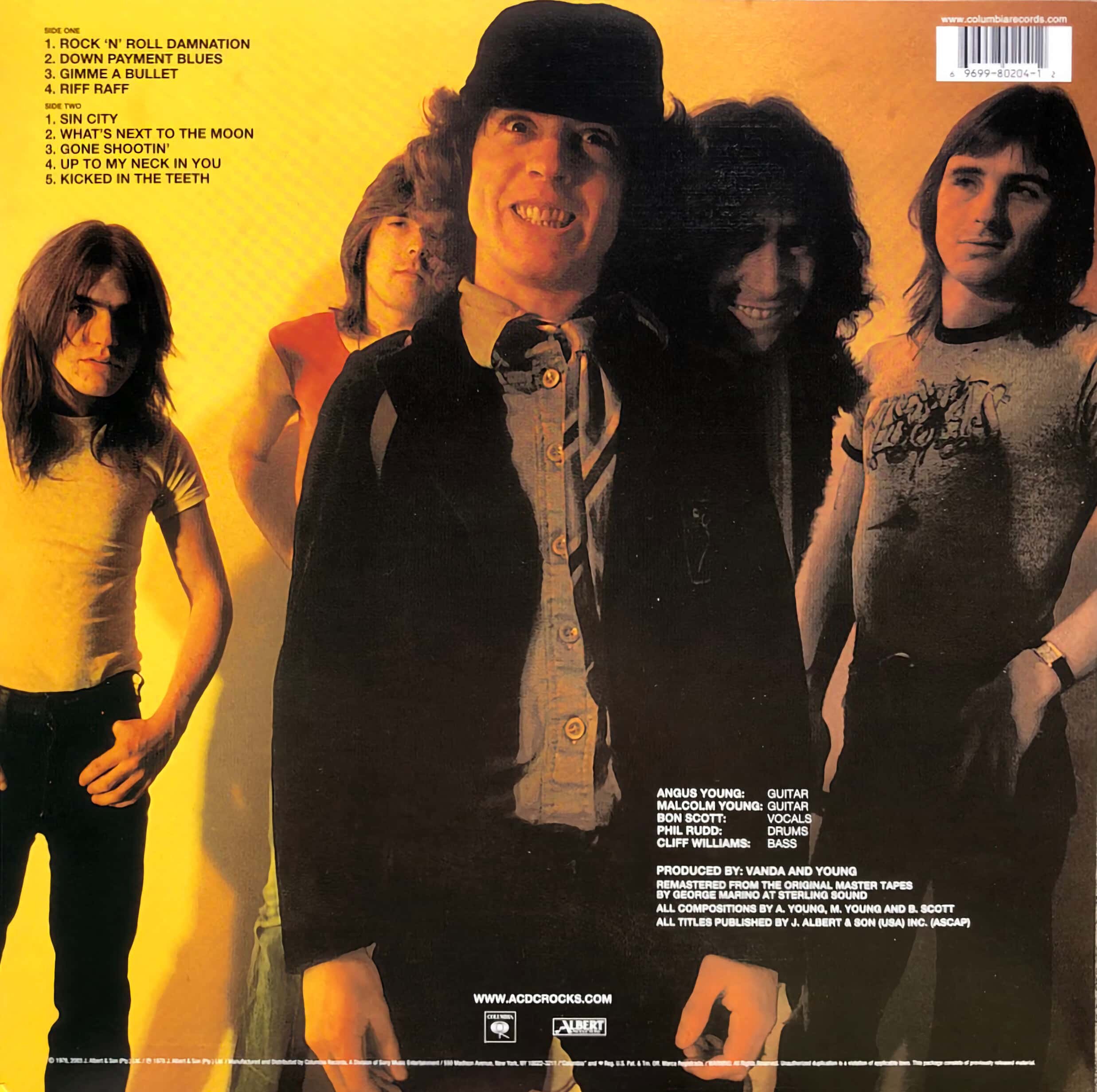
As a longtime fan of AC/DC, I’ve been fortunate enough to collect all their releases, yet despite a massive back catalogue of music, there are some albums, such as Powerage that simply don’t get spun that often. Yet upon putting it on the turntable, I marvel at the sonic masterpiece before me and wonder just why I don’t seek Powerage out more often. 

Released in 1978, Powerage is the rock legend’s fifth studio album and is easily one of the best Bon Scott era recordings. Despite loving Highway To Hell, I may even go as far as declaring Powerage the best 70s release from AC/DC. Yet, I just don’t seem to reach for it. It’s as if it has been overshadowed by Highway To Hell, Back In Black, and Scott’s unfortunate passing in 1980.

As a result, underrated, is likely the best way to describe Powerage for it’s a monster of an album but it just isn’t the one that everyone talks about, nor is it the album that you immediately think of when you think of AC/DC. While I acknowledge that I prefer Brian Johnson’s vocal style, and that leads me more to his side of the AC/DC catalogue, Bon Scott was an incredible vocalist in his own right and no more is that true than when listening to his searing vocals on songs such as Rock ’N’ Roll Damnation, Riff Raff, and Sin City.

Of course, Powerage is more than one single man as it is also Cliff Williams’ first recording with AC/DC. Bass player aficionados can best debate his appointment, but you won’t find me criticising Mark Evans; the man he replaced. In fact, and this will undoubtedly be blasphemous to some, I don’t hear a radical shift between the two players. Perhaps Williams played it safe, and in many ways, he was never a flashy bass player, but I’d argue that he never really stood out because his main role was to keep a steady pulse that connected all band members thereby guaranteeing the hard rock blues-based vibe all AC/DC fans know and love.

Speaking of AC/DC’s sound, let’s shift our attention to the sonic presentation and distribution of Powerage. While I’m fortunate to own the 2003 vinyl reissue, along with having access to the Hi-Res Lossless Apple Music stream, it is imperative to note, for those who are fans of Powerage, that different mixes exist. Yes, dear reader, the UK release was originally issued with an entirely different mix of the album. That mix is subsequently no longer available, as the US mix was chosen as the gold standard. Hence, if you wish to delve into the minutia of Powerage, you might want to seek out an original UK vinyl or cassette pressing. To be clear, I’ve never heard it and for me, at the moment, I’m content with the worldwide reissue from the 2003 remastering sessions. 

As with all AC/DC vinyl reissues from 2003, Powerage is immaculately presented with an inner sleeve that details the era in relation to what was happening within the band and how those shifts impacted the music. In many respects, it is akin to a short biography that offers fans a little insight into the recording process of the album. 

While the liner notes are well presented regarding the outline, band photographs, and production details, it is sans lyrics. In many respects, that isn’t really an issue, as the original releases of the album didn’t come with lyrics either, but if you’re a fan wanting to ensure you don’t embarrass yourself with a mondegreen during your next karaoke night, you’ll have to turn to Apple Music’s lyrics, rather than the physical counterpart, for that aspect. 

As you’ll likely be able to tell from the photographs, the record itself is visually magnificent. Simply designed album labels really play to the no-nonsense approach that has been an AC/DC trademark for decades. Plus, and even more importantly, the sonic reproduction that comes off the record is spectacular with plenty of headroom, thereby allowing you to turn the volume knob up and rock out. 

Similarly, the Apple Music edition, an Apple Digital Master, sounds great but arguably is a little more shrill and compressed, unless you boost the bass, thereby resulting in a sound that doesn’t hold together as smoothly as the vinyl counterpart; especially when pumping the volume. That isn’t to suggest that you’ll be disappointed with the digital counterpart, but if you have access to a quality turntable, you’ll likely have a more immersive experience. 

The differences are particularly noticeable on Sin City. As solidly as the bass solo is reproduced, on the digital release, the surrounding musical elements, outside of the solo, are simply less dynamic and jarring on the senses. When listening to the vinyl record, however, you’ll feel the bass in the deepest depths of your soul. Similarly, the opening of What’s Next To The Moon is incredibly open on the vinyl reissue but feels more restricted in soundstage depth and width on the Apple Music release. 

The result is that, for this fan, the vinyl release is simply more enjoyable to listen to. That doesn’t mean that I don’t listen to, or thoroughly enjoy, the streaming version, for you can’t take a vinyl record with you everywhere you go. It’s simply a case of, if given a preference, I would choose the analogue format over the digital version in this particular instance. The delta is small, however, and if you don’t compare the versions, as I have, you’ll not know what you’re missing out on.

Rock ’N’ Roll Damnation is a killer opening track that harks back to It’s A Long Way To The Top (If You Wanna Rock ’N' Roll); another exceptional opener on High Voltage. The guitar work here is exceptional and Scott’s vocal is searing. Interestingly, Rock ’N’ Roll Damnation only saw the light of day as the record label felt Powerage needed a radio-worthy tune. I’d argue there are several single-worthy songs to be heard on Powerage, but radio-friendly, perhaps not. Nevertheless, Rock ’N’ Roll Damnation has become a fan favourite and a mainstay in AC/DC’s back catalogue, even appearing on their compilation soundtrack Iron Man 2. Plus, it’s about the coolest song to have ever featured handclaps; an often overused and somewhat corny musical technique. 

Down Payment Blues could have very well ended up on Stiff Upper Lip; an incredible album in its own right. Just take a listen to this full-bodied blues-based rhythmic rock masterpiece and you’ll see the correlation. It’s an incredible song, one of my all-time favourite AC/DC tunes and another Bon Scott vocal extravaganza. This is blues-based hard rock at its very best! 

Gimmie A Bullet is a solid rock and roll tune, but it’s nothing to write home about, and certainly pales in comparison to Down Payment Blues. Still, Powerage wouldn’t be the same without it.

Riff Raff is an off-the-charts riff-driven song that will have you air-guitaring every time you hear it. The riff is so memorable that you’ll even hear the influence on Rick Springfield and Dave Grohl’s The Man That Never Was, from the Sound City – Reel To Reel documentary soundtrack.

Sin City is a monster track for the opening of Side Two of the record. Just like the seductiveness of Las Vegas, which the song is influenced by, Sin City will reach down to the lowest depths of your soul, infusing it with a masterful rhythmically charged, bass-focused, sonic masterpiece. What more could one ask from AC/DC? More music, certainly, but Sin City is utterly perfect!

What’s Next To The Moon has a guitar tuning that I adore as the level of distortion is spot on. A great song!

Gone Shootin’ is a barebones rock and roll tune but it has such an incredibly addictive rhythm that it becomes an instant classic and a highlight of Powerage

Up To My Neck In You continues the rhythmically charged attack on the senses and while Up To My Neck In You was never going to be a standout tune, Angus’ lead guitar licks ensure that Up To My Neck In You is a hidden gem. 

Kicked In The Teeth has a killer, primarily, vocal introduction that is simply incredible. From a vocal perspective, I’d suggest that this is one of the best vocal performances of Bon Scott’s career. If nothing else, it’s a perfect closer for Powerage with a drilling rhythm that will make you want to play Powerage again and stay within AC/DC’s extensive catalogue of music.

Powerage, while underrated, is amongst AC/DC’s greatest recordings as it highlights the raw power and energy of their music. It’s all killer, no filler, pure blues-based rock and roll. If you’re a fan you already know this, but when was the last time you spun this 1978 rock classic? You may be surprised just how long it has been but if you’ve made it this far, you’ve got no excuse; give it a spin!

Comment