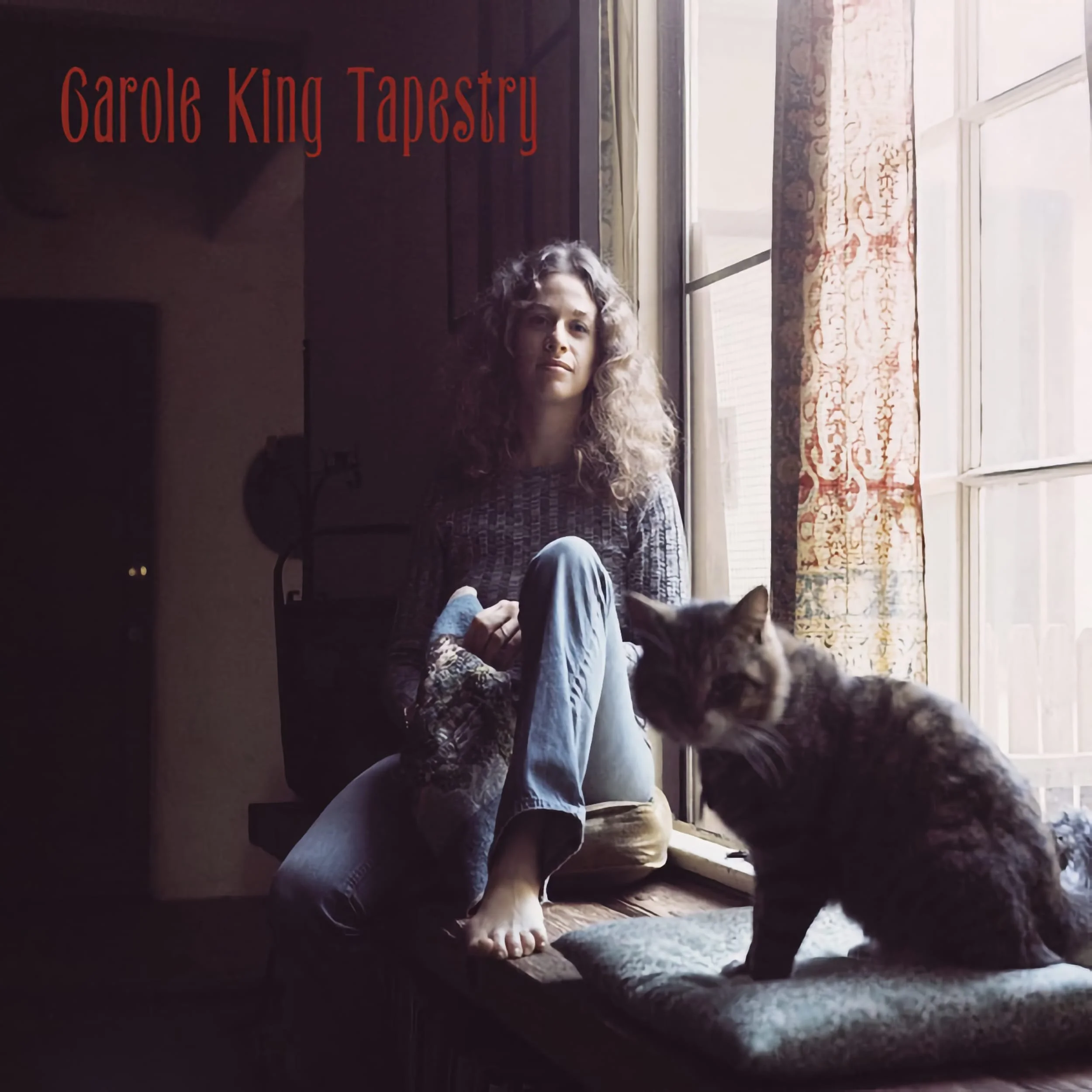
Released in 1971, Tapestry remains one of the most timeless and revered records in the history of recorded music. It’s an album that almost everyone knows of, even those with little interest in the singer-songwriter genre. With sales exceeding 25 million units worldwide, Tapestry is also among the most commercially successful and culturally significant releases of the 20th century, as it touched the hearts and souls of many music lovers through King’s dulcet tones and incredible songwriting, which spoke to a generation while remaining relevant all these years later.
While an album’s reputation is often built upon sales figures alone, Tapestry is one of those rare albums that is so universally admired that many would argue it belongs in any “serious” record collection; a claim that’s difficult to dispute, but it has lived up to its legendary status with its enduring appeal. Aside from it being a landmark release, the influence this record has had on musicians is near-impossible to measure, for its reach goes beyond the songs as the album became part of the zeitgeist, without it ever intending to.
Of course, commercial and critical success doesn’t always guarantee artistic greatness, but in this case, it is most certainly deserved. Tapestry demands attention, and even its few rough edges and imperfections lead to the album’s lasting character. At times, Tapestry sounds as though it was conceived almost like a fully realised demo recording rather than a pristine studio production. It is this rawness, however, amongst an exceptional selection of songs, that makes it so compelling. While the songwriting is excellent throughout, King’s vocal performances are deeply human and emotive, while the underlying musical bed is often understated but equally compelling in its support and delivery of King’s masterful tunes.
Tapestry may lack some of the spit and polish of its contemporaries, but the grittiness and associated warmth of the recording combine to add to the record’s patina in a way that perfectly suits the source material. No truer is this than when listening to the Hi-Res Lossless Apple Digital Master, available via Apple Music. While I’ve had the good fortune to have heard a number of the physical editions, with the most recent being the Music On Vinyl pressing (MOVLP035), I’ve stopped trying to seek out the “best copy” as each mastering and reissue presents the album differently from the one before it, yet the Apple Music stream simply sounds right. Granted, that isn’t a very helpful description, but the shrillness that can be heard, via some editions of the album, is dialled back, preventing a detractive element. Undoubtedly, there’d have to be a killer physical version available; I just haven’t come across it yet, but modern listeners can’t go wrong with the Apple Digital Master.
I Feel The Earth Move has a compelling bluesy-jazz meets Motown vibe, but most importantly, it’s an ideal opener as it sets the tone for everything that follows with its sense of urgency and confidence. King’s vocal is full of emotion, but it’s the rolling piano groove and the hook-laden musical bed that brings everything together.
So Far Away is a beautiful song. While it can be seen as a stark contrast to the album’s opener, the record is tracked so well that it doesn’t cause a jolt to the senses. Instead, you’ll find yourself sitting back, enjoying what can only be described as one of the loveliest songs in King’s arsenal, for every aspect of the recording is handled beautifully.
It's Too Late is a defining number and has that quintessential ’70s pop styling that, if you’re a fan of the era, you’ll immediately fall in love with, for this is one incredible song.
Home Again is brief, but the polished yet raw approach of the recording, with King’s vocal front and centre in an otherwise immersive soundstage, is akin to a heavenly experience. It also happens to be one of the songs that benefits most from the Apple Digital Master treatment, for King’s vocals, on this song in particular, have a tendency to distort in the upper ranges.
Beautiful is a lovely uplifting number, but as great as King’s recording is, check out Anne Murray’s cover for it’s the greatest interpretation of “Beautiful” that I’ve ever had the privilege of hearing. Barbara Streisand’s rendition isn’t bad, either, but I do wish Elton John had recorded it; I dare say he would have knocked it out of the park.
Way Over Yonder is a lovely song that knows no bounds for its composition taps into numerous musical genres, most notably its gospel undertones, to create another standout from an already exceptional album. Add to that, Curtis Amy’s mystifying saxophone at the midway point, and what you’ve got is one of the most memorable and relaxing songs from Tapestry.
You've Got A Friend is, undoubtedly, the centre point of the album and is nothing short of pure perfection. There’s little doubt in my mind that “You’ve Got A Friend” could easily be considered the greatest song ever written, and for good reason, for it’s the emotional centrepiece of Tapestry. Despite being later popularised by James Taylor, and his rendition is magnificent, King’s recording is glorious in its own right.
Where You Lead is a solid pop/folk number, but it’s largely forgettable when contrasted against the other exceptional recordings on this release. Don’t get me wrong, it’s a good song, and King does an admirable job, but there’s a bolder and more bombastic version lying just below the surface that could have been recorded.
Will You Love Me Tomorrow? was originally recorded by The Shirelles, but their rendition is easily forgettable. Thankfully, King reclaims this classic and records it in such a spectacular manner that it adds new depth to what was already an iconic song. While numerous covers have been recorded, few compare to the passion that King portrays through this, one of her very best recordings.
Smackwater Jack has an addictive rhythm that will see you toe-tapping and head-bopping from the very first note to the last. It may not be the most well-known track from the record, but there’s little doubt that it contributes to the overall album experience.
Tapestry is a simply beautiful title track, one that is understated and reflective, but it’s also a standout and somewhat of a hidden gem.
(You Make Me Feel Like) A Natural Woman closes the album with one of King’s most enduring and powerful songs. For lack of a better term, it’s a classic to end all classics and has been covered by the best of the best. While purists will agree that King’s recording cannot be beat, Aretha Franklin's version is stunning and amongst the greatest renditions ever recorded, for it is true to the song’s original intent and direction, but it’s also not overproduced, unlike Celine Dion’s recording. Regardless of the version you prefer listening to, “(You Make Me Feel Like) A Natural Woman” is a magnificent tune and a quintessential closing track; one that will compel you to play the album again whilst simultaneously encouraging you to sit back and contemplate the music you’ve just heard, for songs like this know few peers.
More than five decades on, Tapestry remains one of the most essential and emotionally resonant singer-songwriter albums ever recorded. From its unforgettable melodies to its understated songwriting, Tapestry captures King’s honesty and warmth, resulting in an album that’s both deeply personal and universally relatable. More than that, Tapestry offers a quintessential album experience; one that is timeless and continues to justify its place amongst the greatest records ever released.