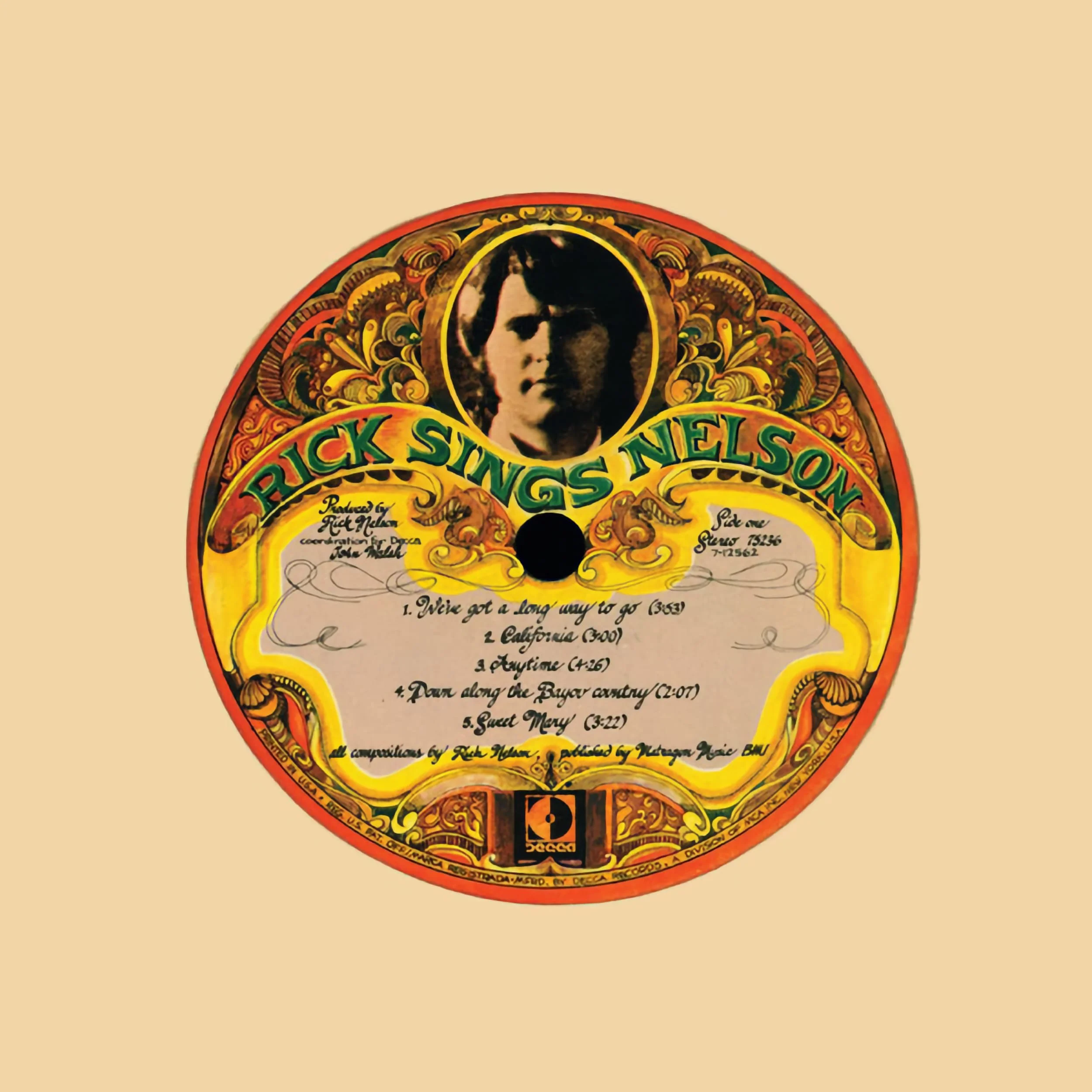
The adage of “they don’t make music like that anymore” certainly applies to this classic 1970 release. Ricky Nelson may not be a household name, certainly in the modern era, and outside of the United States, but when listening to this rockabilly meets pop release with a touch of country rock, you’ll be left speechless for the song selection, recording, and overall mix of the album is extraordinarily good. Its Southern California styling is reminiscent of the Eagles' early recordings and Crosby, Stills, and Nash, but without the slightly more driven rock edge. About the only lacklustre aspects of this release are the cover art and the album title. Seriously, Rick Sings Nelson, what were they thinking? While we can give it a pass, given the era, it hardly compels you to pick up the record; a shame considering just how good the music is.
Rick Sings Nelson is, remarkably, the artist’s eighteenth studio album, and it could be suggested that his multi-talented creative output, having appeared successfully in film and television, limited his appeal within the music industry. Few artists have been able to cross-pollinate the creative arts successfully, and in Ricky Nelson’s case, his musical endeavours up to this point were considered to be bubblegum music. Yet, to pigeonhole Rick Sings Nelson is to do a disservice to the artist himself, as well as to artificially limit one’s own musical scope, for this selection of original songs deserves far more acclaim than they often receive. Many could have become chart-topping classics, had they been released as singles, but that wasn’t to be, as Rick Sings Nelson has gone largely forgotten outside of the few music fanatics who keep tabs on underrated releases.
As for availability, that is where streaming comes in, for this release is somewhat rare aside from the original LP pressings. While never released on Compact Cassette, there have been occasional CD reissues, but only a single standalone reissue, from Germany, in 1993. Rick Sings Nelson / Rudy The Fifth and the 7-CD compilation, The Last Time Around 1970-82, are the only other releases on the format, and neither has been reissued for several years.
While another physical reissue is highly unlikely at this stage, the CD-quality lossless Apple Music stream is more than adequate in representing the recording. The mastering is pleasant and will appeal to just about everyone, as the softer tunes meld perfectly with the more upbeat, thereby making it a highly enjoyable listen. While it could be suggested that a remaster would further amplify this classic record, a shift to one’s EQ settings will likely achieve a subjectively desired result, as the existing presentation isn’t far from perfect. Yes, a vinyl edition may offer a little more smoothness, due to the format’s technical limitations, but it isn’t a guarantee. Regardless, given the obscurity of this release, one needs to be satisfied with the versions readily available, so take a moment and hit play on the stream below as we take a look at the music that makes up this 70s hidden gem.
We've Got Such A Long Way To Go is a beautiful opening number with a poetic-styled vocal that is highly captivating. Setting the tone for the entire album, “We've Got Such A Long Way To Go” has a touch of every element you’re likely to hear throughout, and I can’t help but wonder if there was a little influence from this tune for Lynyrd Skynyrd, for as I listen to this masterful tune, I can’t help but hear elements of Free Bird.
California is a great follow-up, and in a similar manner to “We've Got Such A Long Way To Go”, I can hear how this song could have inspired, either directly or indirectly, the Australian band Skyhooks, for that guitar tuning is exceptionally similar to some of their licks. Nevertheless, California is thoroughly enjoyable and further showcases the musical prowess of Nelson, particularly at this point in his career.
Anytime slows the tempo down slightly with a more mellow tune that is a hidden gem and one of the greatest songs from the album. It’s songs such as this that make my project, “Exploring the history of recorded music; one album at a time”, such a worthwhile undertaking, for there’s so much incredible music that has been forgotten, and overlooked, throughout the years. When listening to “Anytime”, the first thing that becomes apparent besides the incredible musical bed is Nelson’s exceptional vocal.“Anytime”, really, could have been a chart-topping success as it remains one of the greatest songs ever recorded, by anyone.
Down Along The Bayou Country is a rockabilly number that will see you toe-tapping and head-bopping along. It isn’t the greatest, or most memorable, tune, but it’s a solid album-only number that is thoroughly enjoyable each time it’s played in the album’s linear structure.
Sweet Mary has a killer guitar lick and that country twang, Nelson’s vocal presentation, and the overall feel of the tune, following “Down Along The Bayou Country”, ensures this is another great album-only number, one that will compel you to come back to the album time and time again.
Look At Mary is a little too upbeat for Nelson’s style, but the catchiness of the chorus is the song’s saving grace.
Can't You See The Reason Why once again slows the tempo. Backed by the piano, Nelson’s vocal, throughout the introduction, is simply beautiful, and as the song builds, one can’t help but wonder how exceptional this song would have been had Billy Joel covered it, for Nelson sang it in a manner that reminds me of Joel’s later works.
Mr. Dolphin picks up the pace, yet the shift isn’t distracting, proving just how good Rick Sings Nelson was tracked. Mr. Dolphin very well could have come out of the Creedence Clearwater Revival stable, but instead, it’s a hidden gem; one that needs to be heard by more music lovers, so make sure you share this album with those who will appreciate it.
How Long is one of the most beautiful songs you’re ever likely to hear. The delicate nature of the track and the harmonious backing vocal, amidst a minimalistic song structure, make “How Long” a standout.
My Woman is a magnificent closing track. You’ll find yourself head-bopping and toe-tapping as you sing along, thereby encouraging you to listen to the album again. That is, if an earworm doesn’t fill your soul, thereby allowing you to reflect on what can best be described as a musical masterpiece long after the final note has been played.
While Rick Sings Nelson may have never received the recognition it deserves, this is one exceptionally good album. Here, at Subjective Sounds, an album’s value is determined by the cohesive nature of the songs, rather than one or two standout hits. As such, Rick Sings Nelson is amongst the greatest album experiences of 1970 and is deserving of being included in every music lover’s collection, as it really is a timeless classic, without the associated reputation.