Viewing entries in
Rock

Lynyrd Skynyrd – Second Helping (Album Review)

Lynyrd Skynyrd – Second Helping (Album Review)

Released in 1974, Second Helping is Lynyrd Skynyrd’s sophomore album and a powerful follow-up to their debut, (Pronounced 'Lĕh-'nérd ‘Skin-'nérd). Having already made waves with the masterful Free Bird, amongst many other (now) classic songs, does this follow-up match the musicality from their first album?

Yes, but also no. It’s complicated. Let me explain.

As pioneers of the Southern Rock genre, Lynyrd Skynyrd had a unique sound that rooted them firmly within the blues while also seeing them incorporate elements of country, rock, and a touch of funk. That fundamental aspect doesn’t change with this second release, and this record strengthens the band’s position and standing within the genre, but it’s also more hard rock-focused than the southern bluesy soft rock of the debut. In addition to that aspect, Second Helping is considerably more polished and layered, by comparison, thereby making it my favourite of their career.

Some of you may naturally have an opposite opinion, as music is highly subjective. Still, I find the cohesive nature of Second Helping to be stronger than the song selection and linear structure of (Pronounced 'Lĕh-'nérd ‘Skin-‘nérd). That isn’t to say that Second Helping is perfect, for I question the decision to include the J.J. Cale cover, Call Me The Breeze; a solid addition, yes, but one that doesn’t always compel me to play the record again as it’s a somewhat weak closing tune.

Either way, when you combine the higher production values, exceptional songwriting and overall performance, Second Helping could only have been bested if Call Me The Breeze had been omitted and my beloved Free Bird was added to the backend of the album. Naturally, that cannot happen, nor should it, for it would forever change the artistic direction of the band, but with that in mind, it’s clear to suggest that Second Helping was a worthy follow-up.

Speaking of production values, while the recording and mix are second to none, I feel the mastering could be a little more refined. Additionally, Don't Ask Me No Questions is more demo-styled than any other song from the album; an aspect that takes you temporarily out of the album listening experience. Nevertheless, when listening to the Lossless Apple Music stream, an Apple Digital Master, it’s thoroughly enjoyable but I’d also suggest that it’s merely adequate, rather than being exceptional. There are no glaring issues to report, it just doesn’t sound as immersive or sonically fluid as I'd ideally like and that, I feel, would likely come across well with regards to the various audiophile-based releases of this classic album. Of course, having not heard those other releases, I cannot comment on their sonic prowess, but a slight adjustment to one’s EQ settings could likely adjust the album to perfectly reflect one’s tastes.

Sweet Home Alabama kicks the album off with one of the most iconic riffs in rock and roll history. It may be Lynyrd Skynyrd’s most well-known song, for it’s a masterpiece, but it is worthy of inclusion amongst the songs that are considered part of the Great American Songbook for it’s one of the greatest songs ever written and recorded.

I Need You presents itself as a slow-burning, bluesy ballad that demonstrates the band’s versatility and while I Need You was never destined to be a hit, it’s one of their most pleasing tunes for the soulful and haunting guitar interplay between Allen Collins and Gary Rossington is exceptional, as is Ronnie Van Zant’s raspy, pleading vocals. The highlight for this music lover, however, is Ed King’s bass tracking which is subtle, yet extraordinary. The culmination of all aspects makes I Need You a hidden gem; particularly for those who are not familiar with Second Helping.

Don't Ask Me No Questions has a killer riff, funky rhythm, and a raw production style that appeals to the song, but it’s somewhat out of sync with the production standards heard throughout the rest of the album. Nevertheless, this Southern rock number is a solid addition, even if Don’t Ask Me No Questions is more akin to a demo than a fully-fledged song.

Workin' For MCA has a vibe that will get you moving as it dives into the complex relationship between artists and the record industry. Perhaps most interestingly, however, is that MCA Records allowed the song to be published. That in itself takes courage, but what can’t be denied is the musical prowess of this song as lyrical interpretation is one thing, but the musical bed, and that guitar solo, are simply sensational.

The Ballad Of Curtis Loew is a thoroughly pleasing blues-based number that, while not a standout, is a quintessential album-only tune.

Swamp Music, with its lively swampy groove, lives up to its title by embracing the bayou feel that is both infectious and fun.

The Needle And The Spoon has an incredible hook that is emphasised by the gritty lyrical topic and issues relating to not only addiction but the dangers of drug use. It’s moments like this that I celebrate enjoying music sans lyrics, with the vocalist becoming another instrument within the mix, for I can tune out the meaning and groove along to what I consider to be one of Lynyrd Skynyrd’s greatest tunes.

Call Me The Breeze is a solid cover of J.J. Cale’s original, from his 1972 release Naturally, yet despite Skynyrd's livelier presentation, it isn’t an ideal closing track as it seldom encourages me to listen to the album again. I’d also argue that Lynyrd Skynyrd was, by this stage, so well-established that the need to include a cover was superfluous to the album’s requirements and it’s a shame they didn’t have another song ready to go for their own compositions are incredible and have stood the test of time.

If nothing else, Second Helping strengthens the band’s influence for with this 1974 release, Lynyrd Skynyrd’s Southern sound, merged with the album’s raw energy and blend of blues, rock, and country elements, solidified their place in American rock whilst simultaneously creating a series of timeless songs that would ultimately result in one of the greatest albums of the 70s.

Lou Reed – Sally Can't Dance (Album Review)

Lou Reed – Sally Can't Dance (Album Review)

Lou Reed's 1974 album Sally Can't Dance stands out in his discography with its blend of his traditional rock roots and experimental production choices that saw Reed, arguably, edging closer to mainstream success than at any other time in his career. Fuelled by Reed’s rock roots, an exceptional production, and his unique balance of thought-provoking gritty lyrics, Sally Can’t Dance is surprisingly accessible; especially to those who weren’t drawn to his earlier solo works or that of The Velvet Underground. That said, Sally Can’t Dance isn’t so far removed from his origins that it fundamentally would have alienated Reed’s fan base, yet some would vehemently disagree with that statement.

Hardened individuals aside, Sally Can’t Dance is broadly appealing because it not only has great songs, but the glam rock mixed with a touch of funk ensures that just about any music lover can get into this release. No, it’s no Transformer or Berlin, but it shouldn’t be compared to those classic releases. Instead, we should consider what an artist is and from my perspective, evolution and experimentation are just as important, if not more so, than giving the fans what they expect. Granted, the album’s high production values would likely be a turn-off for some, but Sally Can’t Dance is, without a doubt, one of Reed’s most underrated releases.

While Reed may have been less than enthusiastic regarding this release, I often appreciate the albums that artists may prefer to disown; think Alice Cooper’s DaDa. That is, thankfully, why music is so subjective and how one interprets the music will differ from person to person and even from the artist’s perspective. As such, if you’ve ignored this release for far too long, because that’s what the cool kids do, give it another chance, on its own, and I’ve no doubt you’ll look at it differently.

Speaking of looking at the album differently, the album artwork is amongst Reed’s greatest; only bested by Transformer. The boldness of the artwork and the use of white space is particularly appealing. Even if you’re a Lou Reed fan who isn’t enamoured with the music contained within, you’d still want a copy of Sally Can’t Dance on vinyl for the larger canvas would make for an exceptional piece of artwork amongst your record collection.

While I’m yet to pick up a physical release of this classic album, I will say that I’m thoroughly pleased with the Hi-Res Lossless Apple Music stream for this is another Apple Digital Master that simply sounds right with an immersive stereo presentation, one that ensures every musical element has room to breathe. Of course, it helps that the album was recorded and mixed with kid gloves. Naturally, without another edition to compare it to, I can’t declare the streamed edition as being the very best this album has ever sounded, but aside from the analogue sound signature of vinyl, that is different (rather than being better), I don’t feel the need to pick up a physical release for the stream fulfils all my musical requirements for this record.

Ride Sally Ride opens the album beautifully with a level of musicality that is poetic, well before Reed’s smooth, yet gritty vocal, enters the mix. Yes, it is different from much of Reed’s broader catalogue of music, but its somewhat laid-back feel is thoroughly enjoyable and sets the tone for the entire album. Ride Sally Ride is also one of my all-time favourite Lou Reed songs for his chosen vocal delivery style works incredibly well.

Animal Language picks up the tempo with a lively, almost vaudevillian, melody, but it's the included animal language that truly sets this tune apart and reminds me fondly of Bob Dylan’s Man Gave Names To All The Animals from Slow Train Coming; another album by a legendary artist that divided the fans. Ultimately, Animal Language is a fun, quirky, tune that is perfectly suited to the album.

Baby Face is a slower, more contemplative, track with a subtle yet lush instrumental bed. The mix is utterly perfect as every element, including Reed’s exceptional vocal, is given room to breathe while never overshadowing any other aspect of the recording.

N.Y. Stars, with its upbeat chugging rhythm and grating guitar riffs, is one of the songs, from the album, that harks back to Reed’s more traditional styles for the musical bed is intertwined, yet slightly off, with Reed’s poetic delivery. It’s a solid tune but is arguably not well-suited for this album.

Kill Your Sons has a sombre, darkly reflective, tone that is ideally suited to Reed. It is one song, however, that makes me glad that I appreciate the human vocal as another instrument in the mix, rather than a storytelling device, for this is one depressing tune; regardless of its context.

Ennui presents a slower tempo and somewhat muted instrumentation that matches the song’s title, creating a feeling of emotional exhaustion and disinterest. Add to that Reed’s weary vocal performance and you’ve got an appealing, yet melancholic, tune. It’s not, however, as depressive as Kill Your Sons is.

Sally Can't Dance is a killer title track set to a funky and danceable rhythm. However, the stark contrast here is that despite the upbeat groove, with its bass-heavy rhythm and infectious hook, the song has a grim narrative. Of course, that was always a core talent for Reed; combining dark humour with catchy songwriting.

Billy closes the album with a slower, more reflective, track full of nostalgic undertones that explores a sense of lost youth, friendships, and missed opportunities with an interesting twist. Yes, I don’t often listen to lyrics for their literal interpretation, but some artists, such as Reed, occasionally demand one’s attention.   

Overall, Sally Can't Dance captures Lou Reed at an intriguing point in his career, straddling mainstream appeal while holding on to the experimental, gritty edge he was known for. Each song on the album reflects Reed’s ability to deliver razor-sharp social commentary, but most importantly Sally Can’t Dance is a remarkable achievement and a standout within Reed’s diverse discography.

Kansas – Kansas (Self-Titled) [Album Review]

Kansas – Kansas (Self-Titled) [Album Review]

Kansas’ self-titled debut album, released in 1974, represented a bold and confident entrance into the burgeoning world of progressive rock, a genre that, at the time, was primarily dominated by British acts like Yes, King Crimson, and Genesis. However, Kansas brought something unique to the table with their distinctly American blend of rock, incorporating elements of folk, jazz, and classical music with a heavier, almost Southern rock edge.

Emerging from the Midwest, the band honed their sound playing countless live shows before landing a record deal, and this self-titled release reflects the tight chemistry and musicianship they had developed on the road. Their signature style, where violin, keyboards, and guitars weave into intricate tapestries of sound, was already taking shape and is apparent throughout the album’s eight tracks, which effortlessly switch between driving rock anthems and sprawling, multi-part epics.

Naturally, with such a cohesive and dynamic sound, the sonic reproduction needs to replicate the production values and in this instance, the 2004 remastering, from which the streamed Expanded Edition derives is perfectly balanced and thoroughly enjoyable. It isn’t the greatest mastering, however, for it sounds a little concealed in places. Of course, that could be due to the recording and mixing styles, and I’ve certainly heard Kansas’ music, in the past, sound a little too thin for my liking. That said, I’d suggest that the mastering for this self-titled debut is one step above what I hear on my beloved Monolith, but you’ll still need to adjust your EQ or tone controls to get the very best out of the album.

Can I Tell You opens the album with a punchy dynamic fusion of hard rock and prog with a touch of funk. Highlighting the band’s tight musicianship right from the start, particularly between Robby Steinhardt’s fiery violin work and Steve Walsh’s powerful vocals, Can I Tell You is a hidden gem that introduces Kansas’ signature sound, balancing melodic hooks with a sense of musical adventure.

Bringing It Back is a solid J.J. Cale cover, but I’d argue that Kansas’ strengths lie in their original compositions. Still, it showcases the band’s ability to groove while simultaneously delving into prog-rock territory.

Lonely Wind is a simply magnificent ballad. Driven by the piano, and featuring a lush arrangement, Lonely Wind is one of their greatest recordings; one that makes this debut album worthy of any music lover’s collection.

Belexes is a quintessential Kansas track, blending progressive rock complexities with hard rock aggression. Belexes is, subsequently, another of the album's highlights as the intricate musical bed magnificently shifts through a series of time signatures and tempo changes, all while maintaining a cohesive driving force.

Journey From Mariabronn is an epic tune that showcases Kansas’ progressive rock ambitions in full force. Musically, the track is akin to a tour de force, with dramatic shifts in dynamics and tempo, but it’s the interplay between all musical elements that not only captivates but creates the song’s expansive soundscape.

The Pilgrimage has a jazz-inspired introduction that initially makes one wonder if they’re listening to the right album. That is, until the folky upbeat nature of the song enters into the mix with a strong emphasis on melody and harmony. While The Pilgrimage is unlikely to be anyone’s favourite Kansas tune, it offers a nice reprieve from the heavier, more intricate songs, thereby showcasing Kansas’ versatility.

Aperçu is the second of the album’s extended tracks and is another deep dive into the band’s progressive style. Clocking in at nearly ten minutes, Aperçu is a sprawling journey through multiple musical landscapes and is one of Kansas’ most ambitious tunes.

Death Of Mother Nature Suite flows seamlessly from Aperçu and is a killer tune that encompasses all aspects of Kansas. From their ballad style to their hard rock and progressive approach, Death Of Mother Nature Suite has it all and is an ideal closer for it allows for reflection as well as compelling the listener to play the album again. It’s also amongst Kansas’ greatest compositions and it’s, therefore, a shame that casual listeners likely won't hear this exceptional tune; for it’s a deep cut, one that all music lovers should listen to.

Kansas’ self-titled debut is a fascinating introduction to a band that would go on to become one of the defining acts of American progressive rock. The raw talent and ambitious songwriting, heard on this release, is undeniable and the band’s ability to balance accessible melodies with complex arrangements sets them apart from their contemporaries. The result is that Kansas is an essential listen for fans of 70s prog rock and rock in general.

Eagles – On The Border (Album Review)

Eagles – On The Border (Album Review)

Released in 1974, On The Border was the Eagles’ third studio album and marked a pivotal moment for the Eagles, transitioning from their country roots to a more rock-oriented sound. While it wasn’t a complete departure and reinvention of themselves, On The Border has a delicate balance of styles that take influence from their first two records whilst simultaneously evolving the Eagles’ signature sound. Add to that the introduction of guitarist Don Felder, whose arrival gave the band a new level of energy, and you’ve got an album that is representative of the best of both worlds; the before and after, if you will.

Perhaps most interesting, however, is that On The Border is my least-played Eagles album. I honestly can’t tell you why as each time I spin the record, I’m blown away with not only the song selection but the entire recording, mix, and mastering. Yes, there are songs that I don’t feel are necessarily perfect on their own, but when combined On The Border is most certainly an album experience from start to finish.

It isn’t a lack of sonic reproduction either, that determines the lack of playback, for it sounds just as good as any other Eagles’ release, regardless of whether or not you listen to the Hi-Res Lossless Apple Music stream, an Apple Digital Master, or in my case the 2014 vinyl reissue that I’m fortunate to own.

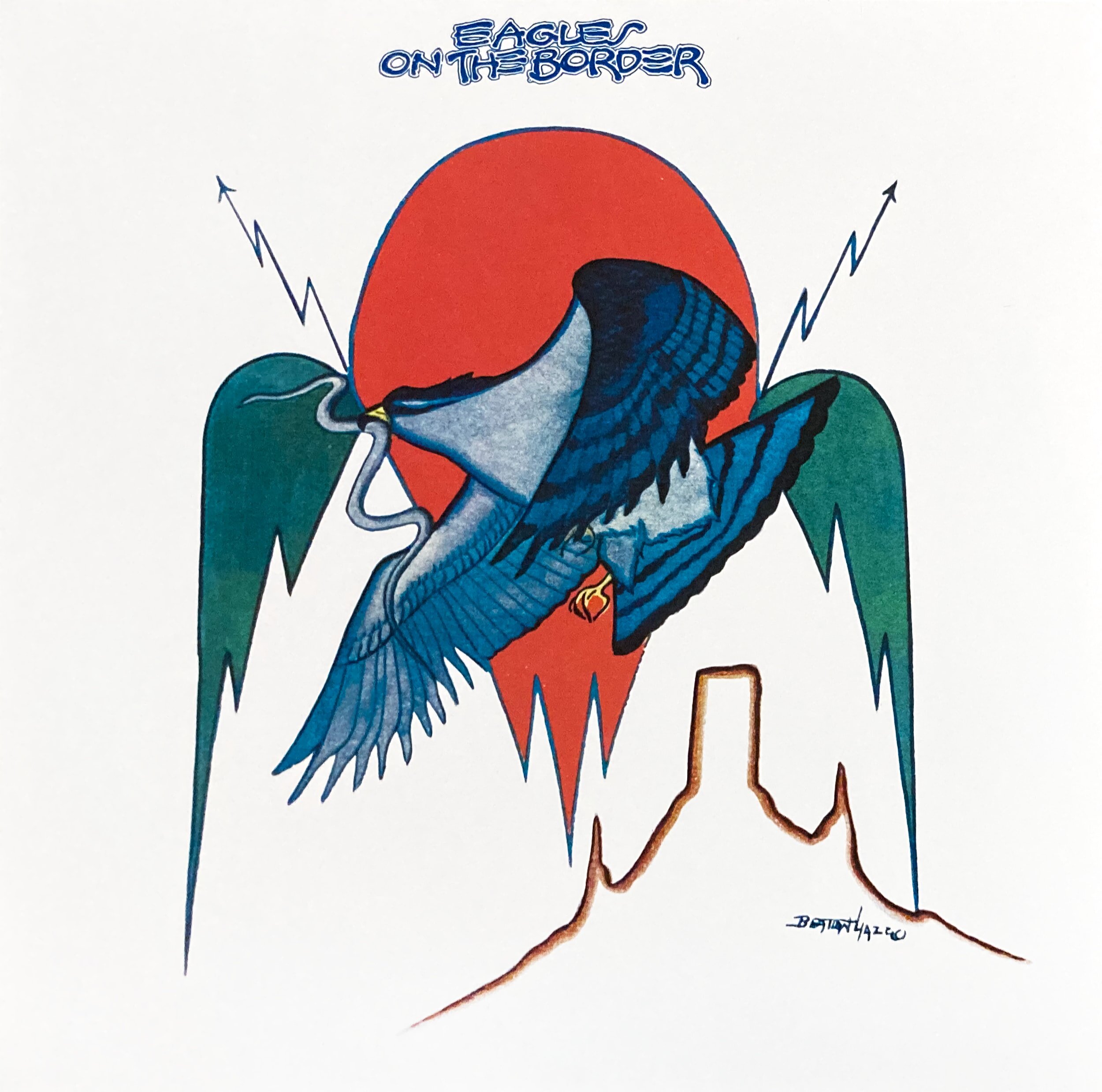
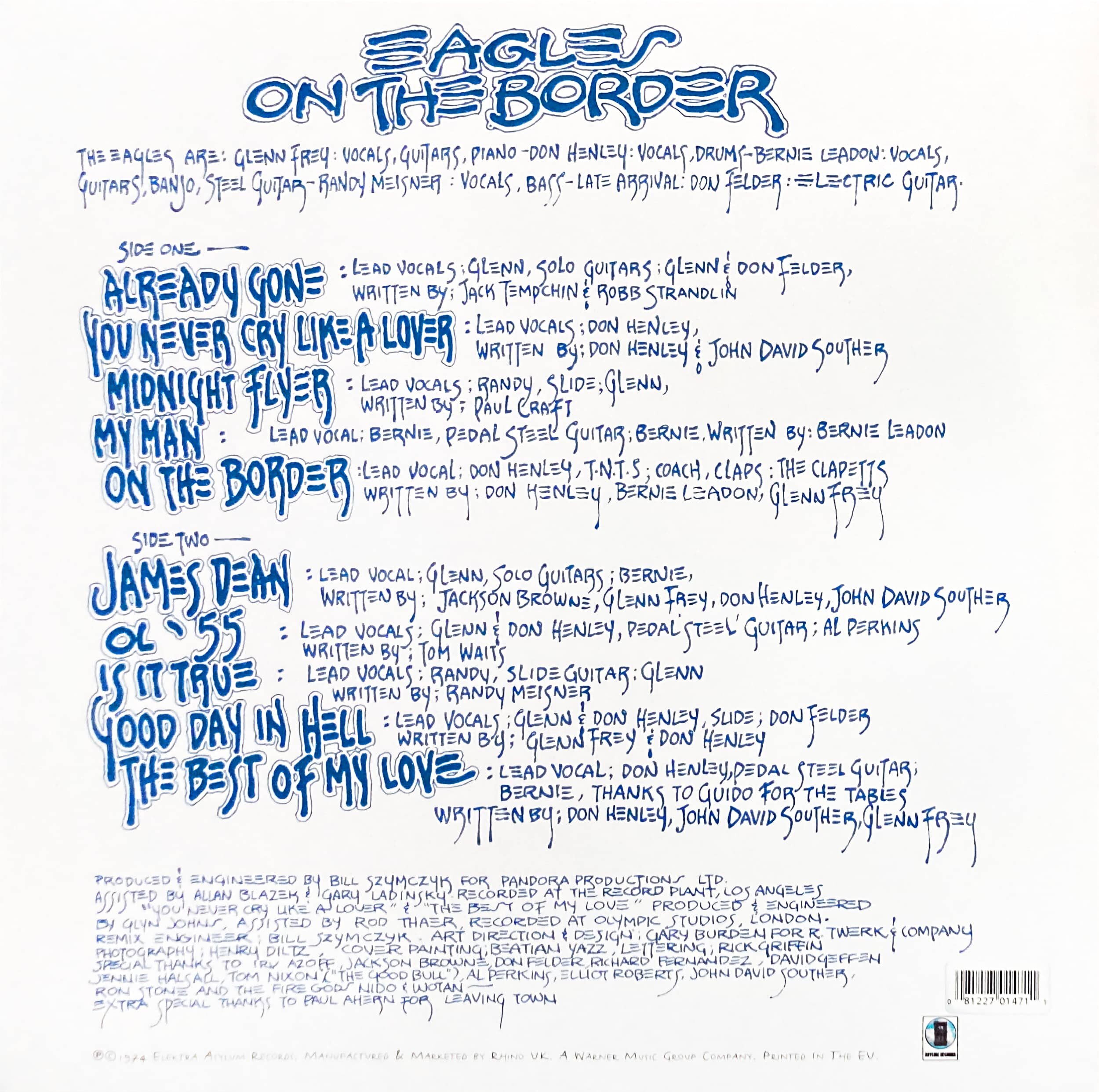
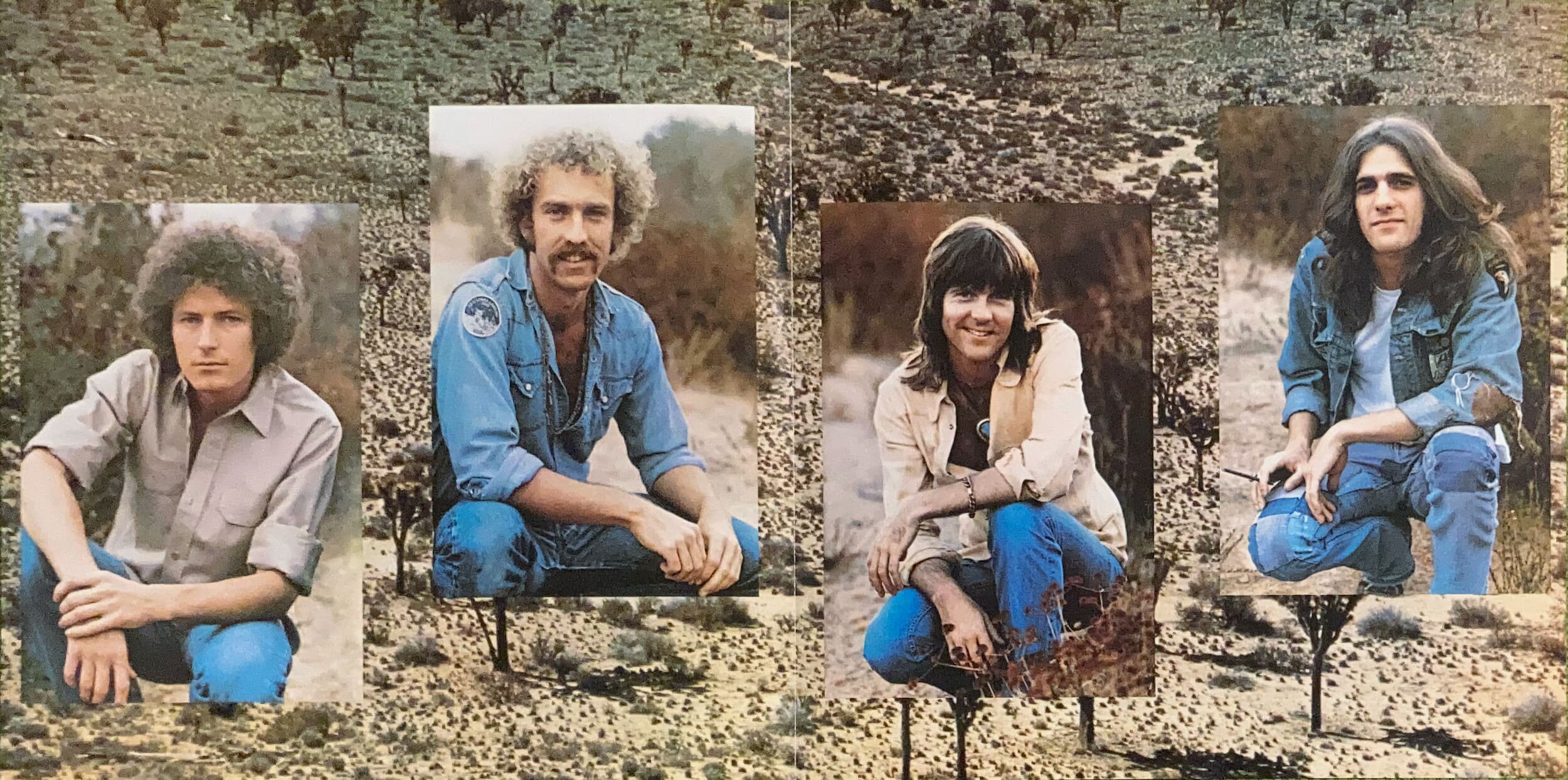
While vinyl collectors would love to hear that the 2014 reissue offers a lovely facsimile to the original release, thinking that would likely yield a little disappointment. Yes, the reproduction is respectable. However, in this instance, the album artwork is reissued on a smooth canvas rather than the rough texture of the original releases. It’s a minor thing, granted, but one that fans and collectors care about. At least, as you can see from the photos, the foldout poster is included, so all is not lost. Frustratingly, had I attained the 2014 US reissue, that version has the textured cover art. Yes, dear reader, you read that correctly. The same edition released for the US market, in 2014, was different to the UK release. Sometimes it’s incredibly annoying to be a music collector for small variances such as this make no sense at all.

Of course, you’re probably more interested in how the 2014 reissue sounds. Well, Eagles’ albums are generally pristine with regard to their sonic quality and while this vinyl reissue isn’t bad, the Apple Music stream is smoother and fuller with a more analogue sound that is more laid back in its delivery. It’s ironic, I know, given that it’s almost certain that the vinyl re-issue was sourced from a digital master as well. That said, this isn’t the first time an Apple Digital Master has left me impressed and made me question the purpose of my beloved record collection. Hence, for those who disregard digital offerings without ever actually comparing them, all I can say is you’re missing out for it isn’t always the case but digital has come a long way over the years and is considerably more affordable than vinyl reissues; particularly in the modern era.

To give you a little more context, the song My Man loses the bass and drum emphasis on the vinyl reissue when compared to the Apple Music stream, yet Ol’ 55 sounds a little better on the vinyl reissue. It really is a bit of a mixed bag and while I generally don’t give numeric ratings for sonic quality, I’d place the vinyl reissue as a 3 out of 5 and the Apple Music stream as a 4.5 out of 5. If I could get the Apple Digital Master on vinyl, I’d be one happy fan. And, yes, I acknowledge the ludicrous nature of that statement.

Perhaps the best way to explain what I’m hearing is that I find myself distracted when listening to the vinyl reissue. If my phone is nearby, I’ll reach for it. Yet, I’ll happily sit and listen to the stream, on repeat, for hours on end. Subsequently, my advice would be that if you’re considering picking up a vinyl reissue, give the stream a listen first and consider what advantages a vinyl edition would offer you.

Already Gone is a solid opener with an addictive rhythm and twang, although it isn’t the strongest song on the album. Not only do I feel it launches the record on an abrupt note, but I find the woo-hoo-hoo vocal elements to be distracting. Yes, the guitar work throughout is a redeemable quality, and overall it is far from the worst song that the Eagles ever recorded, but it’s most certainly an album-only number that contributes to the solidity of this classic record.

You Never Cry Like A Lover slows the tempo down and is a masterful tune. The soundstage depth and air surrounding each musical element is an experience in and of itself as it will surround you in a captivating sonic presentation. The accompanying guitar solo reminds me fondly of America's style, but it’s the delicate vocal harmonies that are layered with typical Eagles’ precision that truly sets this tune apart as being one of the greatest songs the Eagles ever recorded.

Midnight Flyer would have been perfect for Desperado but isn’t necessarily out of place on On The Border. Full of bluegrass and authentic Americana influence, the lively banjo, infectious rhythm, and vocal delivery ensure that this fun tune is memorable and balances out the ballads and heavier rock elements heard throughout the album.

My Man is a beautiful vocal-focused ballad. It’s one of the best songs from On The Border, despite never receiving the recognition it deserved.

On The Border has a killer rock intro that I adore. The tempo shifts a little when Don Henley’s vocal comes into the mix, but as the song progressively builds it becomes an incredible blues-based rock and roller with a touch of funk that makes this a standout and an ideal title track.

James Dean as a song on its own isn’t fundamentally flawed, but I’ve never felt that it was suited to the Eagles or On The Border. Yes, it's energetic and fun and could be seen as a precursor to Glenn Frey’s 80s output, but it also sounds as if it belonged on a 50s-era release; by another band or artist.

Ol’ 55 is a stunning cover of Tom Waits' original. Turn the volume up, close your eyes, and sing along if that brings you joy for Ol’ 55 is one of the best songs the Eagles ever recorded. The gentle musical bed and steel guitar enhance the melancholic feel, and the harmonies soar in a way only the Eagles can deliver.

Is It True is another song that has never received the accolades it deserved, for its catchy melody, jangly guitars, and easygoing rhythm make it one of the lighter, more pop-oriented tracks on the album. Randy Meisner’s lead vocals are particularly notable for they add to the song’s overall charm and blend ideally with the Eagles’ mid-70s sound.

Good Day In Hell is one of the Eagles’ greatest rockers with gritty guitar work, incredible vocals, and the addition of Felder’s exceptional slide guitar, resulting in a timeless and exceptional tune.

The Best Of My Love closes the album with one of the Eagles’ most beloved ballads; a masterpiece by any metric. The vocal harmonies are pristine, and the acoustic arrangement is warm and lush, creating a soothing, reflective atmosphere. The bottom line is that this classic tune is an ideal closer for it encourages reflection whilst simultaneously compelling the music lover to play the record again.

On The Border stands as one of the finest achievements in the Eagles' catalogue and is one of the standout albums from 1974. The album expertly blends their signature country-rock sound with a more assertive rock edge, creating a dynamic and cohesive collection of songs. Its balance of heartfelt ballads, upbeat anthems, and introspective storytelling, elevates it above many other releases of the time and remains one of the most iconic albums of the 70s.

Captain Beefheart & His Magic Band – Bluejeans & Moonbeams (Album Review)

Captain Beefheart & His Magic Band – Bluejeans & Moonbeams (Album Review)

Released in 1974, Bluejeans & Moonbeams stands as one of Captain Beefheart's most controversial and divisive works, as it presented a departure from the avant-garde experimentalism he was known for. Yes, Bluejeans & Moonbeams was an attempt to embrace a more accessible, mainstream sound, and despite failing to set the charts on fire, this classic album achieved that goal, from a sonic perspective, at least. That said, the record maintains elements of Beefheart’s unique style, albeit while leaning toward a more melodic and softer approach; a shift that alienated some long-time fans. However, to dismiss it based on difference is to miss out on the wonder of this classic release. Hence, I implore you to give it another shot for Bluejeans & Moonbeams grows on you the more you listen to it.

Apart from the music, the album’s cover art is an ideal accompaniment and indicative of the era’s cover art designs that would stand out on the shelf of your local record store whilst simultaneously being a piece of visual art worthy of an art gallery. Of course, as captivating as the artwork is, can you really tell an album by its cover? Well, considering that The Magic Band had quit on mass, following the recording and release of Beefheart’s other 1974 release, Unconditionally Guaranteed, billing the album as Captain Beefheart & His Magic Band seems somewhat disingenuous, especially to longtime fans. However, if you consider The Magic Band as a container for the musicians that would accompany Beefheart, and those musicians were subject to change, then it isn’t necessarily misleading. That aspect alone would likely irritate some as the individual musicians are often as iconic as the lead vocalist, but it isn’t as if the replacement musicians were second-rate; anything but.

As it pertains to the sonic prowess of the CD-quality lossless Apple Music stream, it’s stunningly beautiful. Every musical element is given room to breathe and the soundstage is well-developed and all-encompassing. You’ll find yourself being carried away on a musical journey as this album has been recorded, mixed, and mastered exceptionally well. So well, in fact, that I hope Virgin Records never remasters the album, beyond this most recent edition, for it’s sonically one of the most pleasing albums you’re ever likely to hear.

Party Of Special Things To Do sets the tone for the album, featuring a bluesy groove with a funky undercurrent. Beefheart’s trademark growl is present, but the easy-going rhythm and more structured approach will likely deter those who prefer his earlier works. Nevertheless, it isn’t so far removed from his experimental core that it would deter listeners; although I’m certain some would challenge that statement.

Same Old Blues is a cover of J.J. Cale's I Got The Same Old Blues and this interpretation is nothing short of a masterpiece. The melancholic, slower, and almost lethargic tempo works incredibly well with Beefheart’s vocal styling and his emotive delivery not only adds depth to the song but it’s amongst Beefheart’s finest recordings.

Observatory Crest is beautifully serene. Beefheart’s vocals are subdued and tender, but the musical bed and psychedelic ambience make this a standout and in many respects a hidden gem.

Pompadour Swamp blends blues-based rhythms with a quirky vocal presentation. The gritty earthy quality of Beefheart’s vocals perfectly complements the music and while it may represent his traditional style, Pompadour Swamp has just enough spit and polish to ensure that it remains accessible whilst appealing to those looking for Beefheart’s more experimental output.

Captain’s Holiday is an incredible, and ideally titled, instrumental track that showcases the skill of Beefheart's Magic Band. It’s a relaxed jazzy piece that offers a reprieve from Beefheart’s vocal intensity but is ideally situated in the album’s sequencing. While this track doesn’t aim to be notable, it provides a lovely interlude to the album’s middle section that should be celebrated for it’s one of the most exceptional instrumental tunes you’re ever likely to hear.

Rock ’N’ Roll’s Evil Doll has a fun, upbeat vibe, with a touch of rockabilly that will get you toe-tapping and head-bopping. Though much more straightforward than much of Beefheart’s earlier works, it’s another song from the album that could be best associated with his experimental era.

Further Than We’ve Gone slows things down considerably with this soulful number that has a melancholic beauty to it, with tender instrumentation, and a compelling melody that captures a softer side of Beefheart. Further Than We’ve Gone also has one of the very best piano and guitar performances that I’ve ever had the good fortune of hearing, for the musical bed heard on this tune is some of the very best in all of recorded music history, thereby making this not only a highlight from the album but a hidden masterpiece from the 70s.

Twist Ah Luck features a killer rhythmic groove with a touch of funk that is extremely engaging. It’s songs such as this that make one question why this is one of Beefheart’s most disliked releases and all I can suggest is that one should not contrast it with his other works for isolating this release on its own will likely yield greater acceptance and appreciation.

Bluejeans And Moonbeams is a surreal ballad-styled piece that features one of Beefheart’s most gentle, yet exceptional, vocal performances. If nothing else, Bluejeans And Moonbeams is an ideal title track and a perfect closer that will not only leave you in a reflective mood but will encourage you to spin the record again for once Bluejeans & Moonbeams captures your soul, you can seldom listen to it only once.

Bluejeans & Moonbeams, while often regarded as one of Captain Beefheart's most controversial albums, also appeals to his traditionally unpredictable nature for it, in itself, is a musical experiment that stands out in Beefheart’s eclectic catalogue. Fans of Beefheart’s chaotic genius may find the simplicity and accessibility of this release to be too far removed from his broader catalogue, but Bluejeans & Moonbeams reveals a different side of Beefheart—a more melodic, introspective artist capable of crafting gentle and emotionally resonant songs. For listeners willing to embrace this softer approach, this album offers a rewarding experience; one that is amongst the greatest released in 1974.

Scorpions – Love At First Sting (Album Review)

Scorpions – Love At First Sting (Album Review)

Released in 1984, the Scorpions’ Love At First Sting is an album that not only epitomises the energy and musicianship that was prevalent in 1980s hard rock, but it would be the album that would solidify the Scorpions’ position as one of the biggest rock acts of the era. Building on the success of their previous records, and over a decade of well-received (but sometimes controversial) releases, the Scorpions would deliver their ninth studio album; a record that plays akin to a greatest hits release, for Love At First Sting is more than a mere collection of songs.

Where Love At First Sting really shines is in the mix of soaring guitar solos, Klaus Meine's unmistakable vocals, and a balance of power ballads and fast-paced rockers, that were commercially successful. While there’s no shortage of editions of Love At First Sting, with over 200 at the time of writing, the latest remaster and associated reissue (from 2015) is a bit of a double-edged sword. Yes, some will love the bonus material and demo tracks and while I’m not suggesting they should be omitted, I prefer album reissues to retain the original track listing and have any bonus material added as a separate disc. That isn’t the case for Love At First Sting as the demos are tacked onto the back end of not only the streaming editions but the CD re-issues. Yes, there is a two-disc set, replicated on streaming services, that contains a live performance from Madison Square Garden (in 1984), but it’s irritating that the concert remains intact while the core album is inundated with five additional demo songs. I know, first-world problems, but it’s an aspect that drives this music lover mad.

Thankfully, Apple Music et al allow for the omitting of songs that aren’t of interest and in the heyday of the compact disc player, these technological wonders had a program function that allowed the listener to program a set of songs that would be played, omitting those they didn’t wish to hear. Modern, high-end, CD players still offer this functionality, but it is no longer considered the norm across the board. We’ve truly gone backwards, it seems, in our attempt to march to the modern technological beats. What I can say, however, is that the 2015 remaster of Love At First Sting is exceptional. While not presented as an Apple Digital Master, the lossless CD-quality stream is thoroughly enjoyable with an enveloping soundstage that not only rocks but allows for separation between all elements. Some may criticise the heavy-handed compression and volume increase applied to this newest remaster, but I wouldn’t say it’s detrimental to the album for it may be loud, by comparison to the original releases, but it’s sonically pleasing enough that if you don’t already own a copy of this classic album, you’ll likely find this remaster to be more than adequate.

To facilitate a consistent overview of Love At First Sting, I’ll be sharing a playlist of the album’s original linear structure for you to enjoy as we take a look at the songs that make up this legendary release. Additionally, for those of you seeking a physical release, the vinyl reissues maintain the original tracking and when you have Helmut Newton’s photography adorning the cover art, those larger canvas releases undoubtedly look spectacular in any record collection.

Bad Boys Running Wild opens the album with a rock styling and guitar lick that is not only aggressive and full of rebellious energy but draws you into the sheer power of the song. It also has stadium filler written all over it for Bad Boys Running Wild is not only a classic Scorpions rocker but it’s a song that will appeal to the wild spirit of rockers everywhere.

Rock You Like A Hurricane is an iconic rock anthem of the 80s and, arguably, the Scorpions’ most famous song. It has all the elements of a classic: a catchy riff, a larger-than-life chorus, and a blazing guitar solo. Additionally, the song’s tight structure and sing-along hook make it irresistible. Rock You Like A Hurricane is one of those songs that no matter your musical tastes, will connect with your soul from the very first note and won’t let go until the last note has been played. Exceptional!

I'm Leaving You continues the rhythmic rocking nature of the album as it flows seamlessly from Rock You Like A Hurricane with a catchy chorus, thoroughly pleasing guitar work, and a high-energy vibe.

Coming Home slows the album slightly with its calm and melodic introduction. Not only is the musical bed exceptional, but before the song crescendos, Meine’s vocals will impress just about anyone. Yes, his vocals later in the song are equally impressive, but the delicate nature of the song's opening is to be celebrated. As the song progresses, Rudolf Schenker and Matthias Jabs provide some of their best intertwining guitar work, alternating between powerful chords and intricate solos. However, it is the launching into a fast-paced rocker, from calmer beginnings, with a touch of Iron Maiden influence, that truly turns this song into a hidden gem and one of the most incredible sonic journeys in the Scorpions’ extensive back catalogue.

The Same Thrill is a high-octane rocker driven by pounding drums from Herman Rarebell and aggressive guitar riffing. While it may not have the commercial appeal of songs such as Rock You Like A Hurricane, there are undoubtedly fans who would adore this tune for they prefer the Scorpions’ harder-edged sound.

Big City Nights is a classic 80s rock and roll number. The mid-tempo groove, catchy riff, and anthemic chorus make it appealing and it, therefore, isn’t surprising that it was released as the album’s third single and performed respectfully in the US.

As Soon As The Good Times Roll is a bold mid-tempo number and a quintessential album-only tune. While it is unlikely that this song will be anyone’s favourite tune, what is certain is that it’s a solid B-side and one that continues to drive the album forward as it offers a nice contrast to the more adrenaline-fuelled tracks.

Crossfire is one of the more musically complex songs on Love At First Sting, featuring a slower, more deliberate pace. Rarebell’s drumming is particularly noteworthy here, adding a military-like precision to the track, but with a mix where the guitars and vocals are more subdued, until the song launches into its powerful solo, it offers one of the greatest musical experiences on the album and within the Scorpions back catalogue. Crossfire is most certainly a hidden gem, for it’s worthy of greater recognition than it has ever received.

Still Loving You closes the album with one of the Scorpions’ greatest ballads. As someone who adores the power ballad, Still Loving You is amongst the greatest ever recorded with Meine delivering one of his most passionate vocal performances. As the closing song on the album, it not only offers a reflection of the music that has just been heard, but leaves a lasting impression while also encouraging you to play the record again, for classic albums such as this can seldom be listened to only once.

With a mix of hard-hitting rock anthems and emotional ballads showcasing the Scorpions’ versatility and ability to balance commercial appeal with genuine musicianship, Love At First Sting is not only an essential album in the Scorpions’ discography, but it is amongst the very best albums released in 1984. Add to that a plethora of catchy hooks and an accompanying high-energy guitar-driven sound with exceptional rhythm and vocals and what you’ve got is a timeless classic.

Meat Loaf – Bad Attitude (Album Review)

Meat Loaf – Bad Attitude (Album Review)

By the time 1984 rolled around, Meat Loaf was at a crossroads in his career. After the massive success of Bat Out Of Hell (1977), the pressures of maintaining that momentum would naturally take its toll. Conflict with longtime collaborator, Jim Steinman, would further complicate matters; despite two of his songs being included on this release. Nevertheless, Bad Attitude, Meat Loaf’s fourth studio album, showcased that he was still capable of delivering powerful rock anthems; even if it was less cohesive than his 70s masterpiece. However, if we consider Bad Attitude as a unique experience from Bat Out Of Hell, rather than a continuation, it’s a thoroughly enjoyable album featuring a timeless collection of bombastic rockers and dramatic ballads.

As with several high-profile Meat Loaf releases, the album artwork for Bad Attitude is spectacular. Not only is it perfectly suited to the era, but it simultaneously harks back to what quickly became a Meat Loaf trademark; the motorbike. Yes, a beautiful woman adds to the allure but it isn’t just outward appearances that matter for you’ll come to see that the music contained within this release is quite incredible, yet it isn’t without fault.

Let’s be frank, Meat Loaf’s music has never truly been recorded, mixed, and mastered to what could be considered perfection. Bat Out Of Hell II: Back Into Hell was a marked improvement and his best-sounding record has to be Welcome To The Neighbourhood but all others are merely satisfactory. Granted, his music had a unique sound signature, but just as Bat Out Of Hell isn’t a sonic masterpiece, neither is Bad Attitude.

Given the album’s lacklustre sales performance, Bad Attitude is often overlooked and while it was remastered and reissued in 2014, it was only for a CD reissue that I’ve yet to hear. Interestingly, when you search on Apple Music et al, you’ll come across two editions of the album. Due to the way they’re listed, you have no idea what the differences are, other than one has more appealing visual colour tones and contrast compared to the album artwork on the other. However, in this instance, don’t let the bolder album artwork confuse you because whatever master that version is utilising, it’s downright atrocious.

While I acknowledge that not every music lover is focused on attaining the very best-sounding version of an album, I do wish each record would have a singular definitive master. That isn’t the case here, so let’s take a moment to compare the two different masterings of the same song; Surf’s Up. Click here to listen to the first version. Pay particular attention to the piano introduction and overall soundstage as the song progresses. Now, let’s play the same song but from what I think is the original CD mastering. Click here to listen to the second version. Different, aren’t they?

It’s elements such as this that can make or break an album and I’d love to say this is an isolated incident, but it isn’t. While I appreciate that both editions exist, particularly the second one which is my preferred version, relying on the Apple Music stream can be a recipe for disaster as there is always the chance that the superior edition could be removed for the inferior one. It’s a constant concern for music lovers who want their music to sound a certain way and never change. And, yes, dear reader, as you get older, and get more used to the way the music should sound, you’re less flexible with regards to substandard sonic presentations.

As it pertains to the edition I’m sharing below, I feel that it is the better-sounding version available on Apple Music as it may not be a recording that will set your stereo on fire, but it sounds right and a few minor EQ tweaks on the stereo can go a fair way to addressing any shortcomings.

Bad Attitude (feat. Roger Daltrey) certainly has an 80s synth vibe to it, despite the hard-rocking anthemic styling. There’s also a little Queen guitar lick to be heard on the song, but what is perhaps most disappointing is that Daltrey’s inclusion fails to enhance the song as, in some ways, his vocal is too similar to Meat Loaf’s to truly stand apart. Yes, this title song is a solid and thoroughly enjoyable opener, but when you have these two exceptional vocalists, it isn’t unreasonable to have expected more.

Modern Girl was the first single released from the album and while it didn't set the charts on fire, it did perform admirably in some regions. It’s a shame it wasn’t better received for it’s one of Meat Loaf’s greatest songs, offering a balance between the theatrical and that of a pop-rock masterpiece. While the lyrics may feel slightly dated, in the modern era, the song itself is catchy and energetic, thereby ensuring that it can still be enjoyed by those who are not only nostalgic but are driven towards radio-friendly pop-rock tunes with soaring melodies and lush production values.

Nowhere Fast is one of the two Steinman compositions to be included and was previously recorded by Fire Inc. on the 1984 Streets Of Fire soundtrack release. Meat Loaf’s interpretation has a bolder rock edge and is, arguably the stronger of the two, but retains the 80s synth styling. It suits the era perfectly, even if it isn’t ideal for Meat Loaf. Nowhere Fast is, subsequently, a thoroughly enjoyable album-only number with a killer chorus. Interestingly, the lyrics, aside from the chorus, are different between the two editions. As to why, I’ve no idea as information relating to the change is sparse at best. If you know, please reach out to me as I’d love to know a little more about this variant.

Surf's Up feels like a continuation of the cinematic rock sound from Bat Out Of Hell. Let’s just say that Steinman was a master songwriter of the highest calibre and when Meat Loaf would record his songs, for the most part, they were always exceptional. That is certainly the case here for Surf’s Up is one of the album’s most impressive songs and Meat Loaf’s vocal performance shines here, as he navigates the song’s emotional highs and lows. Add to that the exceptional mid-song guitar solo and you’ve got what can best be described as a masterpiece; an overused term, yes, but one that most certainly applies to this song.

Piece Of The Action is a mid-tempo rocker that flows seamlessly from Surf’s Up while also providing a change of pace. As the song slowly builds, you get the sense that something very special is coming and when the song reaches the first chorus crescendo, you’re given that sonic reward that is essential to mid-tempo rock numbers. With an infectious chorus and a straightforward anthemic 80s rock style, Piece Of The Action is a killer tune; one that is perfectly suited to Meat Loaf’s theatrical storytelling.

Jumpin' The Gun has a driving rhythm punctuated by tight guitars and energetic percussion, but the mix and overall recording isn’t great. It sounds as if it’s a demo and the additional atmospheric elements, while relevant to the era, simply don’t work. Nevertheless, Jumpin’ The Gun can most certainly be appreciated as an album-only tune, for each song need not be a hit for an album experience to be thoroughly enjoyable.

Sailor To A Siren plays into Meat Loaf’s ability to turn songs into mini-operas for the arrangement is dramatic, with soaring guitars and powerful drumming that drive the song forward. Sailor To A Siren may be brimming with 80s cues, but it’s also a stroke of musical genius for it is simultaneously timeless. It may never be one of Meat Loaf’s most recognised tunes, but it’s most certainly one of his greatest recordings.

Don't Leave Your Mark On Me has an interesting, yet offbeat, introduction. It works, however, following the Sailor To A Siren as it builds a large enough gap that the songs can be easily differentiated. While the arrangement of Don't Leave Your Mark On Me is straightforward compared to some of the bolder songs from the album, it doesn’t change the fact that this song is extremely compelling; particularly its chorus. I do, however, feel that it ends prematurely.

Cheatin' In Your Dreams is a beautiful closing introspective ballad that showcases Meat Loaf’s emotional intensity. Pairing his spectacular vocal with a delicate piano arrangement and lush strings ensured an orchestral feel prior to the bombastic energy that arose midway through the song. If nothing else, Cheatin' In Your Dreams will do what all good closers do – encourage you to play the record again.

Bad Attitude may not have reached the towering heights of Meat Loaf’s earlier or later works, but if you’re after a straight-up hard rock album filled with power ballads and rock anthems, look no further than this classic 80s release. While the era was dominated by synth-driven pop and new wave, Bad Attitude is a breath of fresh air as it not only rocks but is a reminder that outside of trends, good music is still prevalent and when combined with Meat Loaf’s larger-than-life persona, Bad Attitude is most certainly an album worthy of any music lover’s collection.