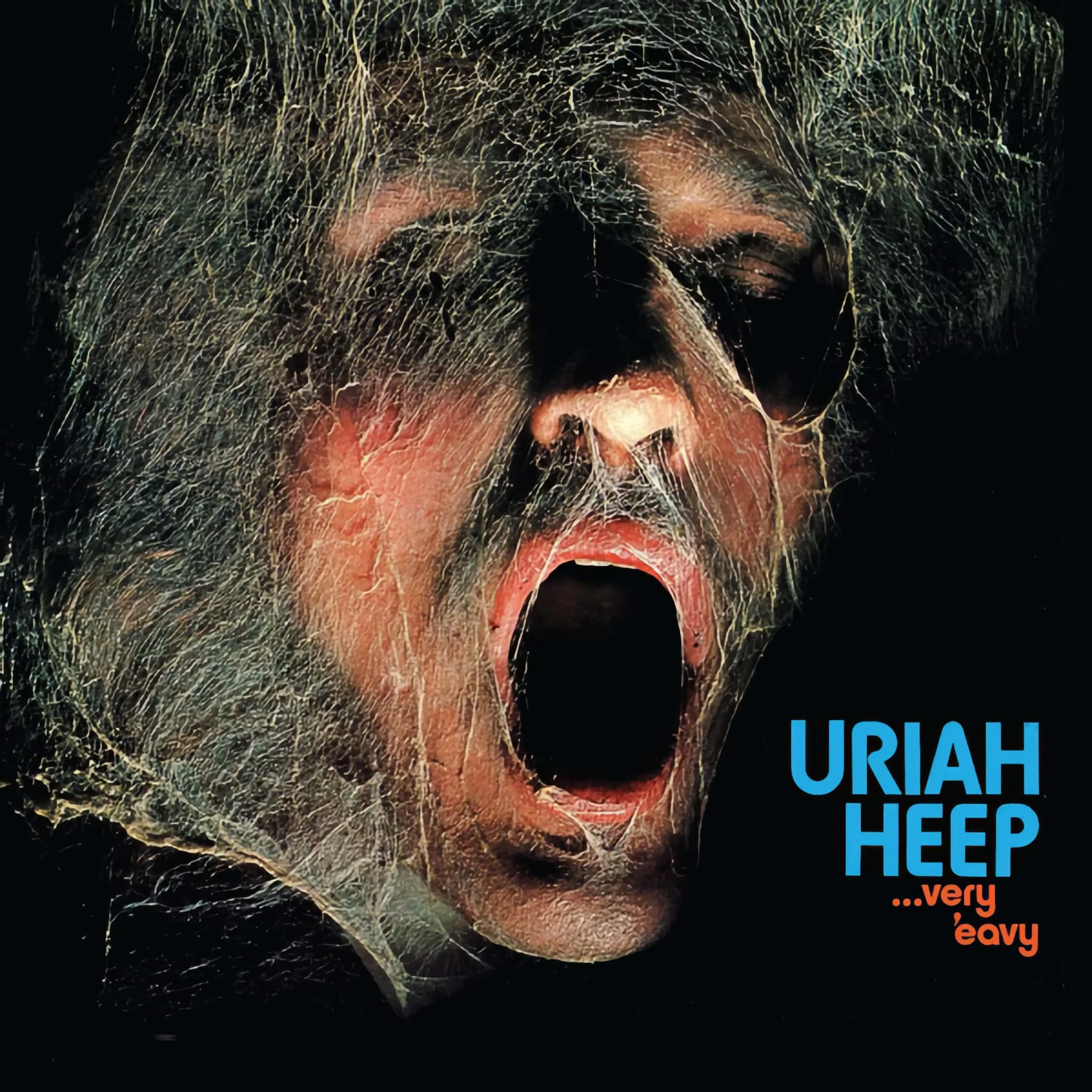
Released in 1970, this debut is amongst the greatest the English rockers ever recorded, and more than five decades later, the production, recording, and overall sonic presentation remain fresh and compelling. With its signature blend of rock, and what is now considered classic heavy metal, Very 'Eavy, Very ‘Umble can not only be seen as a pioneering progressive rock release within the heavy metal music genre but as nothing less than an impressive debut.
Similarly compelling is the album’s artwork, but, as with most digital offerings, it is inadequately represented. While not as restricted as many counterparts, the original cover art design makes use of the vinyl gatefold to portray the entire photograph, including frontman David Byron’s hands, covered in webs. It’s a disturbing image, especially amongst those of us with arachnophobia, but it isn’t quite as bad, in some respects, as the US releases which don a nightmare-inducing centipede-meets-serpent-like creature.
What isn’t traumatising, however, is Andy Pearce’s 2016 remaster. As many music-loving audiophiles will note, remasters are not always the be-all and end-all as it pertains to the sonic quality of a record, but this one is done extraordinarily well. Listening to the CD-quality Lossless editions, via Apple Music, one can’t find much to criticise, as every element is balanced beautifully in the mix with plenty of room between musical elements. My only complaint is that I have yet to pick up this particular edition on CD. Yes, it’s mastered to modern standards, but it’s not overly loud either and can be thoroughly enjoyed at both moderate and ear-bleeding volume levels. So, hit play and join me as we take a look at the songs that make up this classic release.
Gypsy is a killer opener with a funky vibe that sets the tone for the entire record. The riffs are out of this world, as is the percussive backing, but the most compelling aspect is the song’s overall progressive composition that will encourage you to pump the volume. Of course, all would be for nil had Byron’s vocals missed the mark, but that wasn’t to be, as he was one of the finest singers to have ever stepped in front of the microphone.
Walking In Your Shadow is a little less mystical than Gypsy, but it sees Uriah Heep deliver a blues-based hard rock number that is thoroughly pleasing, with a tonne of attitude, that will appeal to just about any rock and rolling air guitarist. Mick Box’s guitar tracking, here and throughout the entire record, is masterful.
Come Away Melinda is a cover of the 1963 anti-war song, penned by Fred Hellerman and Fran Minkoff, and first recorded by Harry Belafonte. While I’m not overly familiar with the original, Byron shows just how incredible he was as a vocalist, for the true worth of a hard rock vocalist is how they can perform a ballad-style piece, and in this case, Come Away Melinda is Byron’s magnum opus.
Lucy Blues is absent from US editions due to the inclusion of an early rendition of “Bird Of Prey”, and in some respects, I can see why the shift was made stateside, for Lucy Blues delves, perhaps a little too far, into the blues. Think Gary Moore, it’s brilliant, undoubtedly, but it’s different enough to the other songs on the album that some may suggest the record lacks focus as a result of its inclusion. Regardless, what Lucy Blues does showcase is the continued broad musical range of the band, even if “Bird Of Prey” may have been a better option.
Dreammare is the only song on the record that irritates me, and not because of the mastering but due to the chosen mix as there’s an out-of-phase aspect that is particularly noticeable when listening via headphones as the vocals are present in the right channel, with percussion in the left, but the vocals have also bled into the left channel, making it sound as it someone is whispering in your left ear. Granted, at this stage in music history, many artists were still testing the waters with what could be done with stereo panning and balancing, but this is one killer song that they got wrong in the recording and mixing process. That said, if you’re not a headphone listener, you’ll likely be unaware, for Dreammare is thoroughly enjoyable when listening via speakers.
Real Turned On has a killer bass lick opening this classic rock and roller. While it may be a more basic composition, especially when positioned against the more progressive numbers on the record, sometimes a solid hard rock tune is all that’s required and while not, necessarily, a standout, Real Turned On will likely be one of those tracks that will compel you to play the record time and time again, for once you’ve allowed Very 'Eavy, Very ‘Umble into your soul, it’s difficult to ignore.
I'll Keep On Trying is a progressive rock masterpiece.
Wake Up (Set Your Sights) flows well from I'll Keep On Trying, but the jazz-styled approach is a little too far removed from the rest of the album’s tunes. If we remember, however, that this is a progressive rock release, then this song makes perfect sense as the culmination of styles is a testing ground to see what ultimately works and what doesn’t. There’s little doubt that the first half of the song is representative of the weakest aspects of the album, but as you listen to the second half, you can’t help but appreciate the tune as you reflect on the music that you’ve just heard.
Very 'Eavy, Very ‘Umble is nothing if not an impressive debut. While Uriah Heep may not have reached the heights of their contemporaries, overlooking such an incredible band, and particularly this release, is shortsighted, as Very 'Eavy, Very ‘Umble is amongst the best albums released in 1970 and is one of the greatest records the band ever released.