Dokken – Under Lock and Key (Album Review)

Dokken – Under Lock and Key (Album Review)

Released in 1985, Dokken’s Under Lock And Key is a glam metal classic and a defining moment in the band’s career. Featuring the classic lineup of Don Dokken (vocals), George Lynch (guitar), Jeff Pilson (bass), and Mick Brown (drums), the album blends melodic hooks and killer rock licks with technical prowess. While there is no shortage of exceptional 80s glam metal releases, Under Lock And Key is one of the most impressive and timeless examples available to rock and rollers.

Turning our attention to the album artwork, it’s adequate. It’s far from the worst 80s album covers but it’s a little bland. Thankfully, the sonic prowess of this release steps things up and is thoroughly enjoyable. Yes, the Apple Music stream delivers the record as a CD-quality lossless stream, but that’s not necessarily a bad thing as it sounds exactly like one would expect. There’s no indication if this is a remaster. Still, based on the sonic cues, I would say that it’s likely that it’s the original CD mastering and, as such, turning the volume up will have you rocking out, rather than feeling fatigued by an overly hot master.

It may not be to everyone’s taste, but this is another prime example of how important tone controls are to music lovers. Some will lament their use, but I don’t share that perspective as I’d much rather tweak the sonic qualities of a record to suit my subjective taste. Regardless, the overall production quality strikes a perfect balance between polished sheen and raw power, ensuring a timeless appeal that will make any music lover happy. With that in mind, let’s take a look at the songs that make up this classic release.

Unchain The Night opens the album with a brooding, atmospheric guitar intro that sets the tone for the entire record. Following the exceptional introduction, the track transitions into a mid-tempo rocker with soaring vocals and intricate guitar work to accompany the killer rhythmic base of the song.

The Hunter was the first single released from the album and is a fantastic rocker, but as strong as it is, I’m not sure it was the best choice for a single release as Unchain The Night has that earworm quality that may have resulted in greater charts success. Nevertheless, The Hunter is a standout that balances intensity with an accessible rhythm.

In My Dreams is a melodic masterpiece. The infectious chorus, tight harmonies, and Lynch's flashy yet tasteful solo make it one of Dokken’s most memorable songs. Yes, it has an 80s sheen, but those of us who live with a nostalgic mindset will find it highly compelling and it’s amongst the greatest rock songs released in the era.

Slippin' Away slows the pace slightly with this reflective ballad that provides a lovely contrast amidst the harder-edged tracks. Don Dokken’s vocals are magnificent and are complemented perfectly by the understated instrumentation that is ideally mixed, thereby allowing the vocals, and guitar solo, to soar above the musical bed.

Lightnin' Strikes Again brings back the energy with this high-tempo number that showcases Lynch’s blistering guitar skills. The aggressive riffing and thunderous rhythm section drive the song, embodying the band’s heavier side, but it’s Don Dokken’s vocals that are the standout here, showcasing just how exceptional his vocal range is.

It's Not Love, with its groove-oriented riff, stands out as one of the album’s most distinctive tracks. Despite the song’s raw energy and gritty guitar work, It’s Not Love is a melodic pleasure to listen to.

Jaded Heart is another incredible ballad showcasing Don Dokken’s ability to convey deep emotion. While some reject ballads, I extoll their inclusion for it showcases just how exceptional the vocalists of our favourite metal bands are as it’s not always about driving the vocal to the very end of a vocalist’s capabilities. Add to that the lush arrangement and Jaded Heart becomes not only a standout on the record, but it’s one of the best songs Dokken ever recorded.

Don't Lie To Me is a catchy mid-tempo rocker with a driving rhythm that will see you head-bopping and toe-tapping along. It’s 80s glam rock at its very best!

Will The Sun Rise has an incredible interplay between the rhythm section while Lynch’s guitar textures create a rich sonic palette on this story-focused tune. The chorus is most certainly a highlight, as is the guitar solo, and as far as album-only tunes go, this is an absolute masterpiece.

Til The Livin' End closes the album out with a bang, delivering an all-out rocker. It is, however, sequenced poorly in that it sounds out of place following the melodic nature of Will The Sun Rise. Yes, the relentless guitar riffs and pounding drums make it a solid conclusion to Under Lock And Key, but it also sounds a little less produced than the other songs on the record. Nevertheless, Til The Livin' End will compel you to play the record again for Dokken can seldom be listened to once.

Under Lock And Key, ultimately, captures Dokken at their peak, blending hard rock grit with melodic finesse. George Lynch’s guitar work is a masterclass in 1980s metal, while Don Dokken’s vocal performances bring the songs’ emotional core to life. Under Lock And Key is, subsequently, not just another album; it’s a testament to an era blessed by glam metal’s dominance. As such, if you’re a fan of the band, era, or genre, Under Lock And Key is a must-listen for it showcased Dokken as a powerhouse amongst many glam metal acts.

Dire Straits – Brothers In Arms (Album Review)

Dire Straits – Brothers In Arms (Album Review)

Released in 1985, Dire Straits’ Brothers In Arms was not only a defining moment in the band’s career, but it was a landmark release. With its blend of poignant songwriting, intricate guitar work, and state-of-the-art production, the album resonates as a timeless masterpiece with an equally compelling piece of cover art that blends perfectly with the music.

While the fanfare surrounding this record is absolutely justified, it’s an album that has long divided music lovers and audiophiles for there are so many different versions (masterings) that one needs to question if it is the sonic quality, or the music itself, that should be at the forefront when listening to Brothers In Arms.

Here at Subjective Sounds, you’ll get both perspectives, but I do lean towards the music rather than sonic prowess alone. Let’s start with the formats, and then discuss the music, shall we?

With over 500 versions of Brothers In Arms listed on Discogs, one would rightfully find selecting a definitive edition to be tricky, if not impossible. While I obviously can’t review every release, I’ll give you my thoughts based on the versions I’ve been fortunate to have listened to.

The releases include:

  • The Mobile Fidelity Sound Lab 2015 release (MFSL 2-441)

  • The 20th Anniversary Vertigo (9871498) Hybrid SACD edition

  • The Apple Music 16-bit/44.1kHz ALAC lossless stream

What’s most interesting, however, is that the Hybrid SACD contains not only the CD version of the album but also the HDCD, SACD Stereo 2.0 mix, and the SACD 5.1 Surround Sound Mix. That single disc has so many different versions on it that it really showcases just how well the Hybrid SACD format could be utilised for a mass market release; a release that could appeal to all music lovers, rather than just audiophiles.

While multiple options are (usually) a good thing, sometimes there can be too much of a good thing and in this instance, less is more. Yes, dear reader, I drove myself to the point of insanity, listening to every version and the truth is that I couldn’t pick a winner for each exhibited their own uniqueness and none were what I would consider to be flawed. Certainly, I had my preferences, but I could never quite lock one in; until now.

So, which version did I prefer and why?

I chose to go with the lossless Apple Music stream. Blasphemy, I hear you say. The problem was I was listening for faults and minute elements rather than simply enjoying the music. Plus, when all else fails, sometimes good enough is…good enough.

Nevertheless, I’ll give a brief rundown on my experiences with the two physical versions, for those of you who may, or may not, wish to go through the torturous process of deciding which version you’d subjectively feel is better. And, yes, if you’ve put more money into your turntable setup than your SACD et al gear, that will be the one to go for, and vice versa.

Let’s start with the Mobile Fidelity Sound Lab (MOFI) edition; for it is magnificent. While I don’t condone MOFI’s deceit regarding the master tape sources they used, along with using a digital intermediary, the sonic reproduction, of this release, speaks for itself as you will be enveloped in the soundstage from the very first note to the last. Every musical element is positioned exactly where it should be and regardless of the volume you choose to play the album at, it’s going to sound incredible. While it isn’t necessarily affordable, although what is these days, if you’re after a record that will make your turntable sing, this is one you should certainly consider. You do have to deal with flipping the record over after two songs, however; a by-product of the album being pressed at 45rpm. Of course, original releases truncate some of the album’s greatest songs in order to have had it fit comfortably on a regular 33.3rpm release, so there will always be a tradeoff when it comes to vinyl editions.

As with all MOFI releases, the outer sleeve is thick, so much so that one would need to be determined to damage it before the sleeve would fall apart. It’s a lovely reproduction, even if the gatefold inner artwork is a little on the blander side.

Shifting our attention to the Hybrid SACD, the following summarises my thoughts on this all-inclusive release:

  • 20th Anniversary CD is clean, perhaps a little too clean. By that, I mean that the bass response, while present, lacks a sense of emotive energy that is present in all other versions. It’s dynamic, yet a cohesion of musical elements is missing, thereby resulting in a lack of body and tonal warmth. Of course, many will point to the origins of the recording, being that it was one of the first albums to be recorded digitally, but it isn’t that; it simply lacks presence.

  • 20th Anniversary HDCD sounds fantastic, especially compared to the CD version found on the Hybrid SACD; but it’s getting increasingly difficult to obtain players that can decode the HDCD layer. Nevertheless, the entire soundstage, bass elements, and treble range of the HDCD sparkles without being fatiguing and while it’s, arguably, not as smooth as the SACD Stereo Mix, it sounds right.

  • 20th Anniversary SACD Stereo Mix is smoother than the HDCD version but arguably lacks detail as the treble range is rolled off considerably. While smoothness can also translate to warmth, the SACD Stereo Mix fails to impress me as much as the vinyl counterpart does as turning the volume up showcases its limitations in comparison to the aforementioned vinyl release. At higher volumes, it simply becomes less pleasurable to listen to. It’s my opinion that the 20th Anniversary SACD Stereo Mix is mastered a little too hot.

  • 20th Anniversary SACD 5.1 Surround Sound Mix is a different beast entirely and if you’ve been listening to the stereo mix of Brothers In Arms for decades, the surround mix can take a little getting used to. While I appreciate the spectacle of it, with discrete sounds moving about my listening space, I still found myself preferring the stereo mix. It’s important to note, however, that I’m not a surround sound enthusiast, so I would recommend that you check out Mike’s Life In Surround YouTube channel and QuadraphonicQuad where the general consensus is highly positive.

If you’ve got this far I applaud your dedication as the testing and comparing, then writing and/or reading about it, can be about as interesting as watching grass grow. Nevertheless, as it pertains to the lossless Apple Music stream, derived from the 1996 CD remaster, I find myself at ease with its flexibility and convenience. Yes, I went there. Convenience is a must and if you have to flip a record too often, or find yourself constantly trying to decide which of the many versions on the SACD to listen to, then just like me you’ll find a breath of fresh air as it relates to the streamed edition. While it is not as resonant as the vinyl counterpart, nor as feature-rich as the Hybrid SACD, it is the simplicity that I appreciate.

As I mentioned earlier, sometimes less is more and, truthfully, I don’t feel as if I’m missing out on much, compared to the physical releases. The Apple Music stream is thoroughly enjoyable, and not at all fatiguing, ensuring that the core musical experience is maintained. Look, it won’t be for everyone, but as I subscribe to John Darko’s music-first audiophile mantra, it’s more than enough and listening to it, anywhere and everywhere, gives me immense joy without the constant nagging that comes along with comparing multiple editions.   

Hence, with all that in mind, let’s take a look at the music that makes up this legendary release.

So Far Away opens the album with a clean and steady rhythm that is largely unassuming but equally compelling. Setting the tone for the music to come, So Far Away is not only an enduring classic but its relaxed groove will appeal to just about any music lover as it sounds deceptively simple, yet its melodic sophistication ensures that it’s timeless.

Money For Nothing is, without a doubt, the most iconic track from the album with one of the most recognisable guitar riffs in rock history. This is pop-rock at its finest and despite being released in the mid-80s, no element pigeonholes it to that era. Much could be said about this landmark tune, including the often criticised controversial lyrics, but it’s in the listening that will determine one’s interest in Money For Nothing. So, take a listen and rock out for Dire Straits doesn’t get much better than this.

Walk Of Life lifts the tone of the album with its upbeat organ tuning and the song’s infectious rhythm. Providing a lighter, more playful counterpoint to much of the album’s introspective tone, Walk Of Life is a joyous track that has long been a fan favourite and a staple in Dire Straits’ live performances.

Your Latest Trick immediately sets itself apart from Walk Of Life, yet it doesn’t sound out-of-place in the album’s linear structure. Your Latest Trick is very much jazz meets soft rock, with lush instrumental arrangements and an intricate interplay between all musical elements. While it may not have set the charts on fire, when released as the final single from the album, it’s amongst Dire Straits’ greatest recordings and harkens back to their earlier releases, just with a tad more production and layered musicality.

Why Worry? is tender, meditative, and despite clocking in at eight minutes, I never tire of it and could listen to this song on repeat indefinitely. The soothing melody, combined with Knopfler’s gentle guitar work and delicate arrangement, makes this beautiful song a hidden gem.

Ride Across The River paints a vivid sonic landscape, one built on a foundation of Latin-inspired percussion and atmospheric synthesisers. The song is so immersive that it creates a cinematic listening experience and, despite being an album-only tune, is a core reason why Brothers In Arms is so respected.

The Man's Too Strong has a stark acoustic arrangement before delving into a more dramatic dynamic that will draw you in instantly. As it pertains to the various editions of this album, it’s songs such as this that can either make or break the record as the crescendo tends to be ear-piercing and shrill. In fairness, the Apple Music stream doesn’t deliver the low-end boldness that is heard on the vinyl release, but at the very least it doesn’t grind my senses.

One World injects a funky upbeat groove into the album. Its lively tempo and rhythmic interplay make it a refreshing change of pace; one that will find you toe-tapping and head-bopping along to this incredible tune.

Brothers In Arms is a hauntingly beautiful ballad that features one of Knopfler’s most emotive guitar performances and serves as a poignant closer to one of the greatest albums ever recorded.

Ultimately, Brothers In Arms is more than just a collection of songs, it’s an artistic statement that has stood the test of time; one that has sold more than 30 million copies worldwide. With its seamless blend of rock, jazz, and blues influences, there’s little doubt as to why this landmark release was not only so well received, but is amongst the greatest albums released in 1985.

Diana Ross – Eaten Alive (Album Review)

Diana Ross – Eaten Alive (Album Review)

Diana Ross’ Eaten Alive offers a compelling blend of pop, soul, and dance music, featuring contributions from some of the most celebrated names in the music industry. Released in 1985, the album sees Ross collaborate with the Bee Gees and Michael Jackson amongst other legendary musicians. While not as commercially successful as some of her previous works, Eaten Alive showcases Ross’ versatility and her willingness to experiment with the contemporary sounds of the mid-80s, but does it work?

Yes, and no! Let me explain.

While Eaten Alive is amongst the best releases of the mid-80s, it isn’t an album that can be appreciated via a single listen alone. So often, in our fast-paced modern realities, we are seeking what’s next and an album such as Eaten Alive will generally be overlooked for it takes several playthroughs to truly connect with the inner soul of us music lovers. Yes, the title track will likely appeal instantly, as will the catchy and iconic Chain Reaction, but the other songs require greater patience. If you have the time, however, you’ll find an album that is most certainly worth your time and Ross’ incredible legacy.

As with many things associated with the era, the album artwork is a product of its time, yet it isn’t worthy of inclusion amongst The Worst (And Most Disturbing) Album Covers Of All Time list. The sonic qualities of this release also exhibit the mid-80s vibe and while that isn’t a bad thing, it could be suggested that Ross drifted, at times, a little too far from her unique style in an attempt to appeal to a modern audience.

Regarding the Apple Music stream, the CD-quality Lossless presentation is more than adequate. It isn’t, however, a sonic powerhouse that you’d use to demo a new stereo or show off your system with pride. Granted, it likely wasn’t intended to have that quality as every album need not have audiophile aspirations to be appealing. What you will hear, however, is an album that has been inspired by some of the most incredible musicians to have ever written and recorded a song and one that is perfectly aligned with the recording, mix, and mastering standards of the era. Hence, the best way to appreciate Eaten Alive is not to listen critically, but to simply listen to the music for there are some hits and plenty of hidden gems to be heard.

Eaten Alive opens the album with a pulsating energy, but don’t get too attached for this isn’t the kind of song that sets the tone for the entire album, as its style is significantly different to the other songs on the record. Of course, that isn’t necessarily a bad thing for this electrifying performance, blended with the smooth vocal delivery, matches the urgency of the song’s delivery perfectly. With backing and intertwining vocals, from Barry Gibb and Michael Jackson, Eaten Alive is one of the most memorable tunes Diana Ross has ever recorded.

Oh Teacher shifts gears into a funky, mid-tempo number but it’s fair to say that Oh Teacher would have been better suited to Barry Gibb as Ross’ chosen vocal register is a little higher than she’s ideally suited to. Interestingly, Gibb did release the demo on the iTunes Store and it’s, arguably, stronger than this interpretation. Nevertheless, the harmonised backing vocals with the song’s catchy hook and Ross’ sultry vocals ensure that Oh Teacher is a solid album-only tune.

Experience slows the record considerably with this ballad; one that stands out for its heartfelt delivery and emotional depth. While its stripped-back production may seem out of sorts with the album’s overall style, Experience is a stunning tune that is not only amplified by Ross’ vocal warmth but also Gibb’s perfectly positioned backing vocals.

Chain Reaction is a killer tune, one that very well could have been a Motown classic had it been released when Ross was a member of The Supremes. Despite the obvious correlation, it was an instant hit, outside of the US, with chart-topping success around the globe. It really is Motown meets The Bee Gees and Ross delivers nothing less than a powerhouse performance.

More And More slows the tempo again, but this beautifully delicate song is perfectly suited to Ross’ more tender style. More And More is, subsequently, irresistible, although I’m certain some would call it a piano bar tune. While that may be an accurate assessment, that shouldn’t be seen from a negative perspective for it’s a lovely song and is one that offers a nice contrast to the more intense moments on the album.

I'm Watching You is a sultry, mysterious track that features a thoroughly atmospheric production. Ross’ seductive tone will draw you in as the narrative builds and while it may not be a song that you’d often associate Ross with, it’s nonetheless lovely and is a quintessential album-only track; one that ensures that the album experience is cohesive and thoroughly enjoyable.

Love On The Line blends disco and pop with a touch of rock. As with most of the songs on the album, it’s got that classic Bee Gees sound and is one of Ross’ most underrated gems. If nothing else, the pulsating beat and uplifting melody provide a dance floor-ready vibe; one that will be remembered well after the album has concluded.

(I Love) Being In Love With You is a dreamy, romantic ballad. Ross delivers a tender, yet understated, vocal performance that perfectly suits the song’s intimate lyrics. Add to that Barry Gibb’s incredibly good backing vocals and what you’ve got is the perfect culmination between these two powerhouse artists.

Crime Of Passion dramatically shifts the tone following the relaxed (I Love) Being In Love With You and while it may not be the most perfectly sequenced record, Crime Of Passion does offer a compelling toe-tapping and head-bopping melody.

Don't Give Up On Each Other closes out the album with this exceptional ballad; one that allows you to reflect on the music you’ve just heard whilst simultaneously encouraging you to play the record again.

Eaten Alive is, subsequently, a testament to Ross’ ability to evolve with the times while retaining much of her artistic essence. The blend of pop, soul, and dance elements, coupled with high-profile collaborations, gives the album a polished and eclectic feel. While it may have failed to set the charts on fire, there are several standout tracks to accompany the hit tunes, thereby making it an ideal album experience and one of the best released in 1985.

Bon Jovi – 7800º Fahrenheit (Album Review)

Bon Jovi – 7800º Fahrenheit (Album Review)

Released in 1985, Bon Jovi’s 7800º Fahrenheit was a pivotal moment in the band’s early career and could be seen as a make-or-break release following their self-titled debut in 1984. 7800º Fahrenheit not only solidified their sound but built upon the band’s raw talent with even higher production and songwriting capabilities that would yield the fan favourite In And Out Of Love and become a precursor to their 1986 release, the highly successful Slippery When Wet. Granted, the songs of 7800º Fahrenheit aren’t nearly as polished as that follow-up, and the band have been rather critical of this release, but if we avoid comparisons and imagine we’re back in 1985, hearing this record for the very first time, what you’ll find is a killer album that offers an essential snapshot of Bon Jovi’s growth.

As with much of their discography, the compelling album artwork would have looked superb on just about any record store shelf. However, an album can’t, and shouldn’t, be judged by its cover, but even if we were to applaud the song selection and sequencing, how does the album stand up sonically?

The good news is that the Hi-Res Lossless Apple Digital Master is exquisite and a marked improvement on the terribly loud and shrilly produced Special Edition CD from 2010. While I always wanted to turn the volume down on the CD, for it was incredibly fatiguing, the Apple Music stream presents a smoother, more rounded tonality, but one that still rocks. I find myself listening at higher volumes and still wish to turn the volume up; most likely to the chagrin of my neighbours. Ultimately, the stream is, by far, the best-sounding digital version (as I’ve yet to hear a vinyl release) of this classic album.

In And Out Of Love is one of the greatest album openers of all time. With Richie Sambora’s sharp guitar riffs and Jon Bon Jovi’s gritty vocals this hard-rocking anthem not only sets the tone for the entire record, but it’s one of the most memorable tunes from the album and is an 80s glam metal classic.

The Price Of Love is a mid-tempo rocker, but it’s Sambora’s licks that are a highlight here, as well as the backing vocals during the chorus. While those aspects are memorable, and Jon Bon Jovi’s vocal delivery is admirable, his performance just isn’t noteworthy. Perhaps it’s the mix, rather than the recording itself, for it sounds as though Jon’s vocal is recessed and all musical elements are front and centre, by comparison. Nevertheless, The Price Of Love is a killer track and a perfect album-only tune.

Only Lonely is a standout and while it may not have received the fanfare, post-release, that In And Out Of Love did, when released as the lead single it performed admirably. Yes, it may have only been a minor hit, but it foreshadowed the depth and sonic prowess of the music that would come on later albums and take the world by storm. Hence, if you’ve overlooked this classic tune, and Sambora’s killer solo, give it another shot for Only Lonely is severely underrated.

King Of The Mountain is an adrenaline-fuelled, energetic number, that embodies the spirit of 1980s arena rock. Unfortunately, most casual fans would have never heard this incredible number, so if you know a Bon Jovi fan who only knows the hits, let them know about King Of The Mountain, for it’s an exceptional tune!

Silent Night foreshadows the band’s knack for crafting timeless ballads, but this, unfortunately, falls short. It’s simply too campy and polished, as if the band and the production team were trying to reach too far.

Tokyo Road has a Japanese-inspired introduction before forging forth with a hard rock swagger. It’s a killer rock and roll number, but the introduction could be seen as either additive or distractive. Part of the problem is the song doesn’t start straight away and while there is nothing fundamentally wrong with the introduction, I don’t feel it adds anything to the song itself.

The Hardest Part Is The Night has quite the multi-layered production, and despite being a solid tune, isn’t exceptional as it gets lost in its own lush production.

Always Run To You is a fast-paced rocker with infectious energy. Sambora’s fiery guitar licks elevate the song, even though Jon’s vocals didn't quite reach the heights he was capable of.

To The Fire is 80s 101 with its stylistic production that, unfortunately, sounds dated to the era. While it may not be entirely indicative of Bon Jovi, the sense of urgency and determination, along with the catchy chorus, results in a tune that’s quite compelling. One, subsequently, can’t help but wonder what To The Fire would have sounded like minus the synthetic elements for there’s a solid rocker hidden behind the extraneous production layers.

Secret Dreams has a killer guitar introduction but it’s the overproduced nature that detracts from the song. It is, however, a solid tune but isn’t necessarily memorable or capable of encouraging the listener to reflect on the album and listen to it again. Its saving grace, however, is the highly addictive chorus and, at times, that is more than enough to close the album on a high note.

From start to finish, 7800º Fahrenheit showcases Bon Jovi in a transitional phase, balancing youthful exuberance with the desire to mature as artists in both production and songwriting capabilities. Clearly centred on what we now consider to be 80s rock clichés, 7800º Fahrenheit delivers moments of brilliance and was a critical stepping stone in their journey to global superstardom. While it may not have been their greatest release, as an album, 7800º Fahrenheit stands as one of the best releases from 1985 and is worth greater attention than it often receives.

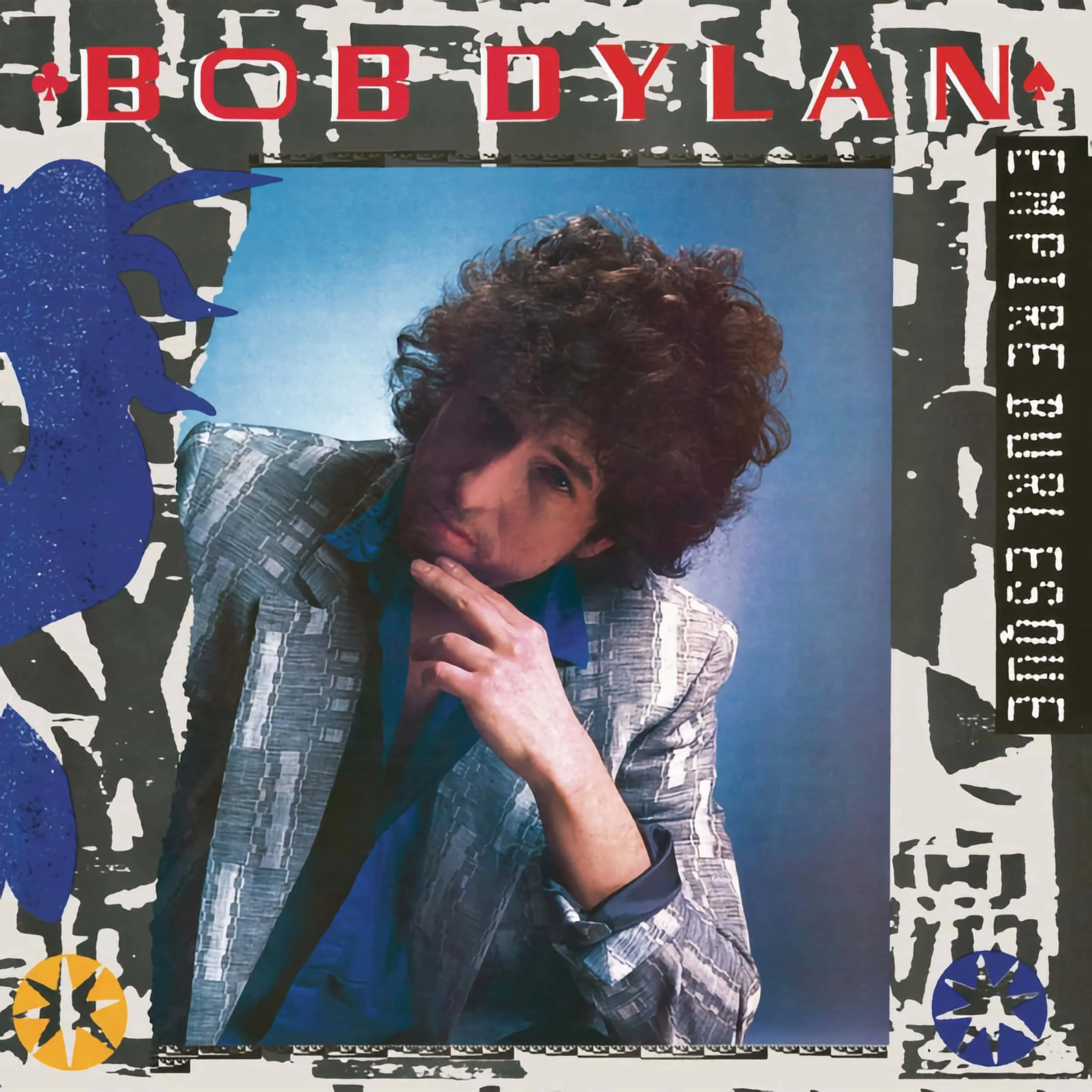
Bob Dylan – Empire Burlesque (Album Review)

Bob Dylan – Empire Burlesque (Album Review)

Released in 1985, Bob Dylan’s Empire Burlesque is a fascinating entry in Dylan’s celebrated and extensive discography, yet it, much like Street-Legal and Slow Train Coming has its detractors; especially those who favour Dylan’s early to mid-70s output. While not quite the album that Oh Mercy would become four years later, Empire Burlesque showcases Dylan’s eagerness to experiment with evolving contemporary production styles. Produced by Dylan himself, the album features a polished, modern sound with an unmistakable 80s sheen; one that isn’t, however, dated to the era.

While the music may not be dated, the album artwork most certainly is. Granted, it isn’t as kitch as some of the other albums, from the 80s, but it’s unlikely that you’ll display this album artwork with pride. Of course, if you’re like me, you may not have had the privilege to have attained this classic release on the larger vinyl canvas and while it would be lovely to acquire a copy, the Lossless Apple Music Stream, a CD-quality counterpart, is mastered respectfully; with one notable caveat. Following the album’s opening track, there’s a considerable sonic shift when Seeing The Real You At Last comes into play and this change, subsequently, is less treble-focused and, therefore, more concealed than the album’s opener. It isn’t necessarily detrimental, but it’s an aspect that may irritate some as album experiences are generally more uniform in their production styles.

Tight Connection To My Heart (Has Anyone Seen My Love?) opens the album with a catchy melody and glossy production that is perfectly suited to the era; even if it’s slightly different to Dylan’s traditional trademark style. Nevertheless, the polished arrangement, backing vocals, and overall musicality of the song make it a memorable opener.

Seeing The Real You At Last is a solid rock-driven number but as alluded to before, the sonic shift when listening to the album's sequencing is interesting as one would assume a bold and rocking sound to emanate from one’s speakers. It’s as if the song has been reduced by several decibels, but has also been muddied as it pertains to the mix. It doesn’t diminish the song, a killer rock number in its own right, but the shift may irk those of us who listen to albums in their intended sequencing, rather than random songs or playlists. That all said, Seeing The Real You At Last balances raw energy with the era’s typical propulsion of sharp guitar riffs and a driving rhythm. The result is that Seeing The Real You At Last is one of the best songs from Empire Burlesque.

I'll Remember You is a beautifully tender ballad that showcases Dylan’s ability to convey deep emotion through lyrics. Add to that the gentle arrangement, featuring understated instrumentation, that highlights Dylan’s vocals, and what you’ve got is one of the greatest ballads Dylan ever recorded.

Clean Cut Kid has a killer rhythm with a brisk tempo that’s addictively good. As usual, Dylan’s biting sarcasm and criticism of modern life come through loud and clear for this satirical number contrasts perfectly with the blues rock edge heard throughout.

Never Gonna Be The Same Again is a smooth, mid-tempo number that maintains the album’s polished production with backing vocals that add to the song’s lush texture. Interestingly, when you listen to Never Gonna Be The Same Again, the lyrical delivery from the backing vocalists is somewhat offset to Dylan’s vocal delivery and while that would normally take away from the song itself, it works perfectly and the combination makes it one of the best tunes from the record.

Trust Yourself is a motivating and empowering anthem of self-reliance. The track’s dynamic instrumentation, with its jangly guitars and keyboards, adds depth without overshadowing Dylan’s lyrics thereby making it ideal for both those who appreciate music from a purely musical perspective, as well as those who listen for literal interpretation. Ultimately, Trust Yourself is a standout and is one of Dylan’s greatest recordings.

Emotionally Yours is a masterful tune, for this soulful ballad, with its beautiful arrangement, complements Dylan’s tender and delicate vocal style. It’s so impressive that I’d place it amongst Dylan’s greatest ballads and it would be fair to say that it could very well be the most remarkable ballad he’s ever recorded.

When The Night Comes Falling From The Sky is Dylan meets rock with a touch of dance. Yes, Dylan purists will likely dislike the slick production, and while it’s far from his greatest tune, it works exceedingly well for not only Dylan’s overall style but within the context and the flow of Empire Burlesque.

Something's Burning, Baby is driven by an ominous melody that works well with Dylan’s vocal delivery. The sparse yet atmospheric arrangement enhances the song, but it’s the culmination of all musical elements that set this song apart from the rest of the tunes on the record.

Dark Eyes closes the album on a stark and poetic note. It’s this kind of stripped-down simplicity that truly highlights Dylan’s exceptional vocal skill for his folk origins shine through and allows a level of intimacy that simply isn’t present throughout the rest of the record. Dark Eyes is, subsequently, a quintessential closing track as it allows time for reflection whilst also encouraging the listener to play the record again.

Overall, Empire Burlesque captures Dylan at a crossroads, blending his timeless songwriting with the contemporary production trends of the 1980s. While some fans may be critical of this further shift within Dylan’s legacy, the album offers a compelling mix of heartfelt ballads, biting social commentary, and his trademark poetic musings. Empire Burlesque is, subsequently, a compelling chapter in Dylan’s discography for it offers a unique blend of old and new and is subsequently one of his best albums from the 80s and one of the greatest albums released in 1985.

AC/DC – Fly On The Wall (Album Review)

AC/DC – Fly On The Wall (Album Review)

Released in 1985, AC/DC’s Fly On The Wall marked a significant moment in the band’s career as it was the third album to follow their mammoth release, Back In Black (1980), and was released during a period of downturn in interest from fans the world over. Comparisons aside, Fly On The Wall was successful in its own right with sales exceeding one million units. While it’s an album that isn’t always heralded by fans as one of their best, Fly On The Wall is somewhat of a hidden gem that features their landmark hard-rocking sound via this electrifying and gritty release that is amongst the greatest hard rock albums from the 80s.

Part of the hidden appeal, considering there isn’t necessarily a standout tune on the record, is the continued high-production values for this was an era when music, especially rock music, began to shift to a more shrill tonal quality that would plague many of the era’s greatest rock and roll albums. Yet, amongst this industry shift, AC/DC never changed their styling and the result is an album that rocks as hard as any other they released. Additionally, Angus and Malcolm Young did a masterful job in the Producer’s chair, ensuring that their vision for the album came through loud and clear. It also helps that the album artwork is visually appealing with its comical design that looks as fresh today as it would have been upon release.

Sonically, as is the case with the majority of AC/DC releases, it’s a powerhouse and the Hi-Res Lossless Apple Music stream, an Apple Digital Master, is no exception for the bombastic nature remains while every aspect is clearly presented within the chosen mix and overall mastering of the album. Brian Johnson’s vocals are raw and exceptionally detailed within the soundstage; a sonic presentation that will envelop you from the very first note to the last. One of the best examples of this can be heard on Danger; where every musical element can be heard clearly but it isn’t shrill and is so sonically pleasing that you’ll be looking to turn up the volume despite being able to enjoy the record at lower volumes.

While some will always lament the fact that AC/DC has basically played the same song over and over, decade after decade, music lovers and fans alike can be confident that AC/DC never changed their style and adopted the “new” recording styles for if they had, an album such as Fly On The Wall would have been a shrill nightmare that would have seen everyone needing to turn down the treble and boost the bass. Thankfully, that isn’t an issue here, so turn up the volume, sit back, and let’s take a look at the songs that make up this, often, overlooked, masterpiece.

Fly On The Wall kicks the album off, perfectly, with an energetic opener featuring sharp guitar riffs, bold percussive elements, and Johnson’s unmistakable growl.

Shake Your Foundations would also make it to Who Made Who, the soundtrack accompanying Stephen King’s film Maximum Overdrive. That version, however, differs slightly from this one as it was remixed and cut down slightly in runtime. As to which I feel is the stronger version, that would be this original album release for despite the remix presenting Johnson’s vocals more prominently, it pales in comparison to the original as the musical bed is somewhat recessed and the song, subsequently, doesn’t rock as hard as the Fly On The Wall original does. Propelled by a driving beat, bluesy rhythm, and sing-along chorus, it’s a wonder that Shake Your Foundations hasn’t remained more prominent within AC/DC’s back catalogue as it’s an exceptional tune.

First Blood is a mid-tempo blues rocker with duelling guitars that weave together seamlessly. It’s quintessentially AC/DC and sometimes you don’t need to forge a new path to stand out, for I’d take songs like First Blood over a shifting style any day of the week.

Danger has a brooding tempo that shows a different side of AC/DC; one that could offer a more blues-focused appeal than the hard rock styling most commonly associated with the band. However, one can understand why it wasn’t a hit amongst fans, at the time, but I have a feeling that modern audiences would be much more receptive to this mood-driven eerie number.

Sink The Pink is, arguably, the song that would appeal to most of AC/DC’s legacy fans for it combines their renowned playful attitude with an infectious groove and some hard rocking licks.

Playing With Girls is a fast-paced rocker that leans heavily into AC/DC's cheeky, tongue-in-cheek persona. While the core riff is straightforward it, combined with the song’s energy, keeps the momentum going and is a standout on this release.

Stand Up is a magnificent tune and is one of Simon Wright’s greatest drum performances with the band, having taken over that role upon Phil Rudd’s departure. In truth, Wright performed magnificently throughout the album and while his style is slightly different to Rudd’s, his appointment didn’t detract from the music at all. I’d even go as far as saying that his inclusion was an enhancement. Nevertheless, Stand Up is a raw, back-to-basics, tune that will have you coming back for more.

Hell Or High Water is a hard-hitting anthem with a relentless rhythm. AC/DC doesn’t get much better than this as Hell Or High Water will appeal to all fans of the band.

Back In Business is a killer mid-tempo rocker with a powerful riff and a driving rhythm section. Its anthemic quality adds to the album, as well as AC/DC’s incredible back catalogue, in such a way that you’ll experience an earworm as that catchy chorus will remain front and centre in your mind well after the album has concluded.

Send For The Man is an ideal closer with its heavy, blues-infused, sound, featuring a grinding riff and thunderous rhythm that ensures the record ends on a high note; one which will compel you to listen to the album again for Fly On The Wall can seldom be listened to once.

Fly On The Wall may be a polarising release within AC/DC’s discography, but it shouldn’t be as the band’s signature hard rock energy is present throughout as it accompanies the infectious riffs and anthemic choruses they’re best known for. Hence, if you’ve overlooked this release, and have never given it a proper listen, I implore you to give it another shot for you may just fall in love with the album’s raw, unfiltered, and rebellious spirit; I know I have!

Skyhooks – Living In The 70’s (Album Review)

Skyhooks – Living In The 70’s (Album Review)

A debut like no other; an Australian masterpiece!

That is, perhaps, the best way to describe Skyhooks’ Living In The 70’s, for they may not have known it at the time, but Living In The 70’s would go on to become one of the greatest albums ever recorded.

Beloved in Australia, Skyhooks never really made inroads into the international music scene. Subsequently, many international readers may be unaware of their music and the influence they’d have over generations of Australian rock bands to come. Thankfully, streaming allows you, dear reader, to listen to Living In The 70’s, wherever you are and there is no time like the present to check out one of the most controversial, yet praised, debut releases ever by an Australian band.

Living In The 70’s was controversial in that the Federation of Australian Commercial Broadcasters decided to ban six of the songs from the album, from national airplay, citing sex and drug references. Of course, the counter-culture teenage population, at the time, wasn’t going to be told what they could and couldn’t listen to and Living In The 70’s quickly rose to #1 on the charts, selling 226,000 copies in its first year; a feat never before seen within the Australian music industry.

Not only was their sardonic view of the zeitgeist in Australia in the 70s a pivotal element for Skyhooks, but they had a hook and they caught us hook, line and sinker, with their catchy blues-based groove rock and combined glam rock style. To say Skyhooks was multifaceted would be a borderline understatement, for their musical style defies adequate explanation. Living In The 70’s is, subsequently, an album that needs to be heard in order to be fully understood and appreciated. Exceptionally written, recorded, mixed, and mastered, you’ll be in pure musical bliss for the entire duration.

The edition of Living In The 70’s that I’m fortunate to own is the remastered CD from 2004 with the additional B-side, Broken Gin Bottle; a perfect addition to an already flawless album. The CD, however, isn’t quite as perfect as I’d like it to be as the booklet has a printing error whereby several pages of the liner notes are missing, replaced by liner notes from a Linda Ronstadt compilation. Now, I have nothing against Ronstadt; a phenomenal musician in her own right, but this is a Skyhooks album and I’m missing all the lyrics except for the title track and Broken Gin Bottle. It’s a frustration, to say the least, but the sound quality is so good that I haven’t bothered with a replacement.

Yes, Living In The 70’s is a remaster and while I’ve been critical of remasters over the years, this one is done nicely, with respect for the source material. It sounds right, unlike the remaster of Cold Chisel’s Circus Animals. The soundstage is wide and enveloping and every instrument can be heard with incredible clarity. The Lossless Apple Music stream, by comparison, is a solid CD facsimile but isn’t quite as live-sounding as the remastered CD. As usual, if you don’t compare the editions, you’re unlikely to notice anything is lacking, but the CD offers a more enjoyable listening experience as the music has a fluidity that is missing from the streaming counterpart despite being derived from the same mastering sessions.

Additionally, a vinyl reissue is on its way, scheduled for an early 2025 release, along with a CD edition that celebrates the 50th Anniversary of the album. One problematic aspect, however, is that it’s said to be a new 2024 remaster. Let’s just hope that it has been handled with respect for the source material for I still declare the 2009 remaster to be perfectly fine. Nevertheless, it seems somewhat fitting that one of the greatest Australian albums of the 70s finds its way back to the format that it was originally presented on; if for no other reason than to display that incredible album artwork.

Living In The 70’s is a killer, rhythmically charged, opener that will have you singing along as you grooving to the music. It has some exceptional guitar and percussion work that showcases the polish and musical skill Skyhooks had right out of the gate, but it’s the song’s references, and sharp critique, to counterculture and societal expectations, that strike a perfect balance between humour and reflection. The result is that Living In The 70’s is one of the greatest debut album openers of all time.

Whatever Happened To The Revolution continues with the upbeat tempo and in many respects, Skyhooks has a similar style to The B-52’s, in that it becomes a fun listen that’s unique when compared to much of the music of the era. Even by modern standards, Whatever Happened To The Revolution sounds fresh with its crunchy guitar riffs and high-energy rhythm.

Balwyn Calling is packed with vivid imagery, a funky bassline, and melodic guitar hooks that give this song its playful edge and ensure that it’s one of the most memorable tunes from the album.

Horror Movie is, without a doubt, my all-time favourite song from Skyhooks. It’s also, arguably, Skyhook’s most iconic tune for its an unforgettable anthem and Graham “Shirley” Strachan’s powerful vocals bring Greg Macainsh’s satirical lyrics to life. However, it’s the overall vibe that takes this song to another level for it is most certainly positioned in the 70s style but has remained timeless and still resonates with rockers the world over.

You Just Like Me ‘Cos I’m Good In Bed says it all, doesn’t it? It’s a fun tune that will bring a smile to anyone's face. While I can understand why the Federation of Australian Commercial Broadcasters banned this tune and five others, I’d call it overkill as we really can take ourselves a little too seriously at times. Nevertheless, it’s a great song; one that flows beautifully within the album’s linear structure and, again, showcases just how proficient Skyhooks were from the get-go.

Carlton (Lygon Street Limbo) incorporates the energy and musicality of Australian music in the 70s, despite the mid-tempo styling. While it isn’t a standout, it’s a quintessential album-only tune that ensures the album is structurally sound and the sum of its parts, rather than being appealing because of one or two songs. 

Toorak Cowboy is a toe-tapping, head-bopping, good time with a country meets glam rock style that is highly appealing.

Smut, true to its name, pushes the lyrical boundaries with its tongue-in-cheek wordplay atop a compelling musical backdrop. It’s a fun song that showcases the band’s irreverence as they challenged societal norms with their bold take on taboo topics.

Hey What’s The Matter is groovy; try sitting still through this one. As with much of the album, it’s impossible to not groove along to the music. The result is that Living In The 70’s can very easily become the ideal soundtrack to an energetic life.

Motorcycle Bitch is gritty riff-driven heaven and Strachan’s vocals on Motorcycle Bitch, in particular, are magnificent. There’s little doubt in my mind that he was one of the greatest vocalists to ever record a tune. Bon Scott is usually held up as the poster child for Australian rock and roll vocals and while this doesn’t take anything away from his vocal prowess, Strachan was on par, if not slightly more capable as a vocalist, particularly concerning pronunciation. I mention this as I don’t feel Strachan has ever received the recognition he deserved.

Broken Gin Bottle was not part of the original tracking of Living In The 70’s, having been released as the B-side to the Living In The 70’s single. However, I couldn’t imagine the album without it as it fits the overall styling so well. Again, and I know that I’m repeating myself, the gritty blues-infused guitar work is extraordinary and will compel you to listen to the album again.

Living in the 70's is a bold, unapologetic, and groundbreaking album. Skyhooks' ability to combine biting social commentary with infectious melodies and a uniquely Australian identity made it a cultural touchstone but this debut isn’t just an album, it’s a cornerstone of Australian music history and one of the greatest albums ever recorded.