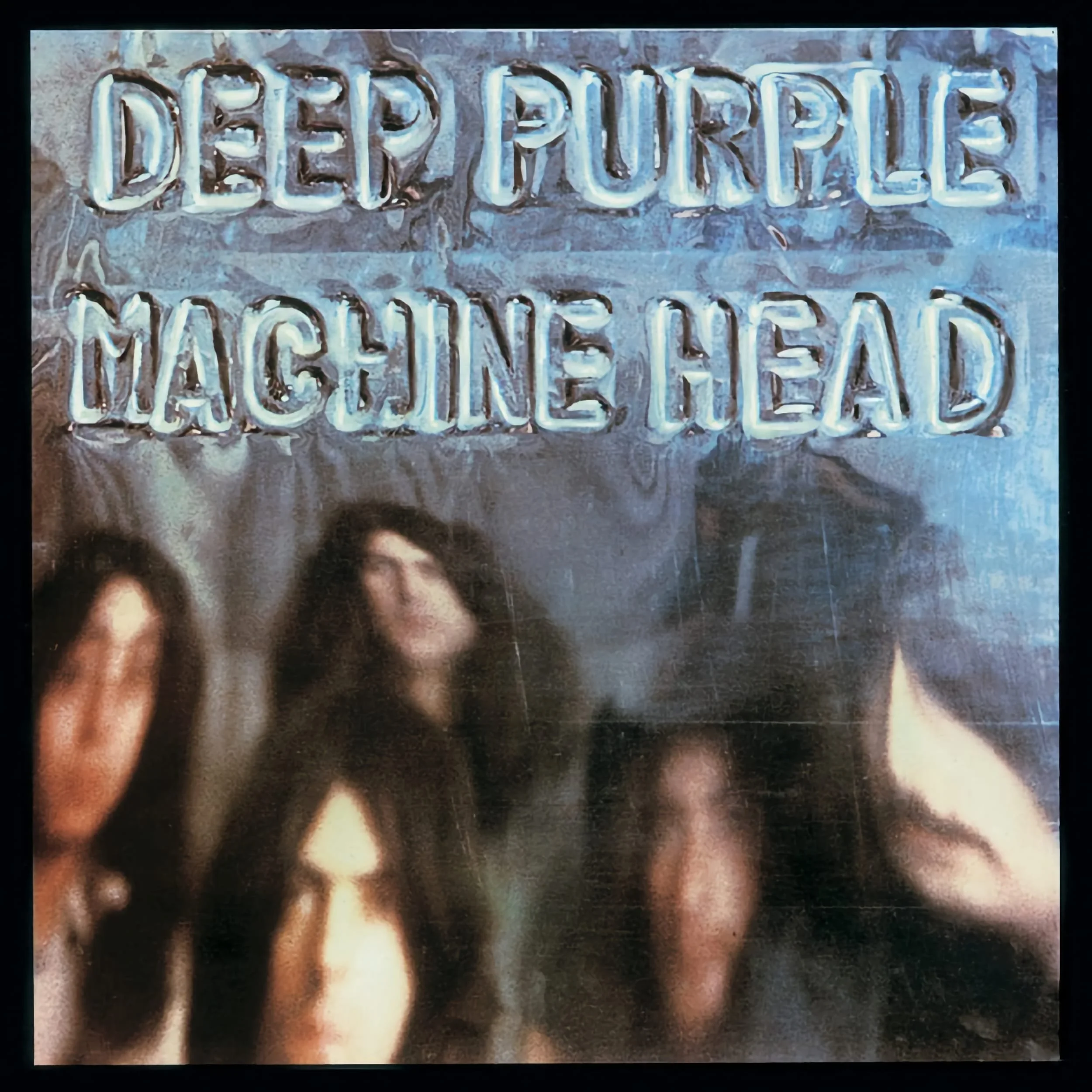
There are hard rock albums, and then there is Deep Purple’s Machine Head; perhaps the greatest heavy metal album of the ‘70s, or of all time.
Yes, dear reader, that is a bold statement, but Machine Head is no ordinary record, for it not only sees the English rockers at the peak of their creativity, but its blistering musicality knows few peers, for it laid the groundwork for heavy metal, and is akin to what one would expect from a greatest hits release. In essence, few albums have defined a genre as much as this one; it has inspired generations of musicians and remains a reference point for what a hard rock album should sound like.
Released in 1972, Machine Head is the sixth studio album from Deep Purple and featured the second lineup of the band: Ritchie Blackmore (guitars), Ian Gillan (vocals), Roger Glover (bass), Jon Lord (keyboards), and Ian Paice (drums). While fans will likely argue over their preferred lineup, it’s impossible to deny just how strong this Mark II lineup was, for their output is otherworldly.
Of course, it isn’t just the music that demands one’s attention, as the album artwork and blurred band image is utterly perfect, aligning ideally with the metal-based music that’s contained within the record. There is, however, an alternative cover art design, but we shouldn’t speak of it as it’s the most pedestrian of covers with the band sitting in the studio, looking downright bored with themselves. To think that the record label would reissue such a landmark release with this artwork, for the album’s 25th Anniversary, leaves me speechless; it really does.
As it pertains to the sonic quality of the lossless Apple Music stream, an Apple Digital Master, it’s sensational. You’ll be rocking out with your air guitar and forgetting about the worries of the world as the music melds with your soul; an aspect that, should you allow it to, will intertwine with your subconscious and never let go. Sounds scary? It isn’t. It’s a gift from the rock gods themselves.
Every aspect of the recording is stunningly presented and preserved with no glaring issues to report. It is so sonically pleasing that I can’t see the benefit of picking up a physical release; aside from the ownership and tactile aspects, that is. Yes, there are lauded after surround sound mixes, all of which are interestingly absent from Apple Music, but that’s okay because this fan prefers stereo editions, especially when they’re done this well.
Highway Star is an anthem-styled rocker that’s a perfect opener for this incredible release. From the uptempo riff to the soaring guitar solos to Gillan’s masterful vocal presentation, “Highway Star” never ceases to amaze, yet the album has only just begun, and it continues to get better. It’s as if Deep Purple set out to prove they were the fastest, tightest, and loudest band on the planet, and they delivered.
Maybe I'm A Leo is a masterpiece and, in my subjective opinion, is the greatest song not only from this album, but that Deep Purple has ever recorded. It’s attitude-driven blues-based rhythm is off-the-charts and perhaps it’s a blessing in disguise that outside of the album, “Maybe I’m A Leo” is less well-known, for as much as I adore “Smoke On The Water”, it has been played to death over the years, yet “Maybe I’m A Leo” has a fresh feel to it.
Pictures Of Home is a thoroughly enjoyable album-only number, complete with the sonic cues that Deep Purple are renowned for. While it most likely isn’t at the top of anyone’s list, as it pertains to the songs that bring them back to Machine Head time and time again, it’s more than a solid tune that flows well within the album’s linear structure.
Never Before brings the funk, with a killer introduction that leads seamlessly into one of Deep Purple’s most compelling songs. There’s little wonder as to why it was released as a single, for its straightforward hard rock approach meant that it was easily accessible (think radio-friendly), particularly beyond the band’s core audience.
Smoke On The Water may well be one of the greatest songs ever written, with a riff that is nothing short of legendary, but it still doesn’t trump “Maybe I’m A Leo” despite it being amongst my favourite songs from the band. No, I’m not trying to be controversial with that statement; it’s just my subjective truth as “Smoke On The Water” has been overplayed, and if it were not for the trademark riff and associated heavy groove, it would be a solid, but not exceptional, rocker.
Lazy is a wonderfully distorted composition akin to a jazz band’s jam session, but with Deep Purple’s blues-based hard-rocking flair. While some may lament the song’s length or the indulgent nature of the tune, when Deep Purple has such incredible music, as heard on Machine Head, let alone their other albums, one can accept a somewhat experimental tune that sees the band not only explore their artistry but also their cohesion with each other. Had it not been for songs like this, the wonderfully expansive and expressive Made In Japan may not be the celebrated recording it is.
Space Truckin’ flows seamlessly from “Lazy” but adds a little more energy and a darker vibe. It’s so compelling that if you don’t find yourself putting “Space Truckin’” on repeat, you’ll most certainly feel compelled to play the album again, for Machine Head will keep you immersed for hours.
From start to finish, Machine Head is a literal masterpiece that is not only Deep Purple’s most successful release, but is also amongst the most influential albums of all time. Artists such as Metallica, Iron Maiden, and Van Halen have cited Deep Purple as an influence on their music, and one can understand why, as the songwriting, performances, and overall production are textbook examples of how to produce a legendary release, one that has not only stood the test of time but will exist for millennia.
