Bob Dylan – Street-Legal (Album Review)

Bob Dylan – Street-Legal (Album Review)

Released in 1978, Street-Legal moved the needle of Bob Dylan’s creative output from a folk-based acoustic style to a pop-rock driven form that blends with his poetic singer/songwriter versatility, thereby ensuring that Street-Legal, and future releases, would be more accessible while simultaneously building upon his previous styles. Naturally, not everyone saw the brilliance in this move, and as exceptional as Dylan’s 60s-era works are, it’s his late 70s releases that intrigue me the most. 

As Dylan’s 18th studio album, it, therefore, becomes understandable that longtime fans would have been less than impressed with the stylistic changes, but what isn’t in question is the fact that the music featured on this release hasn’t aged. Sure, there are recording choices that can be linked back to the era, such as a focus on backing singers, but as you listen to Street-Legal, or any of his other albums, other than the topic of discussion within his lyrics, the musicality is as fresh today as the day it was recorded. It’s an incredible feat and one that while not alien to the music industry is an anomaly nonetheless. 

Sonically, Street-Legal has a full-bodied sound and while it would be nicer if the soundstage had a little more width and depth, the shallowness adds to the sonic presentation. While a broader soundstage sounds good in theory, it would likely dramatically shift the album, most likely resulting in a less-than-stellar sonic presentation. 

Interestingly, Don DeVito, the album’s producer, would remix Street-Legal in 1999 in order to offer a slightly different mix that would result in a richer presentation. As far as I can ascertain, the version available on Apple Music, which is the focus of this review, is the remaster of the original 1978 mix. I’ve reached this conclusion as the remixed version of Changing Of The Gods has a runtime of 7:04 whereas the original runs slightly shorter at 6:37.

While the lossless Apple Music stream isn’t an Apple Digital Master, unlike Slow Train Coming, it doesn’t suffer from this omission. It sounds as one would assume the remastered CD would have sounded and is thoroughly enjoyable. The only advantage of an Apple Digital Master, and Hi-Res Lossless presentation, would be a little more refinement in the minutia of the recording.   

For those who aren’t streaming-first music lovers, Street-Legal continues to be reissued on both the black and silver discs of yesteryear and I, for one, am thoroughly pleased with that knowledge for I see streaming as a perfect counterpart to a tightly curated vinyl and CD collection. 

Regardless of how you choose to enjoy Street-Legal, it’s an underrated gem in Bob Dylan’s back catalogue. No, it will never be his greatest record, but as an album, rather than merely a collection of songs, it’s spectacular in its own right and is among his greatest releases. While many will analyse every lyric, I much prefer to consider Dylan’s vocal as an instrument rather than a storytelling device and subsequently won’t delve into lyrical interpretations.

Changing Of The Guards has a slow build. It’s as if someone has turned up the volume after the song had already begun. Let’s be honest, it’s far better than an abrupt opening and is perfectly suited to the overarching style of the album. Coming from Dylan’s 1976 release, Desire, the first thing you’ll notice is the backing singers. While I’m a fan of backing vocals, they can make or break a song and I remain on the fence as to how well they are implemented here, and throughout the entire album, as it has the potential to detract from Dylan’s vocals while also becoming a little repetitive. Yet, after repeat listens, it doesn’t bother you as much as you would think it does and given I thoroughly enjoy Changing Of The Guards in every other way, it’s one aspect that I’m willing to look past in order to enjoy this solid Dylan tune.

New Pony is a moody blues-styled tune with a slow tempo that will see you toe-tapping and head-bopping to the rhythm. It’s a brilliant song that is not only worthy of inclusion on Street-Legal but is essential to Dylan’s back catalogue. Plus, that mid-song guitar solo is what air guitar dreams are made of. It’s just a shame it isn’t longer and more prominent in the mix.

No Time To Think has a lovely slow waltz to it and if you remove the stylistic elements, No Time To Think is more aligned to Dylan’s 60s works than you may otherwise think as the core elements that made Dylan so successful have remained present on this song and throughout the entire album. 

Baby, Stop Crying is a great tune, although I’m not too fond of the opening as I feel it doesn’t get to the crux of the song quickly enough. The backing vocals here are great, and perfectly positioned in the song structure, but I would have loved for them to be turned down a decibel or two as I feel the subtleness would have made the song even stronger by allowing Dylan’s vocal to be more prominent. Regardless, I love this tune! 

Is Your Love In Vain? is musically stunning, with a perfect mix, and is one of my all-time favourite songs from Dylan. 

Señor (Tales of Yankee Power) is a masterpiece!

True Love Tends To Forget segues seamlessly from Señor (Tales of Yankee Power), although, you’ve likely never heard this tune before unless you’ve listened to Street-Legal for it’s another of those hidden gems with a solid mix and overall presentation. 

We Better Talk This Over picks up the tempo a little; a great tune! While you’ll likely never seek it out on its own, as an album track it’s thoroughly enjoyable and it’s important to remember that every song doesn’t need to be a knockout or a hit to have merit. 

Where Are You Tonight? (Journey Through The Dark Heat) is another hidden gem and a lovely closing tune that encourages me to play the album again. 

Overall, while I find Slow Train Coming to be the better of Dylan’s late 70s releases, Street-Legal is compelling and if you give it a chance, without necessarily comparing it to his landmark 60s works, I’ve no doubt you’ll come to a similar conclusion. Sometimes we can be too judgemental in our comparisons and we tend to forget that the aim is to simply enjoy the music. I don’t know about you, dear reader, but I’ll take an album that grooves with my soul over one that is critically and commercially acclaimed but fails to do so. As a result, Street-Legal is subjectively one of Dylan’s greatest releases. 

Bob Marley & The Wailers – Kaya (Album Review)

Bob Marley & The Wailers – Kaya (Album Review)

Few reggae albums are as relaxed as Kaya, but this easygoing styling is what makes this 1978 release a timeless classic. While many would point to their 1977 release, Exodus, as being their musical opus, Kaya is more consistent, accessible, and plays like a greatest hits release whereas Exodus only comes alive during the second half of the album. It’s a minor variation, but other than the exceptional Legend collection, when I want to just sit back and relax, Kaya is one album that’s always at the top of the list. 

The problem is, as is the case with many albums from the 70s, there are too many editions to contend with. Physical media fans will understand this only too well, but even on streaming we’re met with the standard lossless release, the Dolby Atmos mix, the 40th Anniversary remix, and the Deluxe Edition that contains a barebone live recording from 1978. It simply becomes a troublesome matter of deciding which version to listen to.

Longtime readers will note my general disinterest regarding bonus tracks (even if they’re live, as is the case here) as they’re rarely worthy of listening to more than once and a new mix, particularly one not sanctioned by the original artist, is questionable at best. Hence, I appreciate that The Island Def Jam Music Group has ensured that the original LP track listing and mix remains available on Apple Music, as an Apple Digital Master, as it is superb and highlights the top-notch production values and musicality of the recording. It’s imperative to note that the CD reissue series that accompanied Kaya 40 was released as a double CD and the original mix and Kaya 40 are subsequently placed on different discs; just the way it should be! 

Delving a little deeper into the different editions, I find the Dolby Atmos mix isn’t anything to get excited about. It isn’t poor, by any standards, yet it doesn’t add anything to the album that wasn’t already there. Yes, some musical elements are clearer via this surround mix, but others are a little more subdued compared to the stereo counterpart. Perhaps it is simply a case that I’m more familiar with the stereo mix and subsequently prefer to stick with it as I seemingly know every note and instrument placement within the recording. I’ve no doubt, however, that those who are new to Bob Marley & The Wailers will likely find their preference leans towards the surround mix as it is a little more in line with modern recording styles and techniques. 

While this review is predominantly focused on the original stereo mix, Kaya 40 is interesting. Believe it or not, that is a compliment! However, as with the surround mix, it changes Kaya and not necessarily for the better. Although, I can appreciate some of the mixing choices on this release, as there are elements that are more pronounced than ever before, that does come with a downside as other elements are minimised or hidden. As with all music, it is subjective and your perspective may, and probably will, differ from mine. Is there a wrong way to listen to Kaya? No, it’s an incredible album with a rich heritage, I just prefer my original releases and mixes far more than modern interpretations. 

Easy Skanking is a relaxed mood setter and is an incredible opening tune. It helps that it was mixed and recorded impeccably well, for each musical element is identifiable throughout the soundstage.

Kaya is a solid title track but this wasn’t the first time the song was recorded for it also made an appearance on the, now out-of-print, 1971 album Soul Revolution Part II. That original recording is about as bare bones as you can get and plays like a demo. Still, if you track it down, you’ll hear the essence of the original tune in this excellent re-recording. 

Is This Love, as I’ve said before, has a simple, yet complex beat, combined with vocals and an overall tonality that will get your body moving. As the most well-known song from Kaya, and one of Bob Marley & The Wailer’s all-time greatest hits, Is This Love remains a timeless classic that will live on well beyond the demise of humanity. Magnificent!

The music video is solid, particularly for the era, but the most magical moments arise from Marley’s incredible smile. You can’t help but see the joy and love on his face and even after all these years, it remains infectious and capable of brightening up your day. 

Sun Is Shining is a re-recording as this song initially appeared on the 1971 release Soul Revolution Part II and African Herbsman in 1973. The Soul Revolution Part II version is fantastic. It’s not as polished as the interpretation on Kaya, but the unique underproduced style is mind-blowingly good. The African Herbsman edition adds a little more spit and polish to that original recording and it’s exciting to hear the evolution of the song. Now, while these are out-of-print, if you head across to YouTube, you can easily find these early recordings. In this case, it is most certainly worth your time. 

Original releases aside, Sun Is Shining is a great tune that fits well within the context of the album. I would have, however, loved to have heard the guitar tracking placed more prominently in the mix as it needs to be upfront with Marley to achieve the required impact. Yes, doing so would have diminished the laid-back styling of the song, but it would have been better nonetheless. The Kaya 40 mix somewhat addresses this element, while also ensuring the bass guitar is more prominent in the mix, but the other elemental aspects, of this particular edition, detract from the soul of the original Kaya mix. 

Satisfy My Soul is a landmark Marley & The Wailers tune, but this version is another that wasn’t originally released on Kaya as it was recorded for Soul Revolution Part II and was titled Don’t Rock My Boat. The original recording isn’t great so save your time and simply listen to this exceptional re-recording.

She’s Gone is toe tapping, head bopping, gold. While some may lament the slower styling heard throughout Kaya, and on She’s Gone, I love it as it’s akin to a meditation session. 

Misty Morning has some lovely horn work, but as with Sun Is Shining, it would have been fantastic had the brass been more prominent in the mix. Yes, the Kaya 40 mix helps a little but it’s also not as relaxed as the original release. All that said, it becomes apparent that Misty Morning could have been recorded with two completely different tempos, both being equally exceptional. Misty Morning is a great tune, regardless!

Crisis has a killer groove and as good as Marley’s vocals are, Crisis is all about The Wailers’ musical layering for there’s so much detail present on the recording that you’ll hear something new every time you listen to it. Incredible!

Running Away is so underrated it’s criminal. This is one reason why listening to albums, rather than compilations or playlists, is essential, otherwise, you run the risk of missing out on some stunning music; Running Away being one such example. Admittedly, Running Away has made an appearance on Bob Marley & The Wailers’ Essentials Playlist but it was left off Legend – The Best Of Bob Marley & The Wailers; an unforgivable omission!

Time Will Tell closes out Kaya beautifully, although Running Away would have been a stronger closer. Nevertheless, Time Will Tell leaves me in a contemplative mood and is great for late-night listening sessions where placing the album on repeat isn’t of paramount importance.

Overall, Kaya is a timeless reggae classic that showcases Marley's prowess as a singer, songwriter, and performer. With its upbeat, feel-good, tunes and Marley's unique blend of political and spiritual themes, combined with his smooth, soulful voice and catchy melodies, Kaya becomes a must-listen for any reggae music fan. 

Måneskin – RUSH! (Album Review)

Måneskin – RUSH! (Album Review)

If Gene Simmons was right and rock is dead, nobody told Måneskin for RUSH! is a modern rock masterpiece. 

Released worldwide on the 20th of January 2023, RUSH! is the Italian rockers’ third studio album and while the previous releases, particularly their debut Chosen, have been exceptional in their own right, RUSH! takes their musicality to another level entirely and, certainly at this point, I don’t know how they’ll top this album; yes, it is that good and even though the year is still young, it most certainly has the potential to be not only the best album released in 2023 but to become a classic rock album for generations to come.    

Perhaps one of the most compelling aspects of RUSH! is Måneskin’s continued homage to their heritage by intermingling Italian-based lyrical tunes with English ones. Some may lament this fact, but as someone who appreciates the human vocal as an instrument far more than a storytelling device, I love this amalgamation and sincerely hope that they never change the formula for it works perfectly. It also doesn’t hurt that Damiano David’s vocal prowess, and natural charisma, is one of the greatest and most unique to enter the music scene in decades.  

Sonically, the band and the entire production team need to be congratulated for this is one exceptional release. The soundstage is as wide as it is deep and is utterly immersive and I’m just talking about the stereo mix for we’ll get to the Dolby Atmos mix in a moment. There’s no audible clipping or loudness atrocities to note and this is one album that you’ll never experience fatigue when listening to it. Yet, it’s loud and has a full-bodied sound; it simply rocks. 

While I’ve yet to pick up a vinyl edition, my only hope is that the physical counterpart will live up to the Lossless Apple Music stream. It may not be an Apple Digital Master, but it doesn’t need to be as it has been mastered so well, to begin with. That said, given how much I appreciate the stream, I subsequently question the need to pick up the vinyl release; although the larger artwork is compelling. 

As it pertains to the Dolby Atmos mix, it doesn’t knock my socks off. Look, surround mixes are great, when they’re done with discrete channels in mind, but the modern simulated surround options don’t always offer the greatest reproduction for music; films are another matter entirely. Nevertheless, while there will be many who will enjoy the Atmos mix, I found that it tried to place the listener in the middle of the band too much, thereby reducing the impact of each instrument within the mix. Rock music needs to be felt and the surround mix reduced that thumping rock sound we all know and love. There’s just more emotion to be heard and felt from the wall of sound style that is associated with the stereo mix. 

OWN MY MIND is a great album opener with a killer drum and bass rhythm throughout. OWN MY MIND sets the tone for the entire album and gets your body moving involuntarily from the very first note.  

GOSSIP (feat. Tom Morello) continues with the upbeat rocking rhythm and is one of my favourite songs on the album. It’s a fun listen and if you have a chance, check out the music video for it amplifies the song. Additionally, Tom Morello nails his solo and perfectly complements Måneskin’s style while staying true to his own recognisable sonic signature; such a great musician!

The music video is brilliant. It’s been quite some time since I’ve seen such a well-produced music video and it plays to the band’s persona as well as highlights the song. Morello as the security guard is priceless. I’ve never seen a better introduction for a guitar solo, ever. Yes, the non-musical elements, throughout, detract somewhat from the song itself, but they never feel out-of-place; although the ending is a little slow in direct contrast to the energy of GOSSIP. 

TIMEZONE dials the tempo down a little, but the shift doesn’t shock the senses as can often occur when albums shift direction. While TIMEZONE is unlikely to be a fan favourite, or stadium-filling song, it’s a solid album tune; sometimes that is all that’s needed. 

BLA BLA BLA is FUN! 

BABY SAID continues with the upbeat rock meets pop meets dance floor vibe. It’s so addictive as the rhythm intertwines with your soul; an aspect present in all good music. 

GASOLINE opens with the most overdriven, yet perfect, bass tracking I think I’ve ever heard; Victoria de Angelis, you’re a rock goddess! GASOLINE, without a doubt, is a stadium-filling tune if there ever was one and fans should expect to see it performed live for decades to come.

FEEL opens with David’s incredible vocal and, on this particular song, reminds me of Freddie Mercury. While the vocal is of particular note here, that would be dismissing all other aspects of FEEL for if you haven’t already, you’ll want to turn this rock and roll tune up to 11; exceptional!

DON’T WANNA SLEEP again features some incredibly talented vocal licks that are a highlight and in this case, are the specific reason why DON’T WANNA SLEEP works so well.  

KOOL KIDS has a punk-rock Iggy Pop feel. What’s not to like? 

IF NOT FOR YOU shifts the style of the album, but the tracking has been done so well that, again, there is no jolt to the senses. Regardless, IF NOT FOR YOU is a simply beautiful song and only bested, from a ballad perspective, by THE LONELIEST. 

READ YOUR DIARY is a thoroughly enjoyable album-based rock tune; but other than a deep cuts playlist, READ YOUR DIARY is unlikely to receive much attention outside of this album as, when compared to all other songs on RUSH!, it simply isn’t as strong. 

MARK CHAPMAN is a song you need to listen to for the chorus alone; brilliant! The verses and musicality throughout, while adequate, are filler by comparison. 

LA FINE is so good. As one of the Italian-based tunes, I don’t even care what the song is about for every musical layer, including the lyrical delivery, permeates my soul to become an experience that has to be heard and felt. Exceptional!

IL DONO DELLA VITA in a similar vein to LA FINE will still appeal to those of us who don’t speak or understand the Italian language for it is so beautifully crafted that it can be appreciated from a musical perspective alone.

MAMMAMIA ain’t ABBA’s Mamma Mia but one can’t listen to MAMMAMIA without correlating the whimsical catchy aspects of both tunes. Released as the lead single, the punk meets rock with a touch of dance styling ensures MAMMAMIA will be a fan-favourite. 

The music video, while artistic, does little to amplify the song.

SUPERMODEL has a bit of a Red Hot Chilli Peppers vibe to it. It’s a solid pop-rock tune but isn’t going to be as timeless as some of the other songs featured on RUSH!.

The music video simply exists. It isn’t great.

THE LONELIEST is the perfect closer and one of Måneskin’s greatest musical achievements to date. It’s contemplative with a slower tempo, meaning that you can either finish listening to the album and ponder in appreciation or spin it again for RUSH! is an album you can’t listen to only once. 

The music video, for THE LONELIEST, is cinematic and well-produced, but it’s not as memorable as the song itself.

Overall, RUSH! is tight with a perfect runtime and linear tracking. It is most certainly an album experience and one that should be enjoyed in that context. Naturally, you’ll find individual songs that will stand out from the crowd as each has its own story to tell. THE LONELIEST is one such song, but I find it becomes even more special waiting in anticipation for it to appear in the chosen tracking, than placing that single song on repeat or in a playlist. That said, it really doesn’t matter how you choose to enjoy RUSH! as it’s an outstanding example of modern rock at its very best.  

Bob Seger & The Silver Bullet Band – Stranger In Town (Album Review)

Bob Seger & The Silver Bullet Band – Stranger In Town (Album Review)

There are classic albums and then there is Stranger In Town; an album that was monstrously successful in the United States but flew well under the radar worldwide. While releases were different and often region-restricted, back in 1978 when Stranger In Town was released, our modern interconnected world breaks down those barriers allowing us to all appreciate the masterpiece that is Stranger In Town; Bob Seger’s greatest musical achievement.

One aspect that isn’t so good, especially in the era of streaming, is the lack of acknowledgement of The Muscle Shoals Rhythm Section. Seger obviously had his own band, The Silver Bullet Band, but they would only play on four of the nine tracks heard on Stranger In Town, whereas The Muscle Shoals Rhythm Section played on the other five. Granted, Bob Seger & The Silver Bullet Band, at that time, was sold as more of a band than a solo project for Seger, but while The Muscle Shoals Rhythm Section were respectfully highlighted in liner notes on all physical mediums, streaming offers music-lovers no such acknowledgement which is a shame considering their input to Seger’s creative output. 

Perhaps it shouldn’t bother me as much as it does, but The Muscle Shoals Rhythm Section was an exceptional group of session musicians that recorded hundreds of songs, many of which you’d know immediately by hearing their trademark R&B meets soul with a touch of country; a hallmark sound of the southern United States. One such song, and their most successful hit, was Respect. Yes, Aretha Franklin’s Respect! 

Naturally, this is one aspect of streaming that leaves me cold towards the flexible format, despite its convenience, for it generally lacks information for those of us who deem such knowledge to be imperative. Most music listeners wouldn’t consider this a point of contention, but when you listen to Stranger In Town, you can most certainly hear the different styles between The Silver Bullet Band and The Muscle Shoals Rhythm Section. Hence, Stranger In Town would not be the album it is without the involvement of The Muscle Shoals Rhythm Section. 

While I’m lamenting the absence of liner notes from digital counterparts, I also have to note that Stranger In Town hasn’t seen a physical media release since the 2001 CD remaster; most likely the source of the Lossless Stream on Apple Music for it isn’t an Apple Digital Master and is only delivered in 16-bit 44.1 kHz CD-quality sound. Truth be told, there’s nothing fundamentally wrong with the stream that a little EQ or tone control manipulation can't fix.

Dialling up the mid to low-end bass gets the album rocking a little more as it’s a rather clinical reproduction without this boost to the signal path. Purists, however, will likely point to the clarity and soundstage which is most certainly present, but it doesn’t allow for turning the volume up as the overall sound becomes even more brittle when doing so. A shame considering Stranger In Town is an exceptional, timeless, album that deserves to be played loud. 

Hollywood Nights is a great high-energy opening track that sets the tone for the entire album. Bill Payne’s piano and organ elements are perfectly suited to the song, but I can’t help but wish that they had been more prominent in the mix as I feel it would have taken Hollywood Nights to another level. 

Still The Same is a simply gorgeous soft rock ballad that flows perfectly from Hollywood Nights despite the tempo change. While I don’t know about you, dear reader, Still The Same is one of Seger’s greatest tunes, if not his greatest, as I never tire of listening to it. The inclusion of backing vocals by Venetta Fields, Clyde King, and Sherrie Matthews gives this song an additional, and much appreciated, soul element for it simply wouldn’t be the same song, sans these master vocalists. 

Old Time Rock & Roll is one of Seger’s most memorable recordings and every time it comes on, I can’t help but smile from ear to ear before rocking out. Before even knowing who Bob Seger was, I recall experiencing the song on the 80s television series, Alf. As I aged and began to explore music further, it was with great pleasure that I came across the original recording and subsequent album. While many will take issue with the way music can be appropriated into other mediums, the silver lining is that had I not had that childhood experience, I may not now be so enthralled, or have come across this song at all, for that was an era well before we had almost every album ever recorded at our fingertips. 

Back to the music, however, while we’re rocking out to this upbeat tune, it’s imperative to acknowledge Howie McDonald’s guitar solo and Alto Reed’s saxophone solo for both make Old Time Rock & Roll the timeless classic it is.   

Till It Shines maintains the tempo from Old Time Rock & Roll with a little southern rock influence. The result is a thoroughly enjoyable tune. However, Glenn Frey’s guitar solo should be a highlight, but the tuning sounds off, in relation to the rest of the song, that is. Don’t get me wrong, the riff throughout is great, it’s the mid-song solo that I’m suggesting has a problem. 

Feel Like A Number has some soaring guitar elements and the band is on fire ensuring that they’re not just another number in the grand scheme of things. It’s intriguing to note that even in 1978, being treated like a number was an issue; one that we find ourselves still dealing with to this very day. Whether you identify with the lyrics, or not, this is one of the best songs in Seger’s extensive catalogue of music. 

Ain’t Got No Money is classic Seger with his guttural, yet smooth, vocal. While Seger is front and centre in the mix, Ain’t Got No Money will see you toe tapping and head bopping and it’s fair to say Don Felder’s guitar solo trumps that of Frey’s on Till It Shines. That said, neither is truly exceptional. Given the boys from the Eagles, by this stage, were at the peak of their creativity, I would have expected more. Subsequently, I can’t help but wonder what Joe Walsh would have come up with on a song like Ain’t Got No Money; likely a little more distortion and gruffness that would have better suited the song.

We’ve Got Tonight is simply magnificent and it’s songs such as this that remind me why I love music as much as I do. We’ve Got Tonight is a timeless soft rock ballad love song that is incomparable and fits with the overall style of Stranger In Town perfectly.

Brave Strangers isn’t the greatest song to follow We’ve Got Tonight, unfortunately, for the tempo is mismatched. Nevertheless, Brave Strangers is a solid album-only rock tune.

The Famous Final Scene is a magnificent closing tune, a hidden gem and one of Seger’s finest recordings. I do believe, however, that We’ve Got Tonight would have been a stronger closer for Stranger In Town but that is a minor quibble and should not be seen as a reflection on the song itself. 

As music lovers, we are so incredibly fortunate to have music that is this good. Stranger In Town is a must-listen classic rock album that contains some of Seger’s greatest hits. With its intentionally meaningful lyrics, and a blues-based rock sound signature, it is also Seger’s most accessible creative work and offers newcomers a wonderful introduction to the American singer/songwriter. 

Andy Gibb – Shadow Dancing (Album Review)

Andy Gibb – Shadow Dancing (Album Review)

While the Bee Gees were already a trio setting the world on fire by the time 1978 rolled around, the Gibb Brothers’ youngest sibling, Andy was forging his own path, one that would ultimately lead to an incredible release, Shadow Dancing; Gibb’s second studio album. 

As you listen to Shadow Dancing, you get a sense that this could be an extension of the Bee Gees’ greater catalogue and that wouldn’t be a completely erroneous statement as four of the tracks were written in conjunction with Barry Gibb with the title track also being co-written by Robin and Maurice. Yet, to compare Shadow Dancing to the Bee Gees would be similarly erroneous on the behalf of the music-lover for Andy’s creative output should stand in isolation with nothing more than a tip of the hat for he was a consummate musician and songwriter in his own right. Of course, that isn’t how our minds work so throughout this review you’ll likely come across many correlating aspects. 

Musically Shadow Dancing is simply a fun album to listen to and sometimes that is all you need. Yes, the disco-era elements are present but with a touch of pop and soft rock, Shadow Dancing is an album firmly planted in the 70s that will interest all music lovers. Part of the appeal is due to the production of the album, undertaken by the production trio Gibb-Galuten-Richardson (Barry Gibb, Albhy Galuten, and Karl Richardson). While they were only active for approximately 9 years, the trio produced not only all of Andy Gibb’s albums but would also go on to produce Barbra Streisand’s highly regarded and successful album Guilty in 1980.

Sonically, the Lossless Apple Music stream is exquisite. Yes, it is essentially the mastering from the long-out-of-print CD release, but this is a perfect example of if it isn’t broken, don’t fix it. Far too often the music industry reissues and remasters music to varied levels of success. It is with joy that I can mention that Shadow Dancing has never been remastered, to my knowledge at any rate, and I truly hope it stays that way. 

Yes, I’d love to see the album reissued on a physical medium, for it has been absent for decades, but a remastering need not apply. A proper CD release would be lovely for the 2013 Japanese re-issue is the only one that I’m aware of that fully replicates the original artwork. The early 90s reissues on Spectrum were atrocious and should be avoided on principle alone. At least, in the modern era, we have access to this classic recording via streaming or digital download stores such as iTunes and the good news is it’s sonically impressive. It’s just a shame the liner notes aren’t included.

Shadow Dancing was the ideal lead single and while it obviously has Bee Gees vibes, as the trio joins Andy with regards to writing this song, it very well could have been a song taken straight from Spirits Having Flown. Subsequently, and needless to say, it’s a masterpiece!

If you’re interested in cover versions, may I suggest you check out the Dee Gees’ recording for The Foo Fighters performance, with Taylor Hawkins on lead vocal, is an incredible homage to this original. 

Why is a little more run-of-the-mill when compared to Shadow Dancing, but that often happens when you have an album that opens with such a strong lead track. As with Shadow Dancing, Barry's falsetto vocals can be heard throughout, but is this detrimental or complementary? To be completely honest, I find myself torn on this issue for as exceptional as Andy is, the inclusion of Barry here, and throughout the album, does amplify the recordings; even if it does take the spotlight away from Andy.

Fool For A Night is a hidden gem. Yes, it’s quirky but something is alluring about this particular song that makes me feel it should be considered a standard recording for artists to cover in the decades to come. It just has that laid-back feel that works well within the context of the Great American Songbook. 

An Everlasting Love is a great track and the mix and overall arrangement certainly stand out. Granted, An Everlasting Love has a dated sound, but it harks back to the era and therefore hasn’t truly aged. While An Everlasting Love would have been unlikely to have ever set the charts on fire, for it was never released as a single at any rate, it’s songs such as this that make the album experience so enduring.

(Our Love) Don’t Throw It All Away is one of the most beautiful songs ever recorded. Stunning doesn’t come close to describing the sonic brilliance heard here. Most casual fans of the Bee Gees would have heard this before as it was recorded during the Saturday Night Fever recording sessions but not released until 1979 on the Bee Gees’ compilation Greatest. Andy’s version, as heard on Shadow Dancing, would subsequently be the first time the music-loving public would be exposed to this song and his is an admirable performance. 

As to which version I prefer, I really can’t choose as they’re both complementary to each other. That said, I do appreciate the additional orchestral elements in the Bee Gees’ recording and the additional vocal layering adds a little more polish that is missing from Andy’s version. That said, I’d go as far as saying that I prefer Andy’s vocal, on this particular song, to Barry’s. Both are enjoyable and worth listening to and when I hear either, I never ponder if the other is better, except for at this moment when I’m actively listening in order to pen my thoughts. 

The Bee Gees would also perform the song live, as a tribute to Andy, throughout the One Night Only tour; a recording of which can be heard on the associated live album. While many will lament the use of backing tracks in live performances, this is one instance where it is perfectly suitable for it wasn’t only the Bee Gees that performed this song live as Andy was present, via a backing track, as photos and video of him were shown on the stage screen. It’s a beautiful homage to their brother, who passed away in 1988, and the Bee Gees performed the song masterfully. 

Despite a long legacy, with Barry Gibb in particular, Barbra Streisand’s rendition from Guilty Pleasures isn’t the greatest as the song simply isn’t suited to her vocal style. It likely wouldn’t have been a bad recording if Andy or the Bee Gees hadn’t recorded the song first, but it simply doesn’t work when superior recordings exist.  

One More Look At The Night is really dated to the era and reminds me of soundtracks from 70s television shows and films, but it’s a great album-only tune! 

Melody is the best song on the album, period! Melody should have been released as a single for it’s simply magnificent and I’ve no doubt that it would have reached the top of the charts.  

I Go For You has a great mix and is a solid tune. Don Felder’s guitar tracking on this song is thoroughly appreciated as it amplifies an otherwise average song.

Good Feeling is a slow build but you get that good feeling, pun most certainly intended, as soon as the chorus enters into the song structure. It isn’t a stand-out tune, by any means, but it is perfectly positioned within the album’s linear flow. 

Waiting For You is a lovely song to close the album on and much like Good Feeling, it would never have been single-worthy material but every song doesn’t need to be a hit to offer an appreciative album experience.

From start to finish, Shadow Dancing is an exceptional release that had it been an album released by the Bee Gees, it would have been an absolute chart topper similar to that of Spirits Having Flown. Of course, it’s never too late and streaming services allow us to enjoy this classic album and there is, therefore, always a chance that Shadow Dancing could still reach the success and recognition it deserves.

Rick James – Come Get It! (Album Review)

Rick James – Come Get It! (Album Review)

Rick James and the Stone City Band was a breath of fresh air to both funk and soul genres when they launched onto the music scene in 1978 with their first studio album, Come Get It!. It wasn’t that the music from those genres was lacking in originality at the time, it was more a case of the need for an artist to stand out from the crowd and Rick James was one such musician.

During the same year, Chic would release C'est Chic, but as is often the case fans needed and wanted more than Chic could deliver. Rick James and the Stone City Band was exactly what was necessary; a familiar sound with a uniquely different style that blended more rock elements into their music. 

Listening to Come Get It!, from a modern perspective, one can’t help but see correlations between James’ style and that of Prince’s. Of course, the pages of history will tell of the rivalry between the performers and Prince certainly won the upper hand as it pertained to superstardom and admiration. That shouldn’t, however, detract from James’ musical legacy as he’s given us some of the grooviest songs in the history of recorded music; many of which are included via this release. 

While controversies, criminal acts, and drug addictions have cast a shadow over James’ musical career, one must attempt to separate the man from the performer for while they are linked, they aren’t inextricably connected. Regardless, there’s something special about this debut release. While the 1981 album, Street Songs may be considered James’ opus, aside from Super Freak, the album is rather nondescript by comparison. Whereas, Come Get It! has a flow that goes beyond a hit single. It’s an album, an exceptional one, and one that deserves more recognition for there isn’t a bad song to be heard. 

As James’ greatest creative achievement, it’s disappointing to note that while Street Songs has been reissued ad nauseam, Come Get It! has not seen an official reissue, via any physical format, since 1982. Yes, there was a 2014 CD reissue for the Japanese market, but considering these releases are rarely found outside of that marketplace, it’s a minor consolation.  

For fans, however, James’ entire catalogue was reissued to iTunes in 2014 and that legacy continues today with an Apple Digital Master, in (Hi-Res) Lossless quality, that is simply exquisite. When music sounds this good, I question the need to attain a physical release. There’s a fullness that will remind you of the tonal quality of vinyl while still ensuring every musical element shines with a level of clarity expected from the Compact Disc format. Whoever undertook the transfer, and mastered this particular digital release, should be congratulated as it’s faultless. Perhaps I shouldn’t be as surprised as I am for one of Motown’s greatest achievements was always ensuring their music sounded phenomenally good, on all formats, and I don’t recall ever being disappointed with a Motown-related release. 

What is missing from the digital counterpart, however, is the stunning album artwork. There’s no doubt in my mind that if you saw Come Get It! in a record store, you’d consider picking it up based on the cover alone. I must admit that as much as I appreciate the seemingly endless availability of music, thanks to streaming, I miss randomly coming across something in a record store that I’ve got no idea about but would be willing to give a shot based on the visual presentation of the release. Yes, you can still happen upon new releases on your favourite streaming platform, but it’s far too easy to skip to another record without giving an album, such as this one, a fair spin.

Stone City Band, Hi! Has gone for a stylistic faux live recording and while it isn’t usually something that I’d applaud, in this situation it is utterly perfect as it doesn’t dwell too long on the introductory elements, thereby allowing the song to quickly come into its own. The chosen mix is also intriguing for it offers that low-fi, somewhat produced, styling that you’d get from a live performance.

You And I is a seamless transition from Stone City Band, Hi! and while the false sensation of a live performance is gone, you’ll find yourself on your feet, on the virtual dance floor, as you groove along to every rhythmic beat. You And I was also chosen as the debut single and history will tell that it was the right choice for it rocketed all the way to the top of the charts. As much as I enjoy this album version, the final track on this digital release offers a different mix and is truly worth listening to for it takes You And I and tastefully embellishes it further.  

Sexy Lady has some incredible horns thanks to Randy and Mike Brecker and the song is Funk 101 with an infectious groove. That said, James’ chosen vocal falsetto style doesn't work. Look, it won’t make me skip the song, but the bridge is most certainly taxing on the senses. If I have the song on in the background, I don’t necessarily notice it, but listening intently, as I am while penning this review, it becomes jarring and a low point on an otherwise exceptional album.

Dream Maker is dreamy! Yes, dear reader, I had to go there. It’s that sultry spoken word introduction that sends my thoughts in that direction, but once the song gets going, it is thoroughly enjoyable and perfectly suited to James’ overall style. Yes, there are correlations to be heard, upon retrospect, with Prince and I can’t help but wonder how Dream Maker would have sounded had Barry White recorded it, but despite its kitsch nature, it hasn’t aged and isn’t a bad song by any measurement. Although, we could have done without the moaning at the end of the song, couldn’t we? 

Be My Lady picks up the tempo and pulls us out of the dream-infused world in order to return us to the dance floor. A great upbeat tune!

Mary Jane, as the second single from Come Get It!, is masterful and I’d even go as far as saying that it’s superior to You And I and should have been the lead single. Yes, the tempo is different between the songs, but I feel Mary Jane encompasses more of the 70s overall feel whereas You And I hit more specifically on the disco-era vibes. Regardless, Mary Jane is a killer tune even if its meaning is more closely aligned to James’ love of marijuana than a woman named Mary Jane. I love songs like this where there’s a double meaning. It results in a song that can be appreciated by everyone, for many will assume that Mary Jane is a love interest for James without knowing about this additional aspect. The good news is, that whichever way you choose to enjoy the song, it has a lasting impact and is one of the best tunes on the album. 

Hollywood is one of the strongest songs James ever recorded and I truly believe that it would have been a far better closer than Stone City Band, Bye!; a song that despite bookending the album should have been omitted. Nevertheless, Hollywood is EPIC! 

Stone City Band, Bye! returns us to the faux elements that opened the album but as I mentioned in my reflection on Hollywood, I feel that this song isn’t strong enough to close the album on and while the 2014 remastered edition features the Extended M+M Mix of You And I, all original releases would have ended with Stone City Band, Bye!. Yes, the thank you at the end is cute, and this song does work, I just feel the album would have been stronger had the epic Hollywood been the closer. 

You And I (Extended M+M Mix) is a worthwhile bonus track, particularly because it builds well upon the brilliance of the album mix for You And I, but it’s an isolated example as I generally lament the inclusion of bonus tracks. Why, you may ask? Well, they’re generally substandard tunes that weren’t worthy of inclusion originally and subsequently I often question why we’re bombarded with such unnecessary bloat when the original track listing is perfect. Nevertheless, the Extended M+M Mix for You And I isn’t so removed from the album mix that it ruins the experience and it, therefore, encourages me to spin the album again for you can never listen to Come Get It! only once.

Come Get It! is nothing short of a masterpiece and is rightfully deserving of its position as not only one of the best albums from 1978 but one of the best albums released in recorded music history.

Nirvana - MTV Unplugged In New York (Album Review)

Comment

Nirvana - MTV Unplugged In New York (Album Review)

Experimenting with styles is a key motivator for most musicians, but who would have ever thought that Nirvana would perform unplugged and in the process deliver a recording that is superior to their studio albums? 

Yes, fellow Nirvana fans, you may be offended by that declaration, and while I’m not suggesting that Nirvana weren’t an exceptional rock band and a highlight of grunge, punk, and alternative rock genres, there’s something magical about their MTV Unplugged In New York performance that can't be overlooked. Such a combination shouldn’t work, on paper, yet in retrospect, it isn’t difficult to suggest that Nirvana were ideally suited to the soft and/or folk-rock styles heard via this performance. This is especially relevant when listening to the dexterity in Cobain’s vocal range. 

Whether you agree, or not, with the above affirmation, there is no doubt that Nirvana’s 1993 live performance, MTV Unplugged In New York (released a year later, several months post-Cobain’s death, in November, 1994), is a no-compromise off-the-charts recording. Showcasing some of Nirvana’s greatest tunes, and incredible covers, while also being one of the best live recordings ever made; this is one release you should not ignore. Of course, you don’t have to take my word for it as Nirvana’s MTV Unplugged In New York impressively sold more than 10 million units and also won them a Grammy Award (their only one) for the performance. 

Interestingly, this concert was less about Nirvana’s well-known chart-topping hits and more about creative expression and the exploration of deeper cuts that most people, had they not heard the albums, would have been unaware of. Similarly, the inclusion of covers made this particular performance even more memorable. From The Vaselines to David Bowie to The Meat Puppets and even a Lead Belly cover, the songs were done so well that Nirvana made them their own. 

Flawless is certainly one way to describe this release, but if there was one criticism to make it would be that I generally dislike the conversation between songs. It isn't excessive, nor is it irrelevant, but the volume level is so low that the context isn't easily discernible. This is less problematic when using headphones, but I feel it should have been omitted from the music-only releases of the performance. 

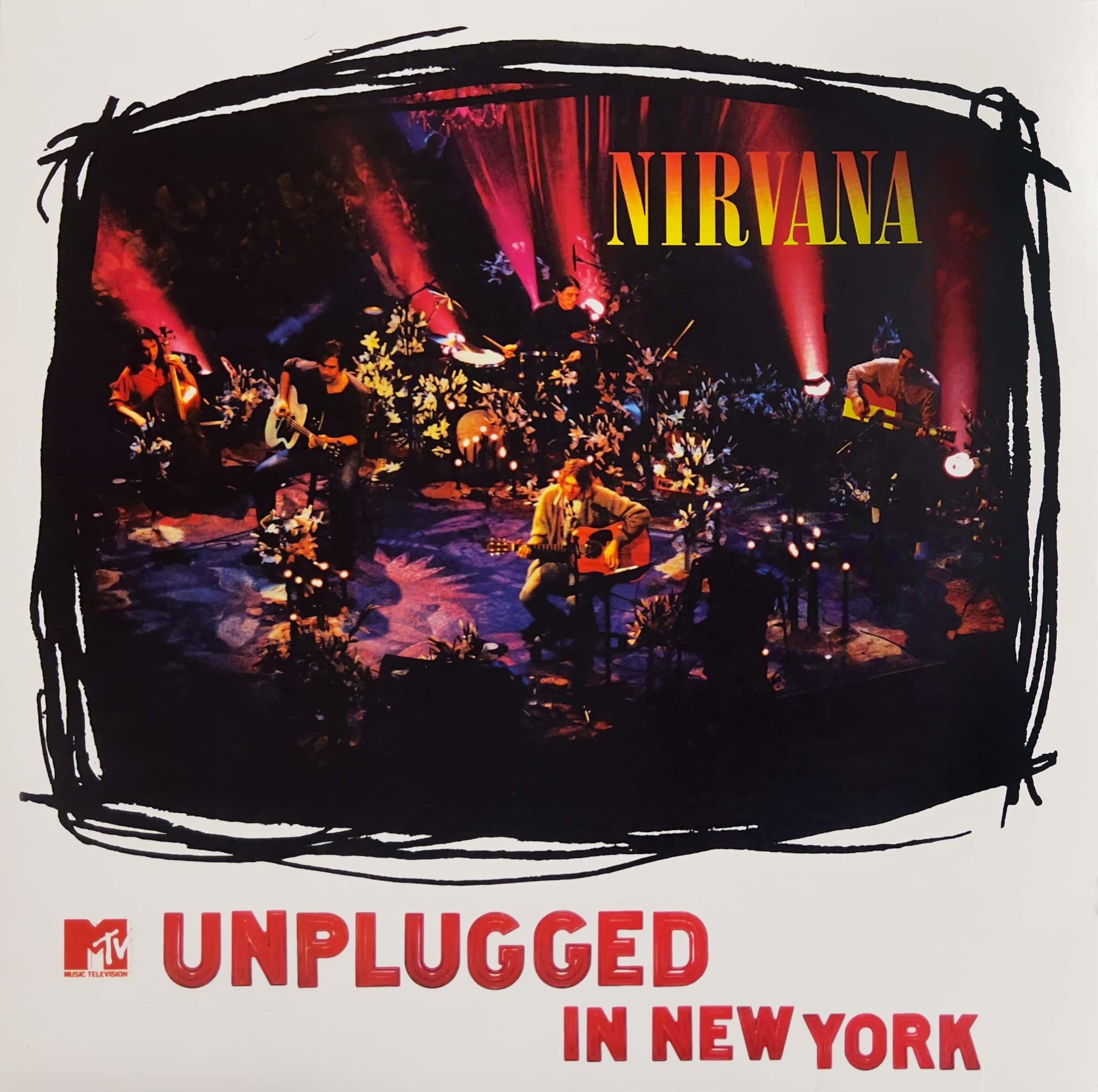
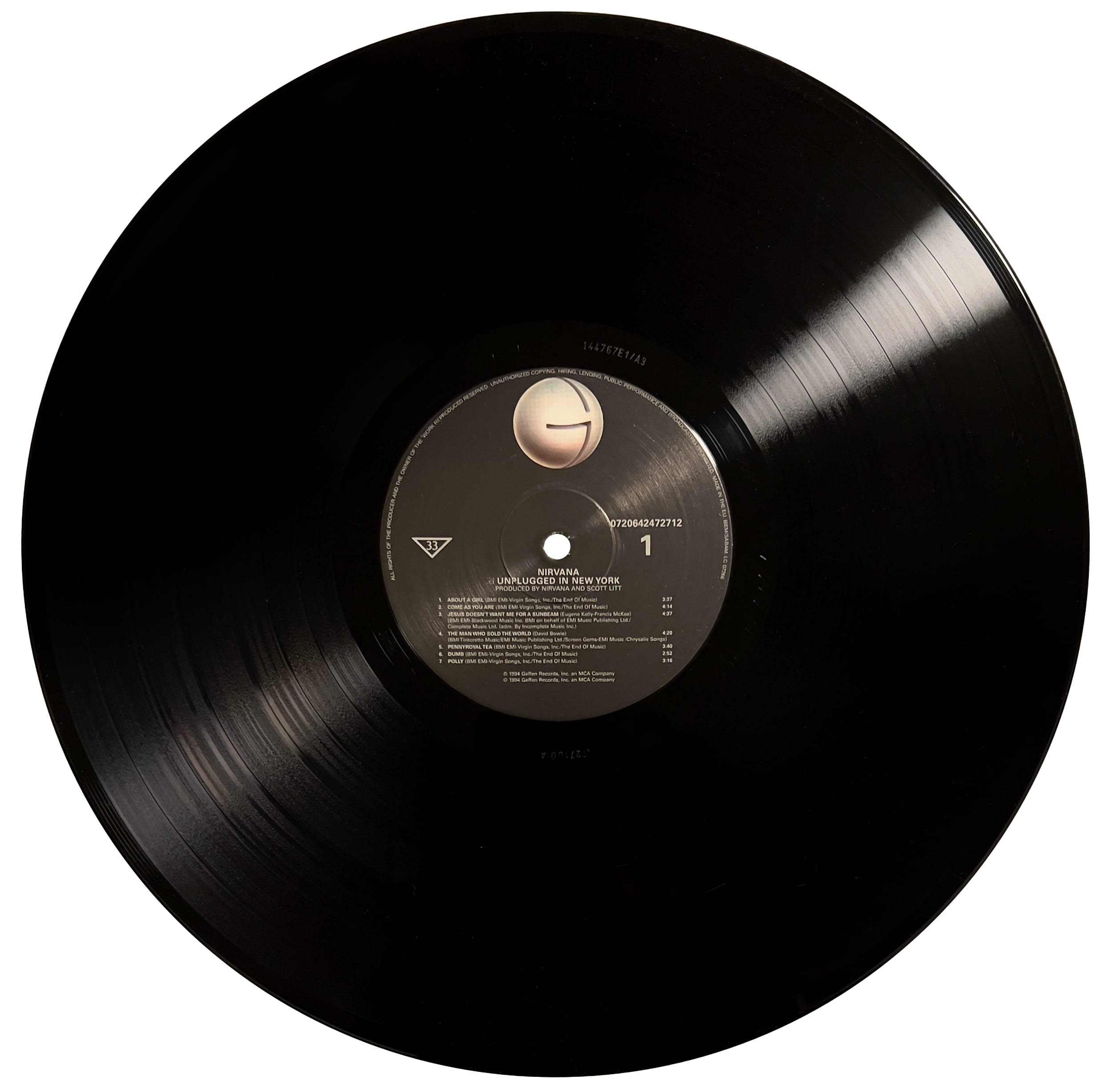
Regarding the sonic qualities of the recording, MTV Unplugged In New York has been reissued numerous times, especially on physical formats. While I’ve been fortunate to own the 2008 vinyl reissue, this particular release isn’t as stunning as the Lossless Apple Music stream. The mastering simply sounds off. While Cobain’s vocal is front and centre, the instrumental backing is somewhat compressed and shriller than on the lossless stream. Additionally, you don’t get the sense that the band is in the room with you when listening to the vinyl counterpart; an aspect that is most certainly present on the Apple Music stream. In essence, if you choose this particular vinyl reissue, you’ll experience this performance via your speakers rather than being enveloped in the performance itself.

While I acknowledge that other vinyl releases, based upon reviews, suggest sonic superiority, it’s a case of once bitten, twice shy. Plus, when the Apple Music stream simply sounds right, with a more solid mid to low end, even I have to acknowledge that sometimes that is more than enough. 

Granted, the artwork is far more impressive on the physical counterpart and while it is a solid reproduction, there are flaws. If you take a closer look, you’ll notice the photos are softer than they ideally should be. Admittedly, the original artwork was compiled during the height of the CD era and we can subsequently assume that this reproduction has been done by merely enlarging the graphical elements. Yes, a vinyl edition was released in 1994, but without having one to compare it to, I can’t say if that original release is better than this reissue. While it isn’t a major problem, it’s one that every music-loving vinyl collector needs to be aware of for the format isn’t only just about that warm analogue sound. 

While there are a couple of different versions of the MTV Unplugged In New York performance, particularly following the 25th Anniversary reissue, this review will focus on the original track listing from 1994; the one that’s present on the aforementioned vinyl reissue and Apple Music stream. 

About A Girl is the only song from MTV Unplugged In New York to be released as a single and it’s no wonder for it’s a killer song when performed acoustically. With a soft alternative pop/rock feel, I can’t help but think of The Beatles, particularly from a barebones instrumental and vocal standpoint. The original, from the 1989 release Bleach, is somewhat similar and as much as I adore that recording, this live rendition surpasses it. It’s a simple case of Cobain's vocal delivery leaving me speechless when performed live. What an incredible talent!

Come As You Are, from Nevermind, is a mellow wonderland and while I adore the original studio recording, this live performance, similar to About A Girl, takes the song to another level.

Jesus Doesn't Want Me For A Sunbeam is a valued addition to their repertoire and is significantly better than The Vaselines’ edition titled Jesus Wants Me for a Sunbeam. No, it isn’t the strongest song in the lineup, but it works well within the structure of the performance. 

The Man Who Sold The World is an incredible David Bowie cover and while Bowie’s version is magnificent, in its own right, Nirvana further refined it and made it just as much their own as a homage to the originator. Due to the guitar styling of the original song, it becomes obvious why Cobain was compelled to use the fuzz box during the recording. While it may have fallen outside the parameters of the acoustic performance, there is no doubt that it is better for its inclusion. The result is an exceptional rendition of The Man Who Sold The World.

Pennyroyal Tea, from In Utero, is a Cobain vocal masterpiece. This is yet another example of where the MTV Unplugged performance surpassed the brilliance of the studio recording. 

Dumb has all the groove and rhythm of the original, as heard on In Utero, yet this performance takes the song to heavenly heights previously unheard on the studio recording.

Polly, from Nevermind, is an incredible song that is perfectly suited to the unplugged ethos of this performance, despite my preference for the studio recording.

On A Plain, from Nevermind, is far greater performed unplugged than it is on the critically acclaimed 1991 release. Yes, the style and intent are slightly different, but On A Plain further validates how well-suited Nirvana’s music was to being performed acoustically. 

Something In The Way, from Nevermind, is one of the most beautiful Nirvana songs ever recorded. While nothing could ever beat the original studio recording, this performance is utterly exceptional and brings a smile to my face every time I hear it.

Plateau, the first of three Meat Puppets covers, is musical perfection! The intermix of the instrumental backing and Cobain’s vocals reminds me fondly of Neil Young's style in the 70s while the original Meat Puppets recording has a Beck feel to it. Either way, it’s a great song and I’m so glad that Nirvana chose to cover it.

Oh Me is one of those tunes that didn’t immediately grab me. Yet, intriguingly, I don’t know why, for the song and the performance are both excellent. The Meat Puppets’ original recording is thoroughly enjoyable and while I don’t have a preference per se, there’s always room for various interpretations. 

Lake Of Fire is one of the greatest songs Nirvana ever recorded. Yes, it’s a cover, but the song suits Cobain’s vocals so well that I dare say this is the only version you need to listen to. 

All Apologies has a killer groove but I’ve always preferred the studio recording as it’s the perfect closer to Nirvana’s final album. On In Utero, the mix and associated wall of sound best this live performance with regard to giving the song a sense of presence that I feel is missing on the MTV Unplugged edition. 

Where Did You Sleep Last Night, is the Leadbelly cover I alluded to earlier and what a way to close out this performance. While the original recording is iconic, as it pertains to the history of recorded music, as far as I’m concerned this is Cobain’s song for no one has done it better and I doubt anyone ever will. 

Nirvana's MTV Unplugged In New York isn't just an exceptional live album, it is the quintessential Nirvana album; one that should be in every fan’s collection. It’s also unique in that it isn’t just a collection of well-known tunes performed live as it offers a different perspective into a band that was creatively greater than their acclaimed three-album run, between 1989 and 1993, would suggest

Comment