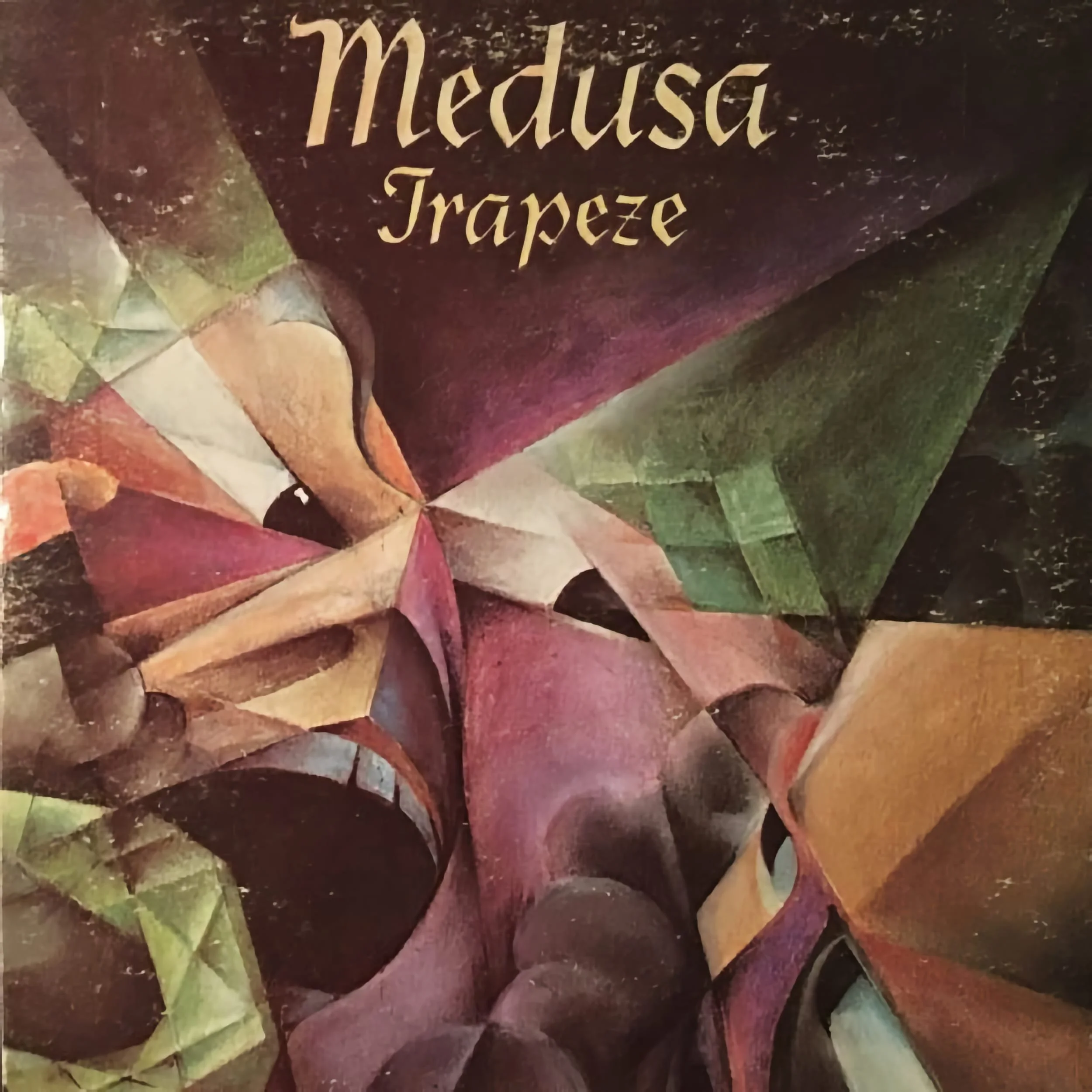
While there is no shortage of hidden gems from the 70s, Medusa, by Trapeze, is one of the most impressive, underscoring the importance of seeking out music that goes beyond mainstream appreciation and acceptance.
Released in 1970, this is the second album by the British rockers, and while their entire catalogue is worth checking out, Medusa is their magnum opus, even though it was overlooked during its initial run, remaining only noteworthy amongst the most ardent music lovers. With a classic rock meets blues-based style, and elements of hard rock and touches of heavy metal, Medusa will appeal to a broad audience, so share this review, and Trapeze’s music, with anyone who has an appreciation for the aforementioned genres, as it’s about time Trapeze received the recognition they’ve always deserved.
Compared to their self-titled debut, Medusa is considerably different, as the band’s first outing has a greater focus on psychedelic soft rock. Some may find that more compelling, but it’s not nearly as engaging as this second release; an album showcasing their signature sound, despite only being separated by six months.
Visually, Medusa is spectacular and is amongst the most captivating artworks of the era. Unfortunately, modern streaming platforms don’t present it adequately for the face trapped within the trapeze-styled optical illusion is poetically suited to the band’s name and provides a perfect visual accompaniment to the music. One can only imagine how it would have been to have picked up this album upon launch and lose oneself in the mystical nature of the album’s artwork as the record played.
While my only experience of Medusa has been via streaming services, Apple Music offers various masterings, allowing fans to choose the edition that best aligns with their personal sonic tastes. As it pertains to the sonic presentation of the album, the lossless Apple Music stream that I find myself listening to most often is the Ork Records 2008/2010 remastered reissue, as shown below, as it’s highly engaging. There’s also the 2020 Cherry Red Records (Deluxe Edition) to consider, but I find that particular mastering to be a little too reserved in its presentation. Some may prefer that relaxed mastering style, one which is not as loud, with cymbals that ring out beautifully within a nicely positioned soundstage, but I find it’s also lost a little of its sparkle as the presentation is akin to a sheet being placed over one’s speakers, by comparison. As to which ultimately sounds better, that will be up to your subjective interpretation. For me, however, I’m sticking with the older remastered reissue.
Black Cloud is a bold rock and roller to launch the album on, one that sets the tone for the entire record with some incredible vocals and a musical presentation that lights up, particularly as the chorus enters the mix. It’s ideally suited to the early '70s, but despite being of the time, it remains fresh and compelling in the modern era; a testament to the talent of the three master musicians at the helm.
Jury initially slows down the tempo to that of a ballad, yet it’s one of the most stunningly beautiful tunes you’re ever likely to hear. As the song builds, one can’t help but appreciate the performance and intricate nature of this rock and roller, for it remains reined in while also having a level of attitude that one would expect from some of Black Sabbath’s most memorable tunes. Even the false ending will blow your mind, for the composition is well thought out and is nothing short of masterful. No, Jury was never released as a single; a shame considering just how extraordinary it is and how in tune it was to the musical zeitgeist. The bottom line is, if you’re not listening to Jury at ear-bleeding levels, you’re listening wrong, for this is one legendary tune.
Your Love Is Alright shifts the tone of the album with a livelier and more upbeat tempo. It’s a solid song, with some killer riffs and an impressive vocal performance, especially during the bridge and chorus, but it’s far from a standout and is, subsequently, an album-only tune that is unlikely to compel you to return to the record. That said, as part of the album’s linear structure, “Your Love Is Alright” works well enough that any shift in styling isn’t so apparent that it detracts from the overall album experience.
My Life is toe-tapping, head-bopping, gold. As a rhythmic wonderland, “My Life” encompasses a sonic middle ground that Trapeze was brilliant at achieving. It’s classic rock at its very best!
Seafull is a magical experience, one that must be heard to be fully understood. The guitar licks are out of this world, as are the backing percussive elements, while the vocal delivery is amongst the greatest in all of recorded music history.
Makes You Wanna Cry is a funk-infused rock number with a slight off-beat rhythm that works remarkably well for the song and the album’s overall flow. While not necessarily a standout, “Makes You Wanna Cry” is one of seven core reasons as to why Medusa is such an incredible album experience.
Medusa is a stunning title track and an ideal album closer, one that allows for not only contemplation of the music that’s just been heard, but one which will encourage you to play the album again for Medusa, both the song and the album, can seldom be listened to once.
No matter which way you look at it, Medusa remains one of the most underrated rock albums of the 1970s. While Trapeze never achieved the recognition they deserved, Mel Galley, Dave Holland, and Glenn Hughes would each go on to leave their mark with Whitesnake, Judas Priest, and Deep Purple, respectively, with Hughes also forging a successful solo career. In hindsight, this release, and the band, in general, feels like the birth of a future supergroup, capturing three exceptional musicians at the very moment their careers were about to explode. More than fifty years later, it remains one of the finest hard rock albums of its era.