Viewing entries in
Australian Music

Crowded House – Temple Of Low Men (Album Review)

Crowded House – Temple Of Low Men (Album Review)

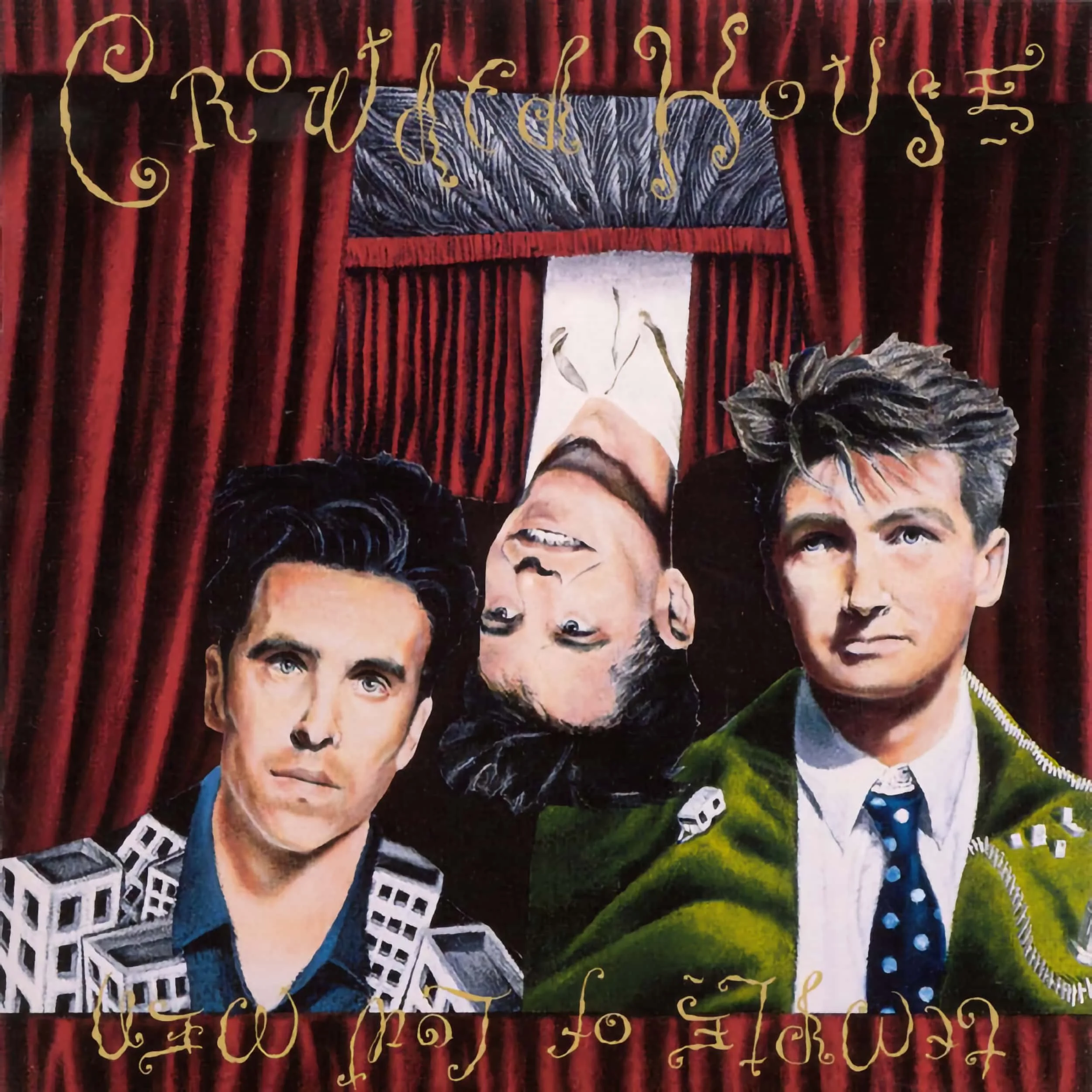
Released in 1988, Crowded House’s second studio album, Temple Of Low Men, became an astounding success in both Australia and New Zealand, hitting #1 and 2 respectively, while also charting well worldwide. While this may be hotly debated, Temple Of Low Men, despite its more sombre musical tone, is Crowded House’s greatest release with ten incredible songs that flow so seamlessly together that you’d think you were listening to a greatest hits album. From the songwriting, to the emotive storytelling, to the musical extravaganza, Temple Of Low Men set the bar so high that it has become a timeless classic.

While Crowded House was most certainly a band billed with three members, it’s important to note the influence of Mitchell Froom in the production chair, for he not only produced their greatest releases but played keyboards throughout. In many respects, he could be considered the fourth member of the band and along with a masterful mix by Bob Clearmountain and a beautiful original mastering by Bob Ludwig, the band and entire production team produced a sonic masterpiece that sounds just as good today as when it was first released…that is, if you have a copy of the original CD release, or a repress, with the original mastering.

Yes, dear reader, as much as I laud streaming, particularly Apple Music, the CD, despite being a tad on the bright side, offers a far better representation of the album than the Lossless Apple Music stream. Unlike their self-titled debut, this landmark release isn’t delivered as an Apple Digital Master, which further complicates matters because it’s unclear which mastering Apple is delivering. The publishing date is listed as 1988, rather than 2016, when the latest remastering/reissue of the album was released in a Deluxe offering. Interestingly, that Deluxe Edition is available on Apple Music, but that too has the original release date as the published date, which is, naturally, erroneous for that particular reissue. That particular edition, however, does seem to have a nicer tonality and is a little closer to the CD’s sonic presentation, but not by much.

Adding to the frustration, for modern streaming and digital download audiences, is the fact that Qobuz has access to a Hi-Res Audio 24-bit/96 kHz version, but the publishing date is 2021 and, to my knowledge, the album wasn’t remastered again in that year. As many music lovers with an interest in attaining the highest quality recordings will testify, Hi-Res is not always better, as it comes down more to the mastering, or remastering, and how that was undertaken. Hence, my go-to remains the European repressed CD, with the original mastering, for it simply sounds right and doesn’t cause additional frustration in determining which version I’m currently listening to.

Where the CD particularly excels is in soundstage and overall sonic detail. There isn’t a single concealed musical element, unlike the lossless streaming counterpart that sounds less lively and dull by comparison. Yes, the treble is reigned in via the stream, but reducing the treble range by a single point on your stereo system will achieve a much better result overall, as it removes a little of the digital glare in the top end but doesn’t dull the rest of the sonic presentation, as is the case with the lossless Apple Music stream.

So, can the Lossless Apple Music stream still be thoroughly enjoyed? Yes, particularly if you haven’t heard an original edition. However, if you’re after a sonic representation that best suits the album, the era, and the overall recording, then I’d suggest you track down a legacy release.

I Feel Possessed is a stunning album opener that sets the overall tone of the record from its very first moments. As you listen, you’ll be captivated by the mix, for the layers of musical elements are thoroughly satisfying and immediately meld with your soul in this otherworldly-styled tune.

Kill Eye shifts the tone considerably to a more aggressive and forward presentation that takes a few moments for the senses to adjust to. As with the album’s opener, and so much of Crowded House’s music, Kill Eye is a musical wonderland where each repeat listen is rewarding as different elements are heard within the mix while never detracting from the song itself. It is, however, the dullness via Apple Music that conceals much of this wonder, and it’s a shame because Kill Eye is a sweeping grind-driven masterpiece.   

Into Temptation slows the tempo and returns the album to a more melodic styling, only this time the shift isn’t as noticeable as Into Temptation is the perfect follow-up to Kill Eye. The highlight here, besides the highly compelling musical styling, is Neil Finn’s incomparable vocal extension and control, as every ounce of emotion is not only clearly heard but also felt. Into Temptation is an astonishingly good song and one of the very best Crowded House has ever recorded.

Mansion In The Slums is an all-time favourite. The vibe, the lyrical context, and the earworm-worthy styling ensure that Mansion In The Slums is not only highly compelling but is one of the deeper cuts that make Temple Of Low Men such an extraordinary release.

When You Come is one of the better-known songs from the album, as it was released as a single. Despite not hitting the top of the charts, When You Come is the ideal counterpart to the album’s most well-known tune, and closer, Better Be Home Soon. As such, the melody will encapsulate you and is an ideal midpoint for the record. For those who have the cassette or vinyl releases, When You Come also signifies the closing of side one, and while you’re likely to play the second half of the album, I couldn’t think of a better song to close out the first half of the record.

Never Be The Same is, in the same context as the perfect opener/closer, an exceptional song to launch the second half of Temple Of Low Men with. Compared to the moodiness of the other songs, Never Be The Same is a little more upbeat in its musical styling, but it’s the wistful nature of the lyrics that are both reflective yet progressive. The result is that Never Be The Same is amongst the most intriguing songs Crowded House has ever released.

Love This Life is another of Finn’s remarkably reflective tunes, for he truly is a master songwriter. The uplifting, yet sombre aspect, is a contrast that plays out perfectly well in regards to both lyrical context and musical styling. While not released as a single, Love This Life is a hidden gem and another reason why Temple Of Low Men is as rewarding a musical experience as it is.

Sister Madly is a fun little number in much the same manner as Nothing Too Serious was for Icehouse. The quirkiness works perfectly, for the catchy, energetic styling results in a playful rhythm-driven vibe that adds a lighter tone and balances out the record.

In The Lowlands is another of those highly sought-after hidden gems. The mix and overall soundstage are remarkably engaging, for you’ll find yourself toe-tapping and head-bopping along to what can be considered an upbeat number in every aspect other than lyrical context. Nevertheless, and this is a core strength of Crowded House, even within their more sombre, more thought-provoking tunes, they’re musically engaging, and In The Lowlands is no exception.

Better Be Home Soon is a simply beautiful Crowded House tune, one that has become a trademark for the band. Seriously, nothing more needs to be said other than to take a listen, particularly if you haven’t already, and you’ll quickly see why Better Be Home Soon is Temple Of Low Men’s Don’t Dream It’s Over.

From Nick Seymour’s magnificent album artwork, to the incredible collection of songs contained within the record, to the recording, mix, and mastering quality (particularly of original releases), Temple Of Low Men is a landmark release that is not only one of the greatest albums Crowded House ever released, but it's one of the very best albums from the 80s and in all of Australian recorded music history. It’s reflective, thought-provoking, but most importantly, it’s unforgettable.

INXS – Kick (Album Review)

INXS – Kick (Album Review)

Few Australian albums are as widely regarded as the sixth studio album from INXS, Kick. While Icehouse garnered much attention with their 1987 release, Man Of Colours, it simply couldn’t reach the international acclaim and sales success that Australia’s other “I-based” rock band would achieve. Selling INXS (pun, most certainly, intended) of 20 million units worldwide, Kick stood out for its high production values that saw a diverse mix of rock and pop with funk-based tribal rhythms that led to what can only be considered a timeless collection of songs. Of course, there’s the ballad-focused Never Tear Us Apart, a highlight of this release, but despite the shifting styles throughout, INXS never deviated from their origins with Kick; they merely took their musical prowess to another level with a record that is akin to a greatest hits release, for there isn’t a lacklustre song to be heard.

Adding to the appeal is the striking album artwork, and while many modern listeners will instantly recognise the standard front-facing version, physical releases also incorporate an expanded artwork design that will appeal to just about any music-loving collector. What may be challenging, however, is figuring out which version best suits your personal tastes. As with many multi-million-selling releases, there’s a plethora of editions that target different audiences because, for some reason, the original mix and mastering is never good enough.

In order to simplify matters, however, I’m going to focus on the 2011 remaster, which is currently the edition that is readily available on streaming and recent mainstream CD and vinyl reissues. Yes, there are the audiophile releases, but they only further deviate from the goal of music first, hardware second, followed by the format; another John Darko idiom that appeals to this music lover. As such, I’ll be taking a look at the Lossless Apple Music stream and accompanying Dolby Atmos mix (both of which are delivered as an Apple Digital Master).

While I’m familiar with the original mastering from the 80s, as well as the 2011 stereo remaster that was released via CD, the Dolby Atmos mix is somewhat of a mixed bag, with most surround sound music lovers on QuadraphonicQuad.com awarding it a 7 out of 10 or higher. Naturally, when listening to these new mixes, one needs to separate oneself as much as possible from the stereo editions; a difficult task, no doubt, when an album is heading towards its fourth decade of being on one’s radar. Nevertheless, I find the Dolby Atmos mix to be an enjoyable listen with a full-bodied, natural sound that doesn’t detract from the original recording. Unlike some Atmos mixes from classic albums, this one doesn’t try to reinvent the wheel. You won’t instantly notice musical aspects flying around within the soundstage, and the stereo mix is so wide that some may even find the surround mix to be a little too boxed in, particularly on a song such as Devil Inside. However, and this is where the Atmost mix shines, it delivers a meatier (a technical term, naturally) sound that will appeal to those looking for concert-level thumping in one’s chest.

On the negative side of things, the bass guitar is a little too recessed in the surround mix, and I find that by the time I’m halfway through the album, I’m looking to turn the volume down slightly as the Atmos mix is a little fatiguing. Granted, I may have turned the volume up too loud to begin with, as this is one album that will give your sub a workout, but if you’re particularly sensitive to listening fatigue, you may wish to stick to the stereo mix; even though that 2011 remaster is a little on the loud side as well.

As to which edition I ultimately prefer, well, for the most part, I find myself drawn to the stereo mix. That said, this is one album where I can appreciate both the surround and stereo mixes, ensuring that it’s an enjoyable experience on both my stereo and surround sound systems.

Guns In The Sky is a killer album opener with a rhythmic drive and lyrical context that is as relevant in today’s modern society as it was upon the song’s release in the 80s.

New Sensation will get any party started with its funky upbeat nature. It’s pure pop/rock gold and a trademark tune for the band.

Devil Inside may introduce a moodier tone, but it’s extremely compelling, from both a sonic and lyrical perspective, as the story of excess and the fear of missing out is a timeless issue that we all have to deal with. It is, however, the killer riff, rhythmic backing, and the chorus that make Devil Inside so memorable, for it has a little bit of everything melded into a single song.

Need You Tonight is a magnificent tune. That rhythmic approach, particularly during the introduction, knows few peers, for the funk meets dance with a touch of rock and elements of pop results in one of the greatest songs from not only the 80s, but in all of recorded music history.

Mediate transitions seamlessly from Need You Tonight, so much so that they could, in some respects, be considered a singular tune with a stylistic shift in the middle of the composition. Nevertheless, Mediate on its own is a sonic pleasure to behold for the spoken-style of the lyrics blends perfectly with the back beat and the atmospheric elements of the mix.

The Loved One has always been divisive for this fan. Whilst I don’t dislike the song, and I consider Kick to be a perfect album experience from start to finish, the shrillness of The Loved One’s introduction can be a little jarring on the senses, particularly on the CD releases of the album. Thankfully, the Apple Digital Master dials the treble range back a little, thereby making it more palatable, but it’s been so jarring over the years that I somewhat cringe when I know the song is about to begin. Thankfully, as the song builds and the chorus is repeated, I’ve fallen in love with the tune and find it thoroughly enjoyable. It is, however, not an original INXS composition but rather a cover of The Loved Ones’ original from their album Magic Box; a solid recording in its own right.

Wildlife is the weakest song on this classic release, but it’s still highly compelling and will likely see you toe-tapping and head-bopping along to the rhythm. It just isn’t a standout, but as an album-only song that acts as connective tissue, it does its job more than adequately.

Never Tear Us Apart is a ballad to end all ballads. Yes, that can be said about so many ballads from the era, but this is one of the most recognisable, and if you’ve heard it once, then you’ll find yourself singing along to, arguably, their greatest recording. That is in part due to an incredible mix that presents Michael Hutchence’s vocal delivery incredibly clear at the forefront of the mix. Yet, it’s the entire arrangement and Kirk Pengilly’s saxophone playing that’s similarly impressive, adding to the overall impact of this timeless classic.

Mystify transitions beautifully, despite the song’s varied styling in contrast to Never Tear Us Apart. As you listen, you may hear a little Crowded House influence, but Mystify could be best described as the most Australian song on the album, for there are also influences from the likes of Icehouse and Cold Chisel, thereby ensuring that Mystify will appeal to just about any Australian music lover.

Kick is a bold and brash title track that keeps the energy of the album rocking forward. Pengilly’s saxophone performance here is compelling, but depending on your setup, it can come across a little too shrill, thereby edging the listener towards listening fatigue. Still, the spirited performance flows well within the album’s linear structure and adds to the overall appeal of the record.

Calling All Nations has some killer guitar licks that meld well with the dance-driven styling of this tune. It really is a case of two dissimilar musical aspects coming together for the greater good of the song. While it’s not necessarily a standout, all songs need not be hit-worthy to ensure the flow and overall album experience is maintained.

Tiny Daggers is a fantastic closer, one that has a little Bruce Springsteen influence, that will compel you to play the album again, as Kick is one of those records that can seldom be listened to once.

No matter which way you look at it, Kick remains fresh, compelling, and one of the greatest albums ever released. It also happens to be the crowning achievement of INXS’ career and proves that a blend of rock, funk, and pop is a killer combination that continues to captivate us as much today as it did upon its release in 1987.

Crowded House – Crowded House (Self-Titled) [Album Review]

Crowded House – Crowded House (Self-Titled) [Album Review]

As far as debuts go, the self-titled Crowded House is amongst the greatest you’re ever likely to hear.

Released in 1986, Crowded House may be an album of the 80s, with its studio sheen, but its timeless appeal is due to Neil Finn’s heartfelt vocals, strong melodic instincts, and the band’s tight arrangements. Joined by drummer Paul Hester (also formerly of Split Enz) and bassist Nick Seymour, Crowded House is a masterclass in pop craftsmanship and remains one of the most enduring debuts in pop-rock music history.

Visually compelling, as much of Crowded House’s album artwork is, this debut will reward those who pick up a physical copy, particularly on vinyl, as the cover art is worthy of displaying amongst one’s record collection. While the streaming version provides an adequate visual facsimile (depending on screen size, of course), the Hi-Res Lossless Apple Digital Master delivers a stunning audible presentation that must be heard to be believed and is worthy of this classic album’s stature. Derived from the 2014 remaster series, there will be those who vehemently disagree with this assessment, as some will consider the remaster to be mastered too hot. While I appreciate that concern, as I grow older, I’m honestly getting tired of comparing editions and listening for differences. These days, if it sounds good, then that’s all I’m looking for, as the music is the most important element, and this remaster sounds really good.

As it pertains to the track listing of this self-titled release, depending on your region, the linear structure of the album has varied throughout the years. There have even been songs swapped and omitted but, thankfully, common sense prevailed upon the 2014 reissue campaign and it’s that version’s linear tracking that provides the backbone to this review, for it’s about as comprehensive as we’re ever going to get and the more I listen to it, the more this linear structure melds with my soul.

Mean To Me isn’t just an exceptional opening track that sets the tone for the music that’s to come, it was an ideal choice to be the album’s lead single as Finn’s vocals are slightly raw, full of urgency, and are perfectly aligned to the energetically addictive musical bed; aspects that would ultimately form the basis of Crowded House’s sound signature.

World Where You Live slows the tempo slightly, but this mid-tempo melancholic number, complete with jangly guitars and layered textures, is amongst the finest songs in Crowded House’s celebrated catalogue.

Now We're Getting Somewhere takes a slight left turn for the jangly elements remain, with a tight rhythmic pulse, but it’s a more straightforward pop-rock number. It’s a solid album tune, and despite being released as a single, it simply doesn’t engage my interest outside of the album’s linear structure, as I much prefer Crowded House’s more elaborately produced songs.

Don't Dream It's Over is, arguably, Crowded House’s most recognisable tune, and there’s little doubt as to why that is, for the song’s structure makes it a classic in every sense of the word. Add to that the haunting style, a technique that would be further explored throughout the exceptional Temple Of Low Men, and you’ve got an incredibly moving and memorable song that’s amongst the greatest ever recorded.

Love You 'Til The Day I Die is a sharp contrast to the mellow style of Don't Dream It's Over, but this punchy, somewhat chaotic number blends elements of funk and new wave to create a highly compelling tune. The layered musical elements are simply stunning, and you’ll find yourself immersed in a soundstage that is as deep as it is wide. Still, throughout all the complexity, every musical element and vocal lick is perfectly positioned in the mix, making this one of Crowded House’s greatest compositions.

Something So Strong is an uplifting guitar-driven number and another standout from the band’s extensive catalogue. The reason for its success is likely due to the bright melody, instantly engaging and sing-along lyrics, along with the song’s clean production, all of which makes Something So Strong quintessentially Crowded House.

Hole In The River is one of the darker, more moody songs from the album, and I simply adore it. Finn’s vocal control and delivery are masterful, but it’s the whole soundstage and layered presentation that make Hole In The River one of the very best songs Crowded House ever recorded.

Can't Carry On returns the album to a more upbeat rhythm, following a reserved introduction. The driving beat and unique vocal phrasing keeps the album interesting and showcases the diversity of not only Crowded House but also Finn’s songwriting.

I Walk Away, written by Neil Finn while he was a member of Split Enz, was also recorded by the New Zealand band and released on See Ya ‘Round in 1984. As to which I prefer, it would have to be this latter Crowded House recording. Of course, as a fan of Crowded House, and one who has never really been enamoured with Split Enz, my subjective perspective, in this regard, may differ from your own. Still, as a bridge between both bands, I Walk Away is ideal for those who want to hear more of Neil Finn’s brilliance.

Tombstone adds a lovely bluesy touch to the album with its stripped-down arrangement. As a deep cut, it’s thoroughly enjoyable, but few will seek it out on its own, outside of the album’s linear structure. Despite that, all songs need not be hit-worthy to be thoroughly enjoyable, and Tombstone ensures that this debut release is an album experience worthy of all music lovers’ attention.

That's What I Call Love closes the album with a sonically adventurous number, complete with swirling synths and a slightly off-beat styling that works exceedingly well, despite a departure from what has, thus far, been a guitar-driven sound. Again, diversity is key as it pertains to this release, and that’s what makes it so rewarding, as you’ll find yourself revisiting this classic album time and time again, for it can seldom be listened to only once.

Crowded House is a rare debut, filled with confident, eclectic, and timeless tunes. While it was launched into prominence thanks to hits like “Don’t Dream It’s Over” and “Something So Strong,” the album holds up because of its consistency and emotional range. Neil Finn’s incredible songwriting and vocal capabilities are unique in being capable of delivering stadium-filling tunes and deeply personal ballads while Paul Hester’s charismatic drumming style similarly impresses, as does Nick Seymour’s melodic bass work that gives the album its solid foundation. The culmination of all these elements ensures that this self-titled debut is amongst the greatest albums of the 80s, particularly of 1986.

ICEHOUSE – Measure For Measure (Album Review)

ICEHOUSE – Measure For Measure (Album Review)

By the time 1986 rolled around, Icehouse had already cemented themselves as one of Australia’s premier new wave/synth-rock acts. Measure For Measure, the band’s fourth studio album, would represent a further shift in refinement for the band, particularly following the rawness of 1984’s Sidewalk, as their sound evolved beyond the post-punk energy of their earlier works into a more lush, cinematic soundscape that would further embrace synthesisers and ambient textures.

Impeccably produced, mixed, and mastered, Measure For Measure is a pleasure for the senses as the music contained within isn’t the only extraordinary aspect, as the album’s artwork is stunningly beautiful and is amongst the greatest that Icehouse ever released. If you haven’t already, consider picking up the CD reissue from 2012. Not only does it sound exceptionally good, but the foldout digisleeve design takes the album’s artwork to another level of immersion and appreciation.

Speaking of immersion, regardless of how you choose to listen to this classic album, you’ll be met with a warm and full-bodied sound and a sonic signature that isn’t often associated with the shrill clarity of the early digital recording era. While I simply can’t recall how previous editions sounded, I can say with certainty that Steve Smart (Studios 301) did a fantastic job in remastering not only Measure For Measure but all of Icehouse’s studio albums for the 2012 reissue series.

The only challenging aspect when listening to Measure For Measure is whether or not you should include the bonus tracks, particularly the core CD-era bonus material, Too Late Now and Into The Wild. Both are exceptional, but to maintain the album’s original linear structure, given these songs weren’t included on the original vinyl and cassette releases, I’ve decided to stick to the original 10-track album structure, from the original Australian release, via the following playlist. However, if you’re after the bonus material, including the additional live tracks, click here for the complete Bonus Track edition.

Paradise opens the album with a pulsating synth element that adds to the overall atmosphere of the song as well as playing into the style of the album as a whole. Sonically expansive and immersive, the greatest aspect of Paradise is Iva Davies’ magnificent vocals, which hover over the entire musical bed. It’s an utterly perfect mix as there isn’t a single element that is overshadowed, and with the hypnotic groove and cinematic styling, Paradise is the perfect combination of art-rock and ambient pop.

No Promises, despite being the first single from the album, had previously been released on the Boxes (Original Motion Picture Soundtrack), from 1985, and was included in an original composition and a reprise, but it is this re-recording that stands out as the gold standard. Driven by a shimmering synth-pop rhythm and an uptempo beat, No Promises is another exceptional tune. More importantly, however, it showcases just how expressive Davies is as a vocalist, for his vocal reach knows few peers, especially regarding the high notes and control he has over his delivery.

Mr. Big shifts the tone of the album, somewhat abruptly, yet the more you listen to the record, the more you’ll appreciate the shift from Paradise and No Promises to this rockier, glam-infused tune. It’s Icehouse amongst their most playful, with a healthy dose of crunchy guitar riffs, a sassy delivery, and brass instrumentation by Simon Lloyd that shines and adds to the overall vibe of this addictively good song.

Angel Street returns the tempo to one that’s a little more contemplative while the near out-of-phase musical styling adds incredibly textured layers to the song. Is it a favourite? Not really, yet something is compelling about Angel Street. While I wouldn’t seek the song out on its own, I thoroughly enjoy it each time it plays within the album’s linear structure.

The Flame is a slow-building epic. The mood and atmosphere captivate and encapsulate the senses via the song’s three-dimensional soundstage, resulting in one of the greatest songs Icehouse ever recorded.

Regular Boys, as with No Promises, was originally part of the Boxes soundtrack, and although the original and reprise are solid, this re-recording is arguably better. However, it does present another significant structural shift in the album’s mood and tempo. While I’m used to it, having listened to this album since the 80s, I fear newcomers may get lost in the mid-tempo, synth-heavy style of Regular Boys, particularly if they only listen once. Interestingly, this shift wouldn’t be so dramatically noticeable should you have the Australian vinyl or cassette editions of Measure For Measure, as Regular Boys was positioned as the opening track on Side 2 of those releases. Hence, in the time it took for you to flip the record, or turn the cassette, the senses had time to readjust.

Cross The Border has always been a personal favourite, but despite the tribal percussion style, intricate melodies, and overall rock edge, what I would have once considered to be the best song on the album now takes a backseat to The Flame, proving that as artists evolve, so do the fans. Still, Cross The Border is a standout tune that suits the album’s structure perfectly.

Spanish Gold is a smooth, upbeat number that works remarkably well within the band’s ambient pop-styled framework. Presented in a hazy, almost dreamlike style, Spanish Gold represents another unique entry in the Icehouse catalogue, one that showcases their willingness to evolve beyond their core roots.

Lucky Me is one of the most abrupt rock-structured tunes Icehouse ever recorded. Still, the rawness shows diversity, and it’s a style that Davies and co would develop further via the more industrial Big Wheel album in 1993. Yes, it can be seen as being somewhat out of place on this release, but as alluded to earlier, once you’ve listened to the album several times, you’ll consider it to be perfectly normal and well-aligned, even with the more delicate songs on the album. Perhaps this is one reason why I appreciate such a diverse range of music, as this is one of the albums that I grew up listening to.

Baby, You're So Strange is utterly brilliant. The swagger, riff-heavy, distorted and crunchy styling, combined with Davies’ gritty, yet smooth, vocal delivery, makes for not only one of Icehouse’s most flamboyant numbers, but is a glam-rock masterpiece that is an ideal counterpart to the works of legendary acts such as T. Rex and David Bowie. It’s also a wonderful song to close the record on, and while CD/Digital releases have additional songs, Baby, You’re So Strange is the perfect album closer, for it will compel you to listen to the album again.

Measure For Measure is a masterful fusion of sophisticated art-rock with a touch of 80s pop accessibility that is, at times, unfortunately overshadowed by the exceptional Man Of Colours release from the following year. Still, some may find this era of the band to be too polished and experimental, especially when contrasting it against the band’s rawer rock-oriented origins. For this fan, however, Measure For Measure is the perfect evolutionary bridge that blends seamlessly with the music that has come before, and that which came after, and is amongst the greatest releases from 1986.

Bee Gees – Life In a Tin Can (Album Review)

Bee Gees – Life In a Tin Can (Album Review)

Released in 1973, Life In A Tin Can is one of the Bee Gees’ most overlooked releases. From the moment disco fever took over, following the release of Main Course in 1975, most everything prior to that release was ignored by the broader music-loving public. While no one would ever wish that the Bee Gees hadn’t changed their approach, their earlier releases, with their original styling, are amongst some of the greatest recordings in all of music history. Granted, one really can’t take Life In A Tin Can seriously with its downright dorky album artwork, but it’s one of the Bee Gees’ greatest releases in their pre-disco era.

Life In A Tin Can is, ultimately, intriguing for as much as it builds upon the band’s origins, it incorporates more country and soft rock elements as the Gibb brothers embraced a more Americana style for this particular release. While some may lament that aspect, the shift in styling works remarkably well and in many respects, just as Mr. Natural can be seen as a further precursor to the band’s shifting sonic styling, Life In A Tin Can was vital to the evolution of the Bee Gees. Yes, we all want our favourite artists to keep pumping out the same music that first drew us to them, but when you have the creative genius of the brothers Gibb, to expect them to restrict themselves to a single style is incredibly short-sighted.

Sonically, Life In A Tin Can is masterfully recorded with no glaring issues to mention. Similarly, the Lossless edition, via Apple Music, offers a thoroughly pleasing reproduction that will satisfy most music listeners. That, however, can be said for much of the Bee Gees back catalogue (aside from Spirits Having Flown) that is available on Apple Music, for despite not being presented as an Apple Digital Master, you’d swear the available CD-quality stream is utterly perfect.

Saw A New Morning is a lovely album opener with a beginning instrumental presentation that ensures this is one of the album’s highlights. This soft rock number, underscored by acoustic guitars, warm harmonies, and a touch of country-rock is thoroughly pleasing to the senses and while it isn’t likely that you’ll find yourself singing along, you’ll undoubtedly find yourself captivated by the orchestral arrangement and the Gibbs incredible vocal presentation.

For uber fans, there’s also a touch of musicality, from this song, that would make its way to the hidden gem, Edge Of The Universe from their 1975 release, Main Course.

I Don't Wanna Be The One flows seamlessly from Saw A New Morning and despite being considerably different, given it’s a melancholic ballad, the shift is so masterfully done that your senses won’t skip a beat and you’ll only notice a difference should you be paying attention to the tracking of the album. While I may have mentioned that Edge Of The Universe is a hidden gem, and it most certainly is, I Don’t Wanna Be The One is another of those Bee Gees deep cuts that seldom get the attention or respect they deserve. Yes, the subdued arrangement may not appeal to all fans, but it’s also fair to say that I Don’t Wanna Be The One is amongst the greatest vocal recordings the Bee Gees ever made.

South Dakota Morning embraces a country-western styling, complete with a lap steel guitar that helps to create that rustic element that would remind anyone of the melodic tunes from the Eagles or Willie Nelson. While short, in duration, South Dakota Morning is a beautiful song that is not only worthy of the Bee Gees but is amongst the greatest recordings of the era. Seriously, if you know a Bee Gees fan, one that hasn’t ventured beyond their hits, send them a link to this song for its cinematic quality will quickly grab their attention and they’ll likely fall in love with the Bee Gees all over again.

Living In Chicago is simply stunning. From the delicate opening to the subdued orchestrations and harmonies that underlie the entire song, Living In Chicago is another hidden masterpiece in the Bee Gee’s celebrated back catalogue.

While I Play picks up the pace and leans further into the Americana and country music styling. It isn’t a bad song, far from it, and the musical bridge is notable, but it isn’t the strongest song on the album despite its toe-tapping influence.

My Life Has Been A Song is a lovely tune with Barry’s vocals being delivered beautifully with just the right amount of calm and vibrato, but it’s the chorus that takes My Life Has Been A Song to another level entirely for it’s got that earworm quality about it.

Come Home Johnny Bridie is a solid country-folk number. It’s neither a standout, nor a notable album-only tune, but despite having a touch of what could be considered Beatlesque styling, had the Fab Four recorded a country album, Come Home Johnny Bridie is an ideal filler track and sometimes that is all that’s needed for an album to be considered a top tier release.

Method To My Madness closes the album out beautifully. The vocal presentation is extraordinarily pleasing and while the vibrato in the vocal will impress, the slight variation in the musical bed adds to the song’s overall appeal. The result is that Method To My Madness is an idealistic closer that will encourage you to play the record again, for Life In A Tin Can can seldom be listened to once.

Life In A Tin Can may not have enjoyed commercial success, but that’s seldom a measure of quality. Instead, Life In A Tin Can is quietly ambitious and upon retrospection stands as one of the Bee Gees’ most creative works. Yes, the shift in direction, from baroque pop and orchestral ballads to a more American-influenced country and soft rock presentation would have varied public opinion, but the experimental shift works incredibly well as the subdued nature of the album is hauntingly beautiful, so much so that Life In A Tin Can can be considered a Bee Gees masterpiece.

Buffalo – Volcanic Rock (Album Review)

Buffalo – Volcanic Rock (Album Review)

When Buffalo released Volcanic Rock in 1973, they staked their claim as Australia’s first, truly, heavy rock band, giving local audiences a taste of the riff-heavy, doom-tinged energy that bands such as Black Sabbath were renowned for. Following their impressive debut, Dead Forever, Volcanic Rock cranked everything up with a louder, heavier, and bolder production. To say Volcanic Rock is the band’s greatest creative output would be an apt assessment for the extended jams and primal grooves are raw, unrelenting, and uniquely Australian, thereby ensuring that this is a landmark release worth celebrating.

Visually stunning, yet knowing the tone of the era, one can only imagine the raucous the artwork for Volcanic Rock would have created between conservative parents and their teenage children. Perhaps it was a good thing that Buffalo flew, somewhat, below the radar for if they had been more successful, you can almost guarantee that social expectations would have deemed the cover art inappropriate thereby requiring different artwork to be issued. That said, I think we can all agree that Volcanic Rock’s artwork is significantly more tame than their 1974 follow-up, Only Want You For Your Body.

While Volcanic Rock was never a commercial success, as with many albums that didn’t see the respect they deserved upon release, Buffalo and Volcanic Rock would achieve a cult following; particularly amongst those with a penchant for early heavy metal, psychedelic rock, and doom metal releases. The album’s raw production and extended track lengths may also have deterred casual listeners but this style of powerful rock is steeped in tradition and remains a sonic treasure to those of us who appreciate music that is somewhat on the fringes of mainstream rock and roll.

Sonically, the album is starting to show its age and despite being remastered by Gil Matthews in 2005, the Apple Music edition is non-committal as it pertains to which master has been given to the streaming giant. The two bonus tracks, Sunrise (Come My Way) (Single Version) and Shylock (Live Version) are missing from digitally delivered versions and the publishing seems to have reverted to Phonogram Pty Ltd, a Universal Music company, rather than Aztec Music; the label that reissued the album in the mid-naughts.

While I don’t have any major issues with the digitally available version, the cymbal crunching can get a little jarring on the senses, particularly if your system leans towards the treble range of the musical spectrum. Granted, this could be an aspect of the original recording, but sometimes mastering is a critically important element and it would be good to know if one offers a less crushed high-end than the other. Maybe I should just head down to Utopia Records and pick up a copy, for the 2005 reissue is still in print. Until then, the streaming edition is my go-to, so join me as I take a look at the songs that make up this legendary release.

Sunrise (Come My Way) opens the album with some killer licks that instantly set the mood for the music that’s about to come. Thick and creamy with a perfect amount of distortion and low-end power ensures Sunrise (Come My Way) is a memorable number that highlights Dave Tice’s incredible vocal delivery. Part metal, part blues rock, but 100% menacing, Sunrise (Come My Way) is amongst the greatest rock and roll numbers that you’ve likely never heard of; especially if you’re not overly familiar with the Australian music scene.

Freedom continues the ominous sonic presentation and is pure rhythmic gold with some of the very best guitar licks you’re ever likely to hear. Yes, there’s a Pink Floyd meets Black Sabbath feel to Freedom, but don’t let that deter you for this song is uniquely Buffalo; a slow tempo blues-based metal masterpiece.

'Til My Death is such a cool tune. You’ll be compelled to get out your air guitar and sing along to Tice’s otherworldly lyrics, for he takes this performance to another level. In addition to that, the chosen mix is pure perfection as Tice’s vocal sits atop and apart from the grungy musical bed, thereby allowing each sonic element to stand on its own merit. If you’re looking for a modern-day equivalent, may I suggest you check out the recordings of Wolfmother or Ash Grunwald.

The Prophet is another exceptional groove-oriented cut with a mid-tempo thunderous rhythm and blistering lead guitar work from John Baxter. Add to that Tice’s howls and snarls, sounding like a man possessed, and what you’ve got is a highly compelling album number.

Intro: Pound Of Flesh is the start of, arguably, the most ambitious moment on Volcanic Rock, for this dramatic, tension-filled instrumental is stunning as it leads into the idyllic Shylock.

Shylock is the masterpiece that you’ve been waiting for, for every tune, thus far, has been leading up to what can be best described as one of the greatest metal numbers ever recorded, in all of recorded music history. It will not only compel you to listen to the album again, but it will simultaneously make you wonder why Buffalo was never a household name. It’s manic, unhinged, and unforgettable and is undoubtedly one of Buffalo’s finest moments.

From start to finish, Buffalo’s Volcanic Rock is an impressive statement in the history of Australian hard rock and heavy metal. It’s ferocious, unfiltered, and confident in its heaviness and while it could be suggested that Buffalo were merely mimicking their overseas influences, that would be to the detriment of the musical experience for they ultimately forged their own path, one distorted riff at a time.

Jimmy Barnes – For The Working Class Man (Album Review)

Jimmy Barnes – For The Working Class Man (Album Review)

Released in 1985, For The Working Class Man shook up the music industry locally and abroad with its seamless blend of hard rock, blues, and soul, reflecting Barnes’ working-class roots, musical influences, and his relentless, passionate, vocal style. Renowned for being the frontman of Cold Chisel, Jimmy Barnes would build upon his solo debut Bodyswerve (1984) and deliver an album of 12 tracks (several of which were remixed from Bodyswerve) that ultimately cemented his status as one of Australia’s most beloved rock vocalists.

Featuring blistering performances by all musicians, the spectacle of the album’s artwork most certainly lived up to its hype, for you’ll find yourself captivated from the very first note to the last. Of course, that wouldn’t be possible if it had not been expertly recorded. No, the album won’t win any audiophile awards for its production, but the grunginess of the recording perfectly matches the guttural tone of Barnes’ unique vocal presentation. That being said, the mastering of the album could be a little smoother.

Yes, the rough-around-the-edges approach works well, to an extent, and while I’ve been fortunate to have owned the album on vinyl as well, I’ve never truly been blown away by its sonic presentation. It's similar to Meat Loaf’s Bat Out Of Hell; an incredible album but one in which the listener has to accept that it sounds a certain way and even the most acclaimed editions aren’t going to be perfect. It’s moments like this that I lament the loss of tone controls, amongst modern stereo equipment, for that function, at least, allowed one to dial in the music to their subjective preferences.

That all said, the remastered CD-quality lossless edition, as delivered on Apple Music, is perfectly adequate and offers a solid sonic presentation that will appeal to most fans. If nothing else, at least it isn’t brickwall mastered as badly as Cold Chisel’s Circus Animals is; an incredible album made uncomfortable to listen to due to its ear-bleeding mastering.

I'd Die To Be With You Tonight kicks off the album with a high-energy rock anthem, driven by a melodic guitar riff and a compelling vocal performance that is amongst Barnes’ greatest. Complete with mid-80s Australian production values, and a radio-friendly sound, I'd Die To Be With You Tonight was always going to be a success on the charts but unknowingly became a trademark tune for Barnes.

Ride The Night Away was co-written by Steven Van Zandt (of Bruce Springsteen’s E Street Band fame) and Steve Jordan. As such, there’s a Springsteen-esque blue-collar rock feel that perfectly fits the album’s overall style and Barnes’ gritty vocals. Add to that the powerful driving beat, and anthemic chorus, and this song will stay with you well after the record has ended.

American Heartbeat is a hidden gem if there ever was one. Featuring a synthesised 80s production style, American Heartbeat would have been ideal for inclusion in any of the era’s films as it not only showcases Barnes’ ability to adapt to different styles, but it’s got a sonic signature that would have been ideal for films such as Top Gun.

Working Class Man is, arguably, the defining song of Barnes’ solo career; a song that has become an anthem for the Australian working-class spirit. The track’s uplifting yet gritty feel, coupled with its powerful chorus, made it an instant classic. While it is Barnes’ trademark tune, special mention needs to go out to the songwriter, Jonathan Cain (of Journey), for the American composer wrote one of the most beloved Australian tunes in all of recorded music history.

Without Your Love has a soulful element that Barnes would often delve into later in his career on releases such as Soul Deep. For now, however, this heartfelt power ballad is a lovely album-only number that showcases Barnes’ ability to convey vulnerability amongst raw power.

No Second Prize is a high-energy track filled with driving guitars and an unrelenting beat and is an idealistic counterpart to the song Working Class Man.

Vision is a killer bluesy number that sees Barnes alternate between smooth crooning and his signature raspy wail.

Promise Me You'll Call has a radio-friendly feel, with a catchy chorus and melodic hooks. While it may not be the standout or chart success that other songs on the album are, Promise Me You'll Call is an exceptional tune where Barnes’ vocal performance is amongst his very best. It’s songs such as this that ensure the album experience is coherent and memorable.

Boys Cry Out For War is rock and roll to its core. With a more aggressively charged musical and vocal approach, Boys Cry Out For War is one of the heaviest and most intense recordings on the album.

Daylight, with its funk and groove-focused rhythm, incorporating a blues-infused rock sound, ensures it's a standout; one that will see you coming back for more as Daylight lodges itself in your mind as an earworm.

Thickskinned is a deep cut featuring an old-school rock and roll vibe. The slightly rawer production works well with the song and Barnes’ vocal style, but it ultimately adds a little charm to the album as Thickskinned is a solid album-only tune.

Paradise is an ideal closer with a light-hearted styling that leaves you wanting more.

Ultimately, For The Working Class Man is a defining album in Jimmy Barnes’ career, showcasing his blend of rock, soul, and blues with raw energy and passion. Granted, the title track alone secured Barnes’ legacy, but the album as a whole is a powerful statement of resilience, determination, and working-class pride. Not only that, but it’s musically spectacular. The result is a record that is a classic release from the 80s, an essential listen, and one that has ultimately stood the test of time. There’s no doubt that For The Working Class Man is amongst Barnes’ greatest releases and worthy of inclusion in any record collection.