Viewing entries in
'70s

Black Sabbath – Paranoid (Album Review)

Black Sabbath – Paranoid (Album Review)

Released in 1970, Paranoid is Black Sabbath’s second studio album, and while their self-titled debut landed in record stores in February of the same year, this September release saw the British Heavy Metal rockers expand upon their origins with a heavier, more bombastic, yet seductively succulent musical style. Yes, its themes are darker, more demonic, and apocalyptic in nature, but don’t let that deter you, as listening to this kind of music will most certainly not open a doorway to hell. It will, however, expand your horizon as the down-tuned musical style melds with your soul in a hypnotic manner that won’t let up until the final note has rung out.

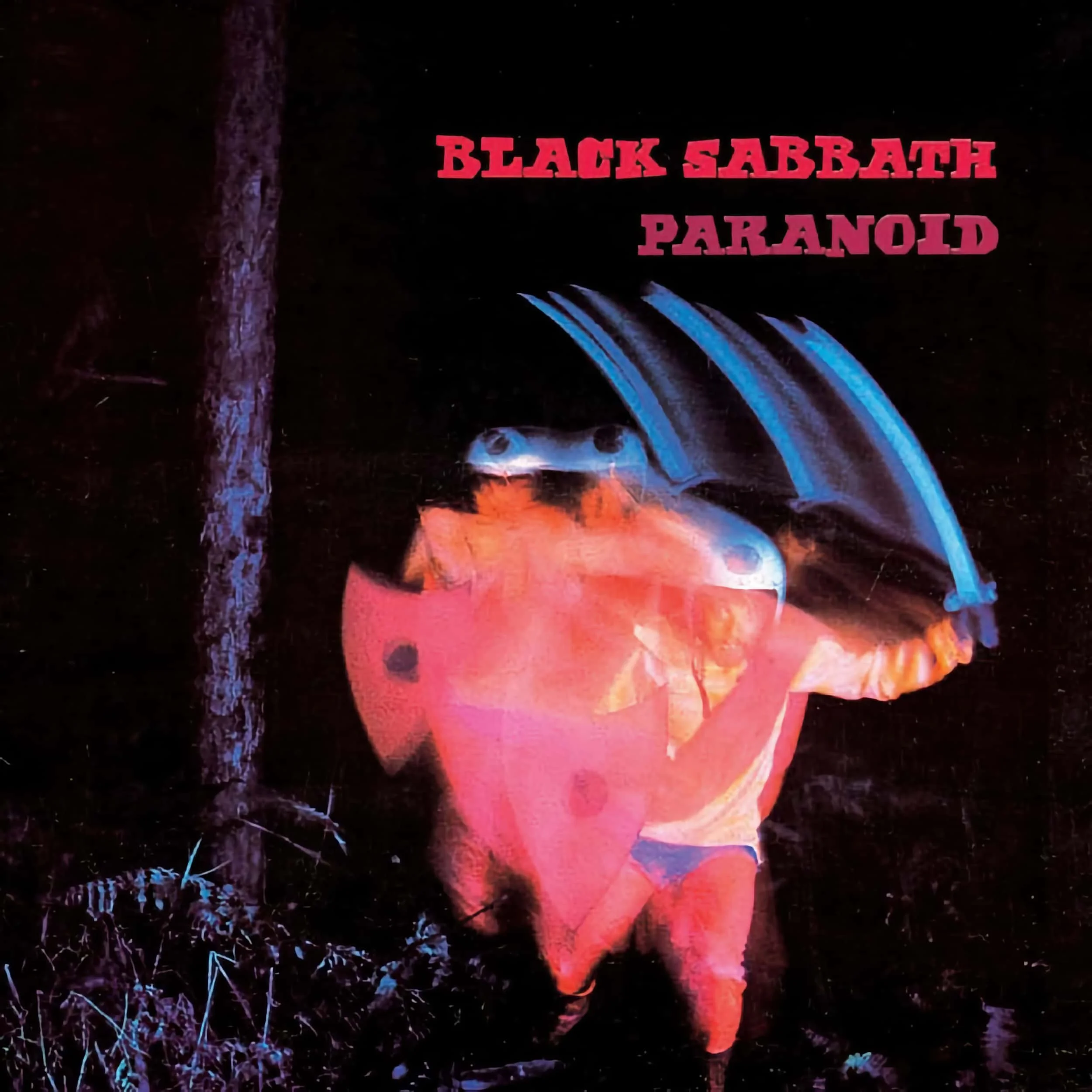
It isn’t all about the music, however, as Paranoid’s album artwork is a thing of beauty, yet it wasn’t always intended to be that way. It’s said that War Pigs was to be the album’s title, yet during the final stages of the record’s release, a decision was made to change the title but keep the existing artwork. As such, you can see where the pig-inspired faux warrior, wielding the sword, would have made sense, but in an interesting dichotomy, the album’s cover art works perfectly with the title Paranoid, for it screams of paranoid delusions. Either way, as is the case with much of Black Sabbath’s extraordinary catalogue, it’s the perfect visual counterpart to the exceptional music contained within.

Speaking of the music, when listening to the 2009 Hi-Res Lossless Apple Digital Master, one can’t help but be impressed by the depth, clarity, and overall tonality of the record, which permits listening at higher volumes, just as an album like this should be listened to, without introducing listening fatigue. It also remains thoroughly enjoyable to those who prefer their volume at less than ear-bleeding levels, meaning that the 2009 edition is ideally suited to a broad audience. Yes, the 2012 remaster is also available via Apple Music, but it’s more shrill and contains known dropouts from the master recording. Plus, I admit that I much prefer the darker mastering of the 2009 remaster as it really highlights Ozzy Osbourne’s vocals, while ensuring the musical bed retains its layered complexity and overall mystique. Yes, there is a case to be made that the 2009 remaster has a noise reduction feel to it (think Dolby NR from the Compact Cassette era), but, in my experience, it makes for a far more enjoyable listening experience. 

The good news is that both remasters are available on Apple Music, and you can decide for yourself. So, hit play, turn the volume to 11, and let’s take a look at the songs that make up this legendary release.

War Pigs is an ideal album opener, as it sets the tone for the entire record and serves as a warning, particularly via the air-raid siren, for the upcoming musical experience that one has to hear to fully appreciate. Not only are the band on fire, but Osbourne’s vocals are amongst the greatest he has ever recorded, the culmination of which leaves no room for one to question Paranoid’s impact on the Heavy Metal genre.

Paranoid has a killer guitar lick that is as raw and forward-driving as the band’s overarching style during these early years. The guitar riff, pounding rhythm, and Osbourne’s near-spoken lyrical approach made “Paranoid” a favourite amongst fans. It isn’t, however, without its controversies as the final verse delivers the lyric: “I tell you to enjoy life”, which is often misheard as “I tell you to end your life”. You’ve got to love a good mondegreen, and this is one of the greatest in all of recorded music history.

Planet Caravan proves Black Sabbath were far more than riff-driven rockers, for this jazzy blues-filled psychedelic number has an ethereal aspect to it that offers a direct, yet ideally positioned and complementary, contrast to Black Sabbath’s heavier hitters. Bill Ward replaces his drum kit with congas, proving just how musically talented he is, and as you listen, you’ll be captivated by the soundstage and layered musicality.

Iron Man is a Tony Iommi masterpiece, for there are memorable licks and then there is “Iron Man’s”; a gift from the gods! That said, the entire band is on fire here, and the chosen mix, recording, and vocal style have made this one of Black Sabbath’s most memorable tunes; one that goes beyond the core fan base, having become part of the social consciousness; it’s that good!

Electric Funeral is a moody attitude-infused number that, while not a standout per se, is a core reason why Paranoid is so revered, for as strong as the album’s first half is, it would be for nil if the back end of the record wasn’t up to par. The only negative aspect of “Electric Funeral” that I can’t stand is the backing vocal aspect mid-song. It really doesn’t work and momentarily takes you out of the song as it’s different enough to be distracting.

Hand Of Doom starts akin to “Planet Caravan”, with a more relaxed styling. That quickly changes as the song ebbs and flows between the mellow and heavier aspects throughout the introduction, prior to the song’s explosive element a third of the way in. “Hand Of Doom” may be an album-only number, but it should never be overlooked as it’s a standout song that just isn’t as well-known as the record’s other landmark tunes.

Rat Salad is short and sweet, with some killer riffs, pounding rhythmic beats, and not a lyric to be heard, as this musical interlude not only shows off the musical prowess and cohesion of the band, particularly Ward’s drumming, but also provides a perfect bridge between “Hand Of Doom” and “Fairies Wear Boots”.

Fairies Wear Boots is an interesting closer. It isn’t the strongest song from the album, but there are moments throughout that are simply wondrous and remind you of the music that has come before it, thereby making it a perfect reflective tune to end the record on.

Paranoid is not only one of the greatest Black Sabbath releases, it’s also amongst the very best albums released in the 70s and includes some of the band’s most revered tracks. Yet, it is the culmination of all songs that ensure this second outing is a top-tier release that can be measured against the best music, from any genre and era, as Paranoid is the very definition of a masterpiece.

Alice Cooper – Killer (Album Review)

Alice Cooper – Killer (Album Review)

Released in November 1971, eight months after Love It To Death, Killer not only built upon the success of that breakout album but also became a defining statement of early-‘70s hard rock along with the Alice Cooper band’s musical, theatrical, and conceptual ambitions. Despite the short timeframe between releases, Killer presents a considerably different Alice Cooper as this, their fourth studio album, feels like a more deliberate and darker collection of songs that remain fan favourites to this day.

Bob Ezrin once again proved his worth in the production chair, encouraging even greater tightness and songwriting while ensuring a production standard that has defined the band, the era, and his career. He is, in many respects, the most influential person as it pertains to Alice Cooper’s metamorphosis and subsequent growth in popularity. Yes, the band was extraordinary, but Ezrin made them legendary.

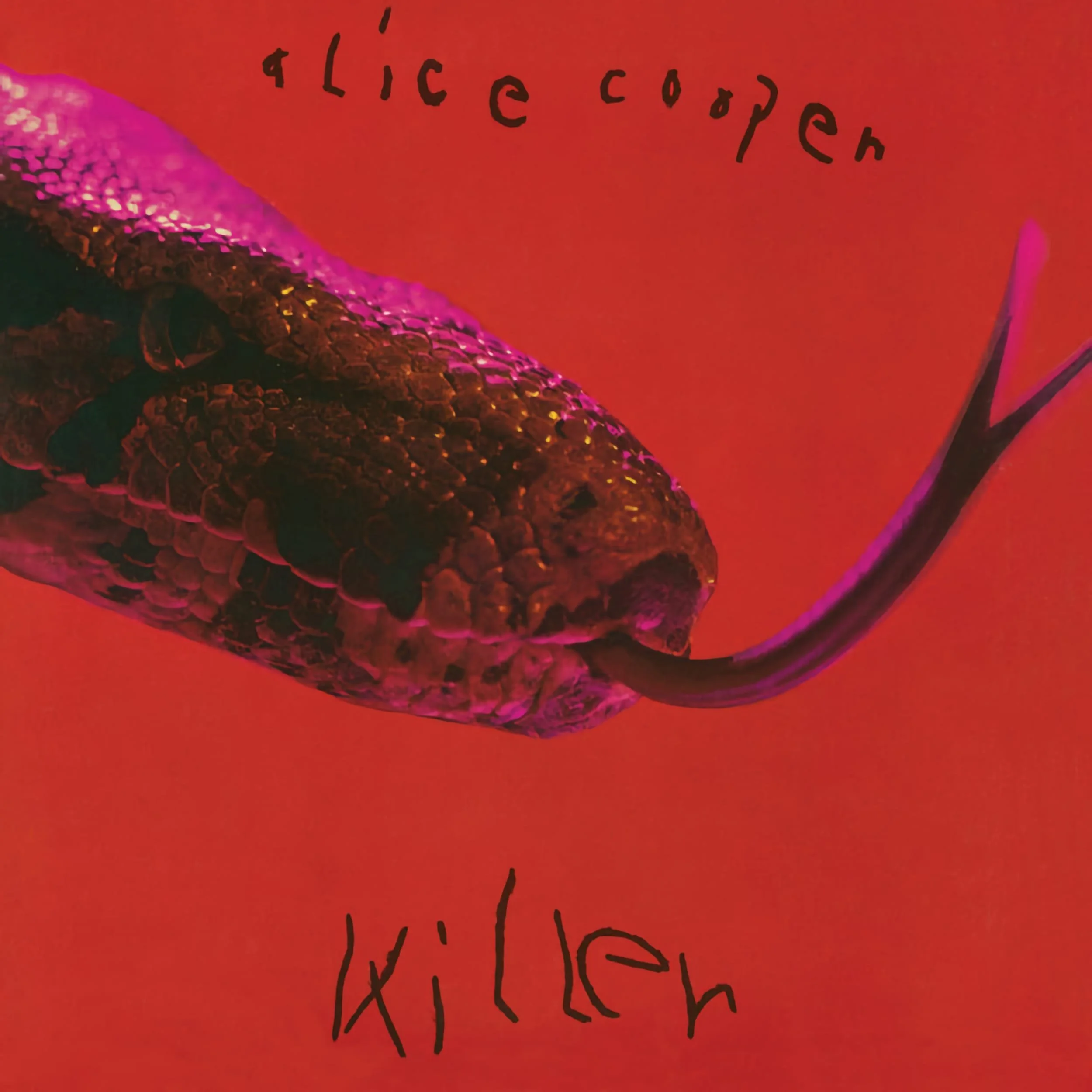
Speaking of things that are legendary, Killer’s cover art is one of the most striking from the era. While not laced in controversy, as Love It To Death was, the inner gatefold, depicting Alice’s hanging, has often received varied opinions. When you contrast it to Alice Cooper’s shock rock approach, however, it’s perfectly aligned with the band’s theatrics. While many of these aspects are lost in modern streaming and digital solutions, given the lack of detailed liner notes, Killer is from an era when the visual accompaniment was often as important, if not more so, than the music contained within the record.

Alongside the striking album artwork, and the incredible song selection, is a mature-sounding record. As you listen to the mix, you’ll come to appreciate the delicate nature of the recording, for this wasn’t merely a thrown-together rock and roll album, but a finely tuned audible spectacle. Despite being remastered for the album’s 50th Anniversary (but released in 2023), I still maintain that the 2004 CD-quality lossless Apple Music stream is the go-to edition, over the newer release.

Warner Music has, thankfully, kept the legacy release alongside the remaster on Apple Music, thereby allowing fans to choose their preferred edition. This is, naturally, a good thing as both releases are notably different to each other. We’re not talking about a remix, but upon initial listens, I feel the 2023 remaster is a little less dynamic and a tad more bloated in the mid to low-end of the audible spectrum. Some may naturally appreciate this boost, for it’s aligned with modern mastering techniques, but tone controls can achieve the same result and can be dialled in, specifically, to one’s subjective preference.

The bottom line, as it pertains to sound quality, is that I implore you to listen for yourself as both versions are readily available. It really is a subjective preference, and one isn’t “better” than the other. So, dear reader, take a listen to the 2023 remaster, or the legacy 2004 CD-quality stream, as we take a look at the songs that make up this classic release.

Under My Wheels sets the tone for the record with a screeching rock and roll vibe from the very first note. Perfectly suited to the era, and Alice Cooper’s style, the brass instrumentation sets it apart in a memorable manner. The only negative aspect is it’s too darn short; punk rock, anyone?

Be My Lover is a spectacular glam rock number, one that is semi-autobiographical as it talks of the groupies that associate themselves with musicians. Ah, what it would be like to be a rock and roll star. While most of us will never know, we can live vicariously through this killer tune; thank you, Michael Bruce!

Halo Of Flies is filled with an eerie musical bed that ideally positions itself as a prog rock masterpiece. Despite its length and ambitious composition, “Halo Of Flies” remains unruly and is one of the best songs that the Alice Cooper band ever composed.

Desperado was perfectly tracked and is the ideal song to follow “Halo Of Flies” for it, too, is one of the greatest songs Alice Cooper (band, or solo) has ever recorded. Despite being written as a homage to Jim Morrison, the correlation simply escapes me. Yes, I prefer listening to vocals as another instrument within the mix, rather than a storytelling device, but even when perusing the lyrics, I fail to see the association. Nevertheless, it’s a great tune and is even greater when performed live.

You Drive Me Nervous picks up the tempo, and as the song progresses, there are moments when you’ll hear the influence the Alice Cooper band had on the legendary Australian rockers Skyhooks. That correlation aside, “You Drive Me Nervous” is short, punchy, and playful; a hallmark of a perfect opening tune for the second half of the record.

Yeah, Yeah, Yeah has a charm to it, and while it flows perfectly from “You Drive Me Nervous”, this album-only tune is unlikely to be anyone’s favourite. Still, Killer wouldn’t be the same without it, and every song does not need to be an elaborate composition for an album to be considered top-tier.

Dead Babies adds a little controversy to the record; that is, if you only focus on the song’s title and fail to comprehend the lyrics. Despite that, this song remains one of the most compelling and heart-wrenching tales told via music. The musical bed is haunting, as are the sound effects, but Cooper’s vocal delivery, in particular, is one of the greatest in his entire career.

Killer flows seamlessly from “Dead Babies” with a similar tonality that closes the album perfectly by permitting reflection as well as encouraging you to spin the record again. Its multilayered experimental nature, with a touch of prog-rock, results in a musical dreamscape that is amongst the most creative of the era and genre. A minor quibble, however, is that closing sci-fi element. It adds no value to the song and, at best, is grating to the senses.

Overall, Killer is (pun intended) a killer record that has not only stood the test of time, but remains one of Alice Cooper’s most beloved. As a fan favourite, it has endured because it has a little bit of everything. From the ballad-styled approach of “Desperado” to the theatrical and progressive styling of songs such as “Halo Of Flies” and “Dead Babies”, Killer showcases a band on the precipice of greatness, for this is a highly enticing album experience and one of the very best from 1971.

Alice Cooper – Love It To Death (Album Review)

Alice Cooper – Love It To Death (Album Review)

When thinking of the origins of Alice Cooper, one’s mind naturally turns to Love It To Death, as it’s arguably the one release, early in their career, that most aligns with the Alice Cooper band’s renowned musical style. No, for newcomers to Alice Cooper, this wasn’t their first or even second release, and while Pretties For You and Easy Action are compelling in their own right, neither had the perfect amount of balance and cohesion necessary to be a landmark release.

Released in 1971, Love It To Death was the first of two Alice Cooper albums released that year. While Killer built further upon the tightness that producer Bob Ezrin and the band would achieve on Love It To Death, there’s an experimental edge to this release that is difficult to ignore. Fans of the band’s first two albums will hear correlations, but the stylistic shift signified a type of music that, up until this point, had yet to be conceived, thereby making it, for the time, at least, extraordinarily unique.

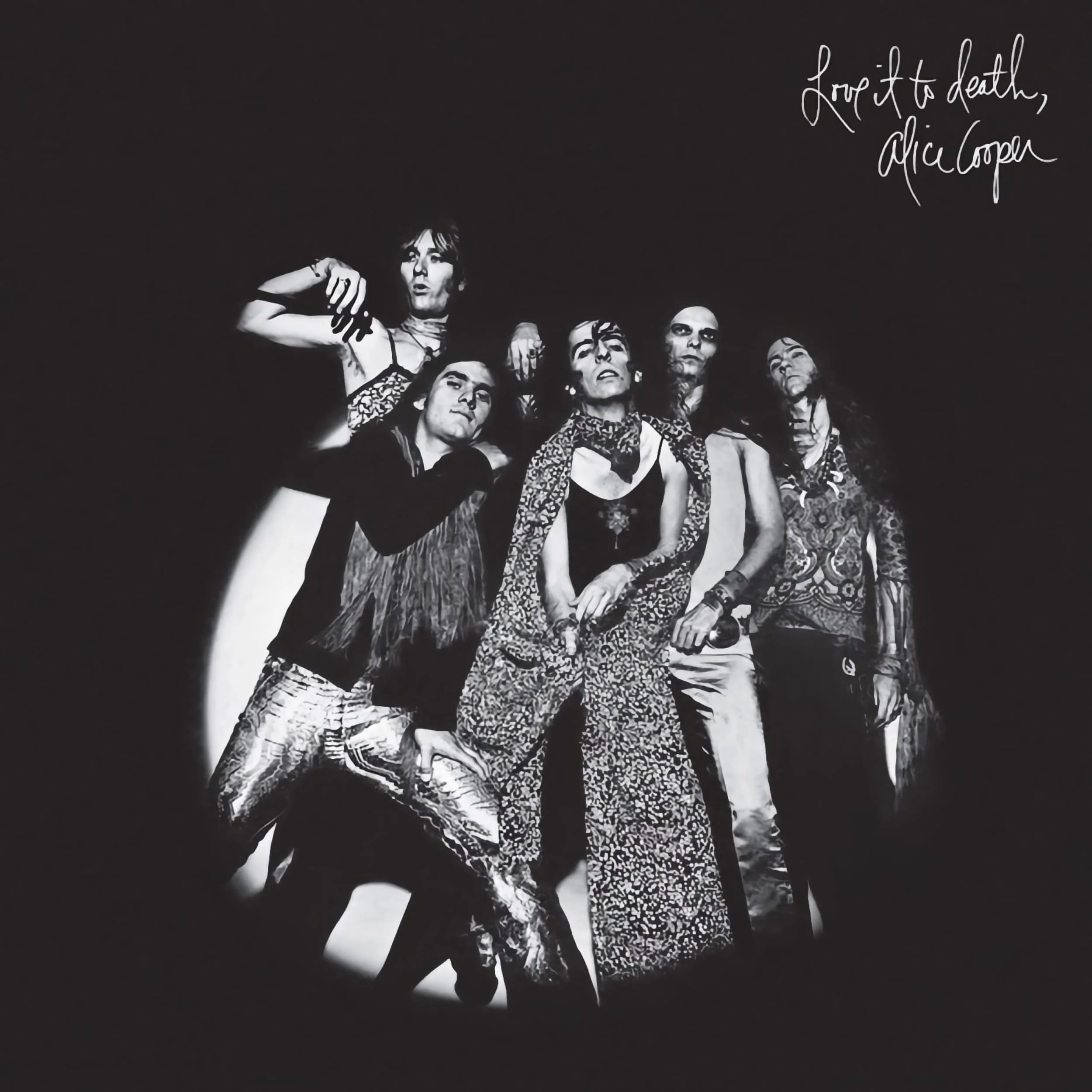
Many classic albums launch with impressive album artwork, and Love It To Death is no exception. Featuring a striking black and white photograph of the band, the album’s artwork is far from controversial as the original uncensored cover art shows Alice with his thumb sticking out of his pants. It was deemed obscene at the time, and reissues, from 1972 to approximately the mid-2000s, contained the edited version sans the controversial thumb. Thankfully, as it pertains to modern reissues, including those on streaming platforms, the album artwork has been returned to its core origins. While one may ponder what the big deal was, for there are many more disturbing album artworks that can be discussed, the outrage undoubtedly added to the mystique of the band. While I usually prefer artwork, in all forms, to be free of censorship, I must admit that I prefer the artwork minus the thumb as I feel it’s less visually distracting.

From an audible perspective, while the recording and mix are done rather nicely, the mastered edition, on Apple Music, is a little muffled in places. Yes, it adds a patina and character to the overall recording, and is anything but shrill; however, there’s a greater sonic presentation to be heard, should the veil be lifted.

While there are different masterings of this classic release, two of the core ones have been limited to singular releases thus far. Steve Hoffman’s Audio Fidelity mastering has been limited to a numbered edition CD (HDCD, more specifically) release and the latest vinyl reissue, mastered by Kevin Gray, has similarly been restricted to that of a singular 2025 reissue and has yet to make it to any digital format, as the stream indicates a publishing date of 2004.

While it goes beyond the scope of this review, I’ve never understood artificially limiting reissues, especially when done by some of the most respected remastering engineers. If they’re that good, and many times they are, then why not permit it to be heard by a broader audience? While I have no answers to that question, it does compel me to pick up the 2025 vinyl reissue as it’s receiving significant praise from fans who have already added it to their collection. Until then, however, the Dolby NR-sounding digital stream will have to suffice.

Caught In A Dream opens the album in a lively manner, with a rock and roll energy that is not only highly compelling but utterly addictive. You’ll find yourself grabbing an air guitar and rocking out to this killer tune. Despite being released as a single, it failed to set the charts on fire following the success of “I’m Eighteen”, and despite being one of the best songs from the Alice Cooper band era, “Caught In A Dream” has, unfortunately, never quite received the accolades it deserves.

I'm Eighteen is, without a doubt, the album’s most notable track as it’s a mainstay of Cooper’s live performances and continues to be admired by fans the world over. For a song that was first released over five decades ago, it has most certainly come of age like a fine wine and appeals to each new generation, longing for independence, amidst internal conflict, as one attempts to carve out their own legacy of non-conformity within societal expectations.

In many respects, it was “I’m Eighteen” that put Alice Cooper on the map, as the single performed well enough on the charts to garner confidence from their record label (Straight Records | Warner Bros.) in relation to releasing a full album. Naturally, it helps if the band and the production team act as fans and request airplay via radio stations, but had that not been done, there’s a possibility that Alice Cooper would have been a mere footnote in the history of recorded music.

Long Way To Go is a high-energy number in a similar vein to the album’s opener. It sees the Alice Cooper band incorporate Ezrin’s tight song structure, and while there are bound to be those that dislike this approach, preferring the jam-style and overall looseness of their early recordings, “Long Way To Go” proves that sometimes less is more…that is, until the epic that is “Black Juju” comes along.

Black Juju is a true masterpiece in every sense of the word. Despite its extended length, and being a throwback to the albums that came before this one, “Black Juju” remains tight, somewhat haunting, and highly compelling. No, it was never going to be released as a single, for it isn’t the kind of song that could have been truncated, but it’s a piece of audible art that is amongst the greatest exploration of musical talent you’re ever likely to hear. Whether it’s the layers of instrumental wonder or Cooper’s divinely emotive vocals, “Black Juju” is amongst the greatest the band ever recorded, and while it does act as somewhat of a detour to the album’s linear structure, it is an extraordinary composition nonetheless.

Is It My Body returns the album to its core rock and roll vibe, with a touch of hard rock. It may not be a standout, unlike some of the other songs from Love It To Death, but it doesn’t need to be because this tune is quintessentially Alice Cooper; one that will see you toe-tapping and head-bopping along.

Hallowed Be My Name is a killer tune with a haunting introduction that creates the backbone of the song. It’s succinct, fun, and is another that ensures Love It To Death is an exceptional album experience whilst simultaneously helping to further define Alice Cooper’s signature sound.

Second Coming is one of my all-time favourite Alice Cooper band tunes. Its style reminds me fondly of Cooper’s solo-era recordings from around 1978’s From The Inside. “Second Coming”, however, is one of the songs that I feel is too short. Yes, it leaves you wanting more and can be seen as more of a lead-in for “Ballad Of Dwight Fry”, but it’s moments like this that I really wish the two songs had been connected as one. Yes, if listening via the album’s linear structure, as one would do more often than not on vinyl, the blend is seamless, but if one wishes to put “Second Coming” on repeat, for instance, in the digital era, it’s a little more problematic. First world problems, I know, but the two songs in conjunction form a masterful composition and lead into the closing track in an utterly perfect manner that showcases just how extraordinary Ezrin was in the production chair.

Sun Arise is a cover of the Rolf Harris original, but this interpretation by the Alice Cooper band breathes new life into the song and is a wonderful closing number for Love It To Death, as it permits contemplation and will likely encourage you to spin the record again.

From start to finish, Love It To Death is a quintessential Alice Cooper band release that laid the groundwork for their renowned hard rock style. While it escapes much of the psychedelic experimental stylings heard on their original releases, the amalgamation of styles delivers a uniqueness that has been inspirational for countless musicians. It, subsequently, wouldn’t be far-fetched to suggest that had it not been for Love It To Death, the Punk, Hard Rock, and Heavy Metal scenes would be considerably different had this record never seen the light of day. So, dear reader, let’s give the record another spin and love it till death do us part, for this landmark release is one of the greatest albums of all time.

Golden Earring – Seven Tears (Album Review)

Golden Earring – Seven Tears (Album Review)

Despite an extensive discography and celebrated career, Golden Earring has flown under the radar of many music lovers throughout the years. In fact, I was unaware of the band prior to my ongoing project of exploring the history of recorded music; one album at a time. Nevertheless, in a world where streaming allows for new music discoveries, there’s no better time to explore those albums that have been overlooked, forgotten, or simply didn’t receive the recognition they deserved. Seven Tears, Golden Earring's seventh studio album, most certainly falls into that final category, for it failed to set the charts on fire (outside of their home country, the Netherlands, where it topped the charts), but to say this 1971 release is underrated is the very definition of an understatement.

Similarly understated is the album’s cover. While Golden Earring has some of the most exceptional album artwork designs you’re ever likely to come across, Seven Tears may appear underwhelming upon first glance. Yet, the simple band photograph, with the painted look, adds a level of mystique to the record. This is particularly true if you have a physical release of the album, as the gatefold is quite impressive and is far better than that achieved via modern streaming services.

As it pertains to the recording and the sonic qualities of the record, Seven Tears is demo worthy for it’s been recorded, mixed, and mastered with kid gloves. While I’m unsure as to which mastering is used for the Lossless Apple Music stream, and it isn’t an Apple Digital Master, to say it’s sonically extraordinary is an apt assessment. Every musical element is respectfully presented, with plenty of room to breathe, thereby allowing for a highly immersive musical experience. The only improvement that could be made, from my perspective, would be to have the album on vinyl, with the same clarity and depth present via the stream, for the warmth (think distortion) of the format would take the album to an even greater level of symbiosis with one’s musical soul.

As always, don’t merely take my word for it. Give the album a listen, particularly if you haven’t already, for Golden Earring’s blend of traditional rock with prog-rock, with a touch of theatrical experimentation, is a gift from the rock gods.

Silver Ships opens the album with epic prog-rock ambitions and a touch of psychedelia. The musical bed is atmospheric and enveloping, drifting between bolder rock elements and softer tonal wonders, unleashing layer upon layer of musical magic. The lead vocals, however, are the highlight here and are amongst the greatest ever recorded in all of music history.

The Road Swallowed Her Name is full of rock and roll heaviness with a guitar riff that would have been the envy of any band of the era. Yet, it has reached through the ages and is still as compelling today as it was upon the album’s release. While the vocal delivery isn’t as powerful as the album’s opener, it’s that riff, with its blues-based foundation, that will keep you coming back for more.

Hope, with a near-ballad styling throughout, has its delicate moments that build before exploding into a progressive rock masterpiece. While the vocals are particularly noteworthy for their reach and control, “Hope” is particularly compelling due to its killer saxophone performance. While there’s no shortage of contenders for the quintessential Golden Earring tune, “Hope” is most certainly among their greatest.

Don't Worry is a rhythmically charged musical wonder. Grounded, most certainly, in a more traditional rock and roll style, “Don’t Worry” not only has an attitude about it, but there’s a funk-infused element contained within that is highly compelling. Rinus Gerritsen’s bass performance, on this track, in particular, is a stroke of genius. Thankfully, the chosen mix ensures that his performance is front and centre as it gives the song its playful momentum.

She Flies On Strange Wings is an experimental epic and one of the most notable moments on Seven Tears. Fully embracing a progressive rock structure, “She Flies On Strange Wings” is somewhat of a hidden gem from the era, despite it being released as the album’s only single. With extended instrumental sections, shifting dynamics, and a hypnotic style, this track has much to offer. Upon repeat listens, you’ll find yourself connecting with different elements of the recording, thereby making this a quintessential prog-meets-art rock number that showcases not only the band’s ambition but their incredible musical cohesion. While I still consider “Hope” to be the standout, on the album, “She Flies On Strange Wings” is very much its equal.

This Is The Other Side Of Life is the most unique song on the album, with not only an interesting composition but an introduction that contains backmasking, which, when played backwards, states: "Uh, this is the other side of life". Backmasking is an intriguing technique that was commonly experimented with during the era, but it’s also fair to say that it detracts from an otherwise solid tune, especially when playing the song, or in this case, the album, in its intended linear structure. Granted, “This Is The Other Side Of Life” was never going to be a standout and is the weakest song on the album, but the dream-like arrangement, with its eccentric-styled backing vocal performance, adds texture to the album as a whole, and all songs need not be a hit for an album to offer a thoroughly enjoyable and cohesive experience.

You're Better Off Free is the perfect long-form rocker to close the album on. The mid-tempo styling works extremely well, and Cesar Zuiderwijk’s drumming is sensational. Add to that Gerritsen’s bass accompaniment, and the killer guitar solo, and what you’ve got is a song that will encourage you to play the record again, for Seven Tears can seldom be listened to once.

While some may suggest otherwise, Seven Tears is an ideal album experience and not merely a collection of songs, as the fluidity of the record, especially when played on repeat, is second-to-none. Is it the greatest record that Golden Earring ever released? Yes, I believe it is, and as much as I appreciate their greater catalogue, Seven Tears is the album I find myself returning to more than any other for it’s a timeless classic.

T. Rex – Electric Warrior (Album Review)

T. Rex – Electric Warrior (Album Review)

There are classic albums, and then there is T. Rex’s Electric Warrior; a killer '70s rock and roller! While not quite as polished as their 1972 follow-up, The Slider, Electric Warrior laid the groundwork for what was to come, despite this being their sixth studio album overall and second under the T. Rex banner. It did, however, deliver a musical shift that favoured an increasingly electric approach, one which had started with their self-titled 1970 release, rather than the acoustic styling they’d previously been known for. As a result, the glam meets rock with touches of funk was met with great success, and Electric Warrior remains T. Rex’s most commercially successful release.

Aside from the musical shifts, much of Marc Bolan’s songwriting on this release revolves around personal experiences and while lyrical intent is not necessarily the focal point of music, particularly for this music lover, one thing is for certain, and that’s that T. Rex benefits from this shift in songwriting as well. Add to that Tony Visconti’s production brilliance, and what you’ve got is an album that is not only highly compelling but sonically impressive. The musical trickery of Visconti took the quartet to much bolder musical heights that couldn’t have been conceived without his influence, and he is, in many ways, a core member of T. Rex, having produced just about everything the band put out until their 1975 release, Zip Gun.

Electric Warrior is also notable for its striking album artwork, which effectively sets one’s expectation, while simultaneously matching the overall musical style of the record. While the album’s artwork maintains its emphasis on small-format digital screens, the stark gold on black design would, undoubtedly, be best appreciated via the larger vinyl canvas, and its ability to be displayed amongst one’s collection. While I’ve yet to be able to appreciate it via that format, the CD-quality lossless Apple Music stream is sonically exquisite. Based on the 2012 remastered/reissue, this streaming edition is ideal for those who have yet to venture into one of the many physical releases and will likely appeal to most music lovers.

You’ll be met with a digital reproduction that sounds warm and enveloping with a full-bodied sound. There are, however, a couple of instances when the cymbals can sound a little jarring, particularly at higher volumes, but it’s a minor gripe that is likely a non-issue on the more rounded and smoother vinyl editions. Nevertheless, the greatest gift of streaming is that we can sample the music, and so, as we take a look at the songs that make up this classic release, give it a listen and decide for yourself.

Mambo Sun sets the tone for the album with its hypnotic upbeat funky vibe. If you’re not moving involuntarily to the rhythm, you’re most certainly listening wrong, as “Mambo Sun” has a surreal atmosphere that perfectly presents Bolan’s vocal atop the pulsating rhythm.

Cosmic Dancer slows the tempo somewhat, but the initial throwback to a more acoustic sound is quickly overtaken by the gorgeous symphonic presentation that not only enhances the song but showcases the experimental nature of both T. Rex and the glam rock genre itself.

Jeepster has a rock swagger that is perfectly suited to the era. While not necessarily a standout, and one song from the record that suffers from a little too much shrillness in the top end, “Jeepster” is a solid album-only number that fulfils that obligation perfectly.

Monolith is a masterful number. Yes, there’s a little too much focus on the cymbals, but the layered nature of this tune is exceptional and feels akin to a bridging element between legacy T. Rex (Tyrannosaurus Rex) and this bold new musical styling.

Lean Woman Blues is about as country as you’re gonna get from T. Rex, but despite the twang element, it’s the blues-driven styling, the vocal grit, and distorted guitar that, ultimately, makes “Lean Woman Blues” so appealing.

Get It On, also known as Bang A Gong (Get It On), is T. Rex’s magnum opus. Nothing comes close, even though there are many contenders, but from the very first note to the last, Bolan and the band draw you into this groove-filled number that will stay with you long after the album has ended.

Planet Queen flows well from “Get It On” with its softer groove that, while less immediate than the aforementioned tune, is dreamy and hypnotic in a manner that you’ll likely find highly compelling.

Girl is a beautiful tune, one that Bolan knocks out of the park for his vocal delivery, the subtle musical bed, and Burt Collins’ exceptional flugelhorn, meld together in one of the greatest and most unassuming tunes T. Rex ever recorded.

The Motivator picks up the pace, but the heavier groove, with its killer rock riff, is a welcome return to form as “The Motivator” represents the broader musical perspective of the band and is somewhat of a hidden gem.

Life's A Gas is a beautiful ballad. Gentle and melancholic. Few songs are as stunning as this unassuming number.

Rip Off is full of raw energy that, in some respects, is too far removed from the dreamy fluidity of “Life’s A Gas”, but it does serve well as the album’s closing tune for it leaves you wanting more and will likely see you spinning the record again, for Electric Warrior is an album that can be seldom listened to once.

No matter which way you look at it, or whether or not you consider The Slider as a superior T. Rex record, Electric Warrior is timeless and has had a profound impact on musicians and music lovers alike. Yes, the sub-million sales may encourage some to suggest that it was less successful than one might think, but those who have taken the time to listen to Electric Warrior know of its impact; one that will see it highly sought after long after this review, and all of us are but distant memories.

Carole King – Tapestry (Album Review)

Carole King – Tapestry (Album Review)

Released in 1971, Tapestry remains one of the most timeless and revered records in the history of recorded music. It’s an album that almost everyone knows of, even those with little interest in the singer-songwriter genre. With sales exceeding 25 million units worldwide, Tapestry is also among the most commercially successful and culturally significant releases of the 20th century, as it touched the hearts and souls of many music lovers through King’s dulcet tones and incredible songwriting, which spoke to a generation while remaining relevant all these years later.

While an album’s reputation is often built upon sales figures alone, Tapestry is one of those rare albums that is so universally admired that many would argue it belongs in any “serious” record collection; a claim that’s difficult to dispute, but it has lived up to its legendary status with its enduring appeal. Aside from it being a landmark release, the influence this record has had on musicians is near-impossible to measure, for its reach goes beyond the songs as the album became part of the zeitgeist, without it ever intending to.

Of course, commercial and critical success doesn’t always guarantee artistic greatness, but in this case, it is most certainly deserved. Tapestry demands attention, and even its few rough edges and imperfections lead to the album’s lasting character. At times, Tapestry sounds as though it was conceived almost like a fully realised demo recording rather than a pristine studio production. It is this rawness, however, amongst an exceptional selection of songs, that makes it so compelling. While the songwriting is excellent throughout, King’s vocal performances are deeply human and emotive, while the underlying musical bed is often understated but equally compelling in its support and delivery of King’s masterful tunes.

Tapestry may lack some of the spit and polish of its contemporaries, but the grittiness and associated warmth of the recording combine to add to the record’s patina in a way that perfectly suits the source material. No truer is this than when listening to the Hi-Res Lossless Apple Digital Master, available via Apple Music. While I’ve had the good fortune to have heard a number of the physical editions, with the most recent being the Music On Vinyl pressing (MOVLP035), I’ve stopped trying to seek out the “best copy” as each mastering and reissue presents the album differently from the one before it, yet the Apple Music stream simply sounds right. Granted, that isn’t a very helpful description, but the shrillness that can be heard, via some editions of the album, is dialled back, preventing a detractive element. Undoubtedly, there’d have to be a killer physical version available; I just haven’t come across it yet, but modern listeners can’t go wrong with the Apple Digital Master.

I Feel The Earth Move has a compelling bluesy-jazz meets Motown vibe, but most importantly, it’s an ideal opener as it sets the tone for everything that follows with its sense of urgency and confidence. King’s vocal is full of emotion, but it’s the rolling piano groove and the hook-laden musical bed that brings everything together.

So Far Away is a beautiful song. While it can be seen as a stark contrast to the album’s opener, the record is tracked so well that it doesn’t cause a jolt to the senses. Instead, you’ll find yourself sitting back, enjoying what can only be described as one of the loveliest songs in King’s arsenal, for every aspect of the recording is handled beautifully.

It's Too Late is a defining number and has that quintessential ’70s pop styling that, if you’re a fan of the era, you’ll immediately fall in love with, for this is one incredible song.

Home Again is brief, but the polished yet raw approach of the recording, with King’s vocal front and centre in an otherwise immersive soundstage, is akin to a heavenly experience. It also happens to be one of the songs that benefits most from the Apple Digital Master treatment, for King’s vocals, on this song in particular, have a tendency to distort in the upper ranges.

Beautiful is a lovely uplifting number, but as great as King’s recording is, check out Anne Murray’s cover for it’s the greatest interpretation of “Beautiful” that I’ve ever had the privilege of hearing. Barbara Streisand’s rendition isn’t bad, either, but I do wish Elton John had recorded it; I dare say he would have knocked it out of the park.

Way Over Yonder is a lovely song that knows no bounds for its composition taps into numerous musical genres, most notably its gospel undertones, to create another standout from an already exceptional album. Add to that, Curtis Amy’s mystifying saxophone at the midway point, and what you’ve got is one of the most memorable and relaxing songs from Tapestry.

You've Got A Friend is, undoubtedly, the centre point of the album and is nothing short of pure perfection. There’s little doubt in my mind that “You’ve Got A Friend” could easily be considered the greatest song ever written, and for good reason, for it’s the emotional centrepiece of Tapestry. Despite being later popularised by James Taylor, and his rendition is magnificent, King’s recording is glorious in its own right.

Where You Lead is a solid pop/folk number, but it’s largely forgettable when contrasted against the other exceptional recordings on this release. Don’t get me wrong, it’s a good song, and King does an admirable job, but there’s a bolder and more bombastic version lying just below the surface that could have been recorded.

Will You Love Me Tomorrow? was originally recorded by The Shirelles, but their rendition is easily forgettable. Thankfully, King reclaims this classic and records it in such a spectacular manner that it adds new depth to what was already an iconic song. While numerous covers have been recorded, few compare to the passion that King portrays through this, one of her very best recordings.

Smackwater Jack has an addictive rhythm that will see you toe-tapping and head-bopping from the very first note to the last. It may not be the most well-known track from the record, but there’s little doubt that it contributes to the overall album experience.

Tapestry is a simply beautiful title track, one that is understated and reflective, but it’s also a standout and somewhat of a hidden gem.

(You Make Me Feel Like) A Natural Woman closes the album with one of King’s most enduring and powerful songs. For lack of a better term, it’s a classic to end all classics and has been covered by the best of the best. While purists will agree that King’s recording cannot be beat, Aretha Franklin's version is stunning and amongst the greatest renditions ever recorded, for it is true to the song’s original intent and direction, but it’s also not overproduced, unlike Celine Dion’s recording. Regardless of the version you prefer listening to, “(You Make Me Feel Like) A Natural Woman” is a magnificent tune and a quintessential closing track; one that will compel you to play the album again whilst simultaneously encouraging you to sit back and contemplate the music you’ve just heard, for songs like this know few peers.

More than five decades on, Tapestry remains one of the most essential and emotionally resonant singer-songwriter albums ever recorded. From its unforgettable melodies to its understated songwriting, Tapestry captures King’s honesty and warmth, resulting in an album that’s both deeply personal and universally relatable. More than that, Tapestry offers a quintessential album experience; one that is timeless and continues to justify its place amongst the greatest records ever released.

T. Rex – The Slider (Album Review)

T. Rex – The Slider (Album Review)

There are classic albums, and then there is The Slider, a record that further solidified the legendary status the English rockers had attained on this, their seventh studio album. While The Slider was not as commercially successful as Electric Warrior (1971), it’s quintessentially T. Rex and if one was to share the band with a music lover, that had yet to experience them, The Slider would be at the top of my recommendation list for T. Rex doesn’t get much better than this, even though I have a soft spot for the experimental Futuristic Dragon (1976).

Released in 1972, The Slider finds T. Rex at a pinnacle moment of their career. With a selection of songs that play akin to a Greatest Hits release, it wouldn’t be far-fetched to suggest that The Slider, despite not reaching the commercial success of Electric Warrior, is the superior album. There will be some who naturally disagree, and they’d subjectively be correct, but The Slider is a glam rock masterpiece that knows few peers.

Featuring a stark black and white photograph of Marc Bolan, courtesy of Ringo Starr (yes, the one and only), the cover art design is striking. Perhaps my only complaint is that my preferred edition, The Visconti Master, utilises the white space from the album’s cover to inform us of the different mastering when presented on Apple Music et al. It shouldn’t matter, and most of the time I overlook it, but it takes away from the original artwork and is a distraction. First world problems, I know, but at least they didn’t make the same mistake as it pertains to the physical releases.

With regard to the sonic qualities, I find the Visconti remaster simply sounds right. And, yes, that is a technical term! For those unaware, Tony Visconti was the album’s producer, and this latest mastering is smoother, bolder in the mid and low end aspects of the recording, whilst also allowing for a thoroughly pleasing wide and enveloping soundstage. It isn’t presented as an Apple Digital Master, but it doesn’t need to be, as the CD-quality counterpart is stunning.

Undoubtedly, there will be fans of the original mastering, but whichever you prefer, join me as I take a look at the songs that make up this legendary release.

Metal Guru is a killer opener with a rhythmic burst that sets the tone for the entire album. Bolan’s emotionally charged vocals help to give the song its glam rock feel, but the backing vocal harmony adds to the mystique, for “Metal Guru” is amongst T. Rex’s finest recordings.

Mystic Lady slows the tempo somewhat, but the flow from “Metal Guru” is so natural that it’s unlikely you’ll sense the shift, unless you’re expecting it. With a near-dreamlike atmosphere, “Mystic Lady” is a lushly layered masterpiece that showcases not only T. Rex’s incredible musical prowess but Visconti’s high production values.

Rock On captivates like no other. You’ll feel compelled to move involuntarily to the rhythm as this song melds with your soul and stays long after the album has ended, but an earworm such as this has never been so pleasantly rewarding to the senses. The gruff, yet highly polished style of the song is part of its appeal, as it provides a contrast that works surprisingly well.

The Slider delves into a grunge-styled tone that provides the backbone to what can only be described as a classic glam-rock number. The layered musical bed is detailed and enveloping, yet Bolan’s vocals sit perfectly within the mix, further showcasing just how well The Slider, the album and this title track, have been recorded and mixed.

Baby Boomerang is an ideal glam-rock tune, for the short and punchy styling is undeniably catchy.

Spaceball Ricochet is a musical exploration that needs to be heard firsthand in order to be fully appreciated. While those not overly familiar with the era, or T. Rex, may point to “Spaceball Ricochet” being akin to a David Bowie tune, that would be a complimentary statement. The sparse, yet evolved, styling of the song is perfectly suited to both artists and is a great example of glam music at, arguably, its apex.

Buick Mackane is amongst the heavier tunes on the album, and while I’ve always appreciated Guns N’ Roses’ 1993 cover, from The Spaghetti Incident, the original is all that one ever really needs to listen to, as its muscular driving riff, while maintaining the band’s glam aesthetic, is nothing short of exceptional.

Telegram Sam is derived from one of T. Rex’s most iconic compositions, "Get It On". With a touch of funk, a dab of rock, and a healthy dose of glam, “Telegram Sam” is as instantly irresistible and catchy as the aforementioned track and a highlight amongst a collection of songs that are some of the very best in all of recorded music history. Some may be perturbed that the riff and overall styling were reused, but when you have such an incredible tune, why not repurpose it? AC/DC has been doing it successfully for decades.

Rabbit Fighter is a boldly dramatic number that sees T. Rex at their most theatrical and grandiose, whilst simultaneously delivering one of Bolan’s most impressive vocal performances.

Baby Strange is a raw, stripped-back rocker that will find you head-bopping and toe-tapping along. The riff and Bolan’s vocal delivery are the highlights on this tune, and while it may have been seen as a little pedestrian, the strength of “Baby Strange” is its simplistic approach.

Ballrooms Of Mars is one of the slower compositions on the record, but it’s an absolutely magnificent tune and another that highlights not only the band’s overall musical ability and tightness, but Bolan’s incredible vocal capabilities that, in this case, have a slight John Lennon styling in a respectful tip of the hat to the former Beatle.

Chariot Choogle is a killer high-energy number with an incredible riff and rhythm that you’ll feel as much as you’ll hear it, for this is one number that will encourage you to move both involuntarily and intentionally to the rhythm.

Main Man is a magnificent closer, with a dreamy mystique that is reminiscent of “Life’s A Gas” and is, subsequently, difficult to ignore. It will encourage you to play the record again, as well as offering you the opportunity to sit and reflect on the music you’ve just heard.

From start to finish, T. Rex’s The Slider is nothing short of an exceptional release that has not only stood the test of time but also remains one of the greatest albums ever recorded. It is T. Rex at their finest and, if, like me, you’ll find yourself playing this record on repeat for hours, for The Slider can seldom be listened to once.